
Auricular Acupuncture
Auricular acupuncture treats the entire body through points on the external ear (auricle). Based on Nogier's inverted foetus somatotopy and refined through Chinese and Western clinical research, it is one of the most evidence-supported microsystems in acupuncture. Explore the interactive ear map below to learn point locations, functions, and protocol associations.
Interactive Ear Point Map
Hover or tap a point on the ear to see its anatomical location, function, and clinical indications
Point locations follow WHO standardised auricular nomenclature. Filter by protocol to highlight NADA (5-point) or Battlefield Acupuncture (5-point) points.
Ear Seed Placement Guide
Ear seeds (耳穴压豆) provide sustained acupressure between clinical sessions. Follow these six steps for safe, effective placement and home-care instruction.
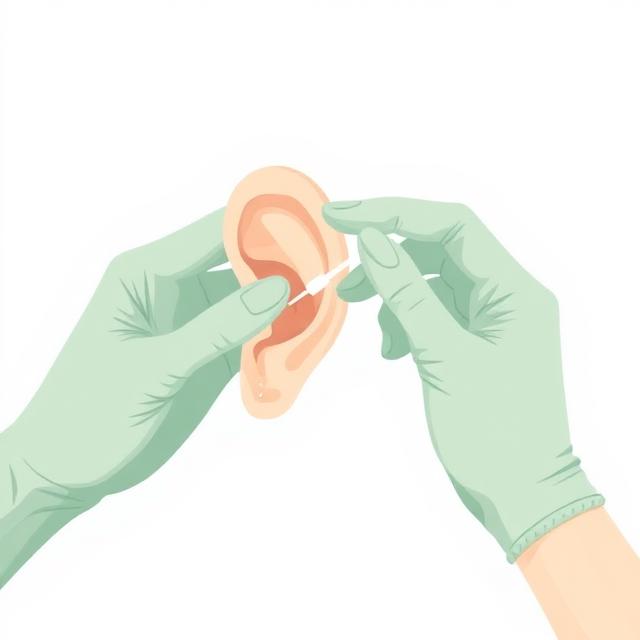
Clean the Ear
Swab the entire auricle with 70% isopropyl alcohol using a cotton pad. Allow to air-dry for 10–15 seconds. This removes oils and bacteria, improving adhesion and preventing infection.
💡 Tip: Avoid touching the cleaned area with bare fingers before seed placement.
Home Care Instructions
- Keep seeds dry — avoid submerging ears in water (cover during swimming/bathing)
- Do not reapply fallen seeds — use a fresh seed on cleaned skin
- Press seeds 3–4× daily for 10–15 seconds each time
- Remove all seeds after 5 days maximum, even if still adhering
- Contact your practitioner if you experience persistent pain or skin reaction
Contraindications
- Open wounds, cuts, or skin infections on the ear
- Pregnancy — avoid strong endocrine and uterine points
- Patients with adhesive / latex allergies (use hypoallergenic tape)
- Severe inflammation or frostbite of the auricle
- Children under 7 years (use with caution and parental supervision)
Major Auricular Systems & Protocols
NADA Protocol (National Acupuncture Detoxification Association)
A standardised 5-point auricular protocol developed in the 1970s at Lincoln Hospital, New York. Originally designed for addiction recovery, it is now widely used for trauma, stress, anxiety, and disaster relief. The five points — Shenmen, Sympathetic, Kidney, Liver, and Lung — are needled bilaterally with 0.22 mm detox needles for 30–45 minutes in a group setting.
- 5 points: Shenmen, Sympathetic, Kidney, Liver, Lung
- Bilateral needling with fine detox needles (0.22 × 13 mm)
- 30–45 minute group treatment sessions
- Used in addiction, PTSD, disaster relief, and mental health settings
Battlefield Acupuncture (BFA)
Developed by Col. Richard Niemtzow, MD, PhD in 2001 for rapid pain management in military settings. Uses five auricular ASP (Aiguille Semi-Permanente) gold needles placed sequentially — alternating ears — until pain is reduced. The protocol targets central pain processing pathways via the Cingulate Gyrus, Thalamus, Omega 2, Point Zero, and Shenmen.
- 5 points: Cingulate Gyrus, Thalamus, Omega 2, Point Zero, Shenmen
- ASP semi-permanent gold needles (retained 3–4 days)
- Sequential placement, alternating ears, reassessing pain after each needle
- Adopted by US Department of Defense and Veterans Affairs
Nogier Auriculotherapy (French Energetics)
Paul Nogier (1908–1996), a French physician, is considered the father of modern auriculotherapy. He discovered the inverted foetus somatotopy on the ear and developed a system of seven frequencies for tissue-specific resonance therapy. His work established the anatomical framework adopted by WHO in 1990.
- Inverted foetus somatotopy mapped on the auricle
- Seven Nogier frequencies for tissue-specific treatment
- Vascular Autonomic Signal (VAS / RAC) pulse diagnosis
- Foundation for WHO standardised auricular nomenclature (1990)
Chinese Auricular Acupuncture (耳针疗法)
The traditional Chinese approach to ear acupuncture, codified during the 1950s–60s by the Nanjing Army Ear Acupuncture Research Group. Chinese auricular therapy uses the TCM diagnostic framework — including zàng-fǔ differentiation, pulse diagnosis, and auricular inspection — to select points. It emphasises seed-pressing (耳穴压豆) with Vaccaria seeds for sustained stimulation between treatments.
- 200+ auricular points mapped to zàng-fǔ organs and body regions
- Ear seed (Vaccaria) pressing for home-care between sessions
- Auricular inspection: colour, morphology, tenderness, and electrical resistance
- Integration with body acupuncture and herbal prescriptions
Clinical Applications
Pain Management
BFA, Shenmen + Thalamus, local anatomical points
Addiction & Recovery
NADA 5-point protocol, Shenmen + Lung
Mental Health
Shenmen, Heart, Subcortex, Occiput
Gynaecology
Endocrine, Kidney, Uterus, Sympathetic
Digestive Disorders
Sympathetic, Liver, Stomach, Small Intestine
Neurological
Subcortex, Thalamus, Occiput, Cingulate Gyrus
Explore Other Acupuncture Traditions
Compare approaches across the world's major acupuncture systems