    Annual subscribers now receive The Modern Nèi Jīng FREESubscribe AnnuallyClinical Education ToolThis platform provides educational resources for TCM practitioners and students. It does not issue medical certificates, prescriptions, or clinical diagnoses.
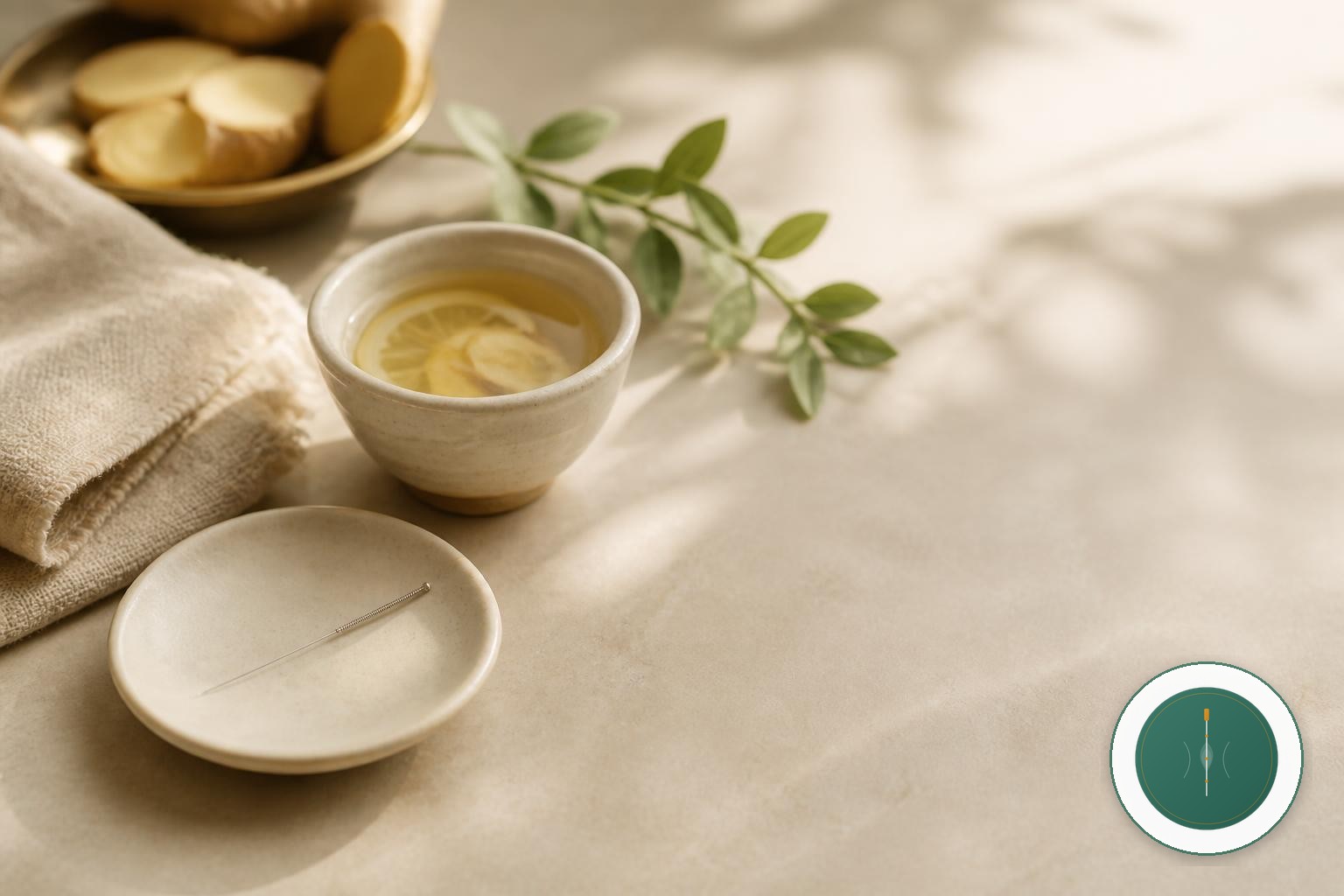
    Single fine acupuncture needle on a pale ceramic dish beside a small cup of ginger-lemon tea and folded linen in warm morning light
    Acupuncture for GallbladderCholecystitisPost-Surgical RecoveryDigestive HealthTCM Patterns

    Acupuncture for Gallbladder Disorders: Evidence, TCM Patterns, and Safety

    Medically Reviewed by Derek Doran, BHSc (Acupuncture) · AHPRA Registered · AACMA Member · Updated July 24, 2026

    July 24, 202611 min readBy Derek Doran

    Gallbladder disease is one of those areas where the honest, useful role of acupuncture has been quietly clarified by a run of good trials in the last few years. This is a practitioner-grade guide — what the current evidence actually supports, how the classical TCM patterns behind biliary disease line up with the modern clinical picture, and the safety rules that stop us stepping into territory that belongs to surgery and emergency medicine.

    If you want the shorter clinical-decision-support version for a specific patient, run the case through the Medi-Chi Pattern Differentiation engine or check the Conditions library. This piece is the long-form.

    The Western picture first

    Symptomatic gallstones (cholelithiasis), acute cholecystitis, biliary colic, and post-cholecystectomy symptoms sit on a spectrum. The 2022 updated international guideline on symptomatic cholelithiasis and acute cholecystitis still puts early laparoscopic cholecystectomy first-line for most patients presenting with symptomatic disease, with antibiotics reserved for complicated cholecystitis and non-surgical candidates [6]. That's the frame acupuncture works inside — not around.

    What has changed is the evidence for acupuncture as an adjunct to that surgical pathway. A 2025 systematic review of acupuncture-assisted anaesthesia in laparoscopic cholecystectomy [1], a 2023 RCT showing meaningful reductions in postoperative pain and opioid consumption after gallbladder surgery [2], a 2022 RCT on gastrointestinal function recovery after laparoscopic cholecystectomy [5], a 2023 TEAS trial improving urinary and bowel recovery [4], and a 2025 electroacupuncture RCT on post-abdominal-surgery gut motility [3] all point the same direction: acupuncture, properly integrated, shortens the awkward first few days after gallbladder surgery. That's a defensible, testable claim — not "we treat gallstones with needles".

    The classical picture

    In the Sù Wèn and Líng Shū the Gallbladder is the "curious organ" — a Fǔ that behaves like a Zàng, storing a clear (rather than turbid) essence. It pairs with the Liver, governs decision-making, and is the confluence of the eleven Zàng-Fǔ (Líng Shū Ch. 44). When the Liver stagnates, the Gallbladder can't drain freely; when Damp-Heat accumulates in the middle jiao and steams upward, the bile becomes turbid and the classical clinical picture — bitter taste, sticky mouth, right-sided rib fullness, nausea, yellow greasy tongue coating — appears in the record almost unchanged from the Shāng Hán Lùn through Zhāng Jǐng-yuè and into the modern textbooks.

    The commonest patterns you'll actually see

    Liver–Gallbladder Damp-Heat (Gān Dǎn Shī Rè). This is the flagship pattern behind cholecystitis and symptomatic cholelithiasis. Right-upper-quadrant fullness or pain, nausea (sometimes with vomiting of bitter fluid), bitter mouth on waking, sticky-greasy mouth, low-grade fever in acute flares, dark scanty urine, sometimes jaundice, thick yellow greasy tongue coating, slippery-rapid or wiry-rapid pulse. Classical formula pairing: Dà Chái Hú Tāng or Yīn Chén Hāo Tāng, depending on how much heat vs damp dominates. Acupuncture: GB-34, GB-24, LR-14, LR-3, ST-36, SP-9, with GB-24 through GB-25 sometimes needled obliquely.

    Liver Qì stagnation invading the Stomach (Gān Qì Fàn Wèi). The modern outpatient pattern — stress-driven right-sided rib pain, bloating, belching, nausea that comes and goes with mood, worse premenstrually, wiry pulse, normal or slightly dusky tongue. Often present between attacks in known gallstone patients and after cholecystectomy. Treatment: soothe the Liver, harmonise the Stomach. Points: LR-3, LR-14, GB-34, PC-6, ST-36, CV-12.

    Blood stasis (Xuè Yū) overlay. Longstanding disease, fixed stabbing pain, purple tongue with stasis spots, choppy pulse. Add SP-10, BL-17, LR-3 with reducing technique.

    Spleen Qì deficiency with residual Damp — the post-cholecystectomy picture. Fatigue, loose stools, poor tolerance of fatty food, mild bloating after meals, pale tongue with a thin greasy coat. Very common six weeks to twelve months after cholecystectomy, when patients have often been told "the surgery went well, you should be fine" but their gut clearly hasn't caught up. Treatment: tonify Spleen, transform Damp, gently regulate the Liver. Points: ST-36, SP-3, SP-6, SP-9, LR-13, CV-12, moxa on ST-36 and CV-12 once wound healing is complete.

    Most real patients are a blend — Damp-Heat with a Liver-Qì-stagnation overlay in the acute setting, Spleen-deficiency with residual Liver-Qì stagnation post-operatively.

    Point protocols in real clinic use

    The anchor points

    • Yáng Líng Quán (GB-34) — he-sea point of the Gallbladder, influential point of the sinews. The single most-used point in gallbladder work. Regulates the Gallbladder, drains Damp-Heat, moves Qì.
    • Dǎn Náng Xué (extra point) — roughly 1–2 cùn below GB-34, on the tender spot. The empirical point for gallbladder disease in modern Chinese texts. Nearly always tender when it's relevant. Bilateral.
    • Qī Mén (LR-14) — front-mu of the Liver. Frees Liver-Gallbladder stagnation locally.
    • Rì Yuè (GB-24) — front-mu of the Gallbladder. Local point for right-upper-quadrant symptoms.
    • Tài Chōng (LR-3) — Liver yuán-source. Soothes the Liver, frees stagnation.
    • Zú Sān Lǐ (ST-36) — supports the Stomach and Spleen, restores gut motility, central to post-operative work.
    • Nèi Guān (PC-6) — nausea, vomiting, chest fullness, anxiety around surgery. The most-cited antiemetic point in the modern trial literature.

    Around laparoscopic cholecystectomy

    The pragmatic three-phase framework most experienced practitioners use:

    Free Clinical Tool

    Turn This Knowledge Into a Treatment Plan

    Enter any Western diagnosis and get a complete TCM treatment protocol — acupuncture points, herbal formulas, moxibustion, cupping, and gua sha recommendations.

    1. Pre-operative (0–7 days before surgery). One session focused on Liver Qì regulation and pre-surgical anxiety. Points: LR-3, PC-6, Yìn Táng, HT-7, GB-34. Add ear Shen Men and Sympathetic. Evidence supports acupuncture-assisted anaesthesia in this population, with reductions in anaesthetic requirement and postoperative pain when combined pre- and intra-operatively [1].

    2. Early post-operative (day 1–3). As soon as the patient is stable. Focus on gut motility, pain, and antiemesis. Points: GB-34, ST-36, PC-6, LR-3, plus ear Shen Men and Sympathetic. Avoid deep needling near port sites; use short retention (15–20 minutes) initially. Multiple RCTs now show faster return of bowel function, shorter time to first flatus and first bowel movement, and reduced opioid consumption in this window [2][3][4][5].

    3. Recovery phase (weeks 1–4). Weekly sessions addressing post-cholecystectomy fatty-food intolerance, residual right-sided rib discomfort, and the Spleen-deficiency picture that emerges once the acute recovery is over. Points: ST-36, SP-6, SP-9, LR-13, CV-12, GB-34, LR-3. Moxa on ST-36 and CV-12 once wounds are fully healed (typically from week 4).

    Between attacks in known gallstone patients (non-surgical candidates or watchful waiting)

    Weekly to fortnightly treatments focused on the underlying pattern — usually Liver–Gallbladder Damp-Heat or Liver Qì stagnation. Combine with dietary advice (limit fried and highly saturated fats, alcohol, and large late meals), weight management where relevant, and clear safety-netting: any severe or worsening right-upper-quadrant pain with fever, jaundice, or rigors goes straight to the emergency department.

    Safety, red flags, and scope of practice

    This is the non-negotiable section. Get this wrong and someone gets hurt.

    Refer immediately, don't treat, when you see:

    • Severe or persistent right-upper-quadrant pain (especially with fever, rigors, or tachycardia).
    • Jaundice (yellow sclerae or skin), dark urine, pale stools — think choledocholithiasis or ascending cholangitis.
    • Positive Murphy's sign in a systemically unwell patient.
    • Hypotension, confusion, or any sepsis features (Charcot's triad or Reynolds' pentad).
    • Suspicion of gallbladder perforation, empyema, or gangrene — right-sided peritonism, guarding, rebound.

    Standard needling precautions:

    • Avoid deep needling over an acutely inflamed abdomen.
    • Anticoagulants and severe coagulopathy — shallower depth, single-use fine needles, monitor for bruising.
    • Pregnancy — the usual contraindicated points (LI-4, SP-6, BL-60, BL-67, GB-21) still apply; if a pregnant patient presents with gallbladder symptoms, refer for obstetric-surgical assessment before any adjunctive treatment.
    • Post-operative wounds — no needling within 5 cm of port sites until fully healed (usually 2–3 weeks); no cupping over the abdomen for at least 4 weeks.

    Don't oversell. Acupuncture doesn't dissolve gallstones. It doesn't cure cholecystitis. Patients who are told otherwise, and who delay surgical review because of it, are the reason this section exists. The evidence-supported claim is narrower and stronger: acupuncture is a useful, low-risk adjunct around gallbladder surgery, and a reasonable option for functional biliary and post-cholecystectomy symptoms once serious pathology has been excluded [1][2][3][4][5][7].

    Practical treatment planning

    A defensible plan for a patient with symptomatic gallstones scheduled for laparoscopic cholecystectomy:

    • Consultation. Full history, review of imaging (ultrasound, MRCP if done), LFTs, any evidence of choledocholithiasis or cholangitis, medications (particularly anticoagulants). TCM pattern differentiation. Confirm surgical date and treating team.
    • Pre-operative session. One session 2–7 days pre-op. LR-3, PC-6, GB-34, Yìn Táng, HT-7, ear Shen Men.
    • Early post-operative sessions. Two sessions in the first week from day 1–2 once stable, focused on gut motility, pain, and nausea. GB-34, ST-36, PC-6, LR-3.
    • Recovery phase. Weekly for 3–4 weeks. Shift toward Spleen tonification and Liver regulation as the acute phase resolves.
    • Coordinate with the surgical team. Share your treatment plan. Ask them what they'd want you to watch for. Document clearly.

    Where Medi-Chi fits

    The Medi-Chi Pattern Differentiation engine will take a full symptom, tongue, and pulse picture and rank the likely TCM patterns for a biliary presentation — with classical citations. The Symptom Questionnaire, Pulse Diagnosis, and Tongue Diagnosis modules feed the same engine, and the Research Database will pull the current evidence base on any specific presentation on demand.

    The honest one-liner

    Acupuncture doesn't treat gallstones. It does have a legitimate, evidence-supported role as an adjunct around gallbladder surgery — faster gut recovery, less pain, less opioid — and a reasonable place in post-cholecystectomy and functional biliary presentations once serious pathology has been ruled out. The practitioners who get the best results are the ones who know exactly where the surgical line sits, refer without hesitation when it matters, and treat the pattern rather than the label the rest of the time.

    Frequently Asked Questions

    Can acupuncture treat gallstones or cholecystitis directly?

    No — acupuncture doesn't dissolve gallstones and it isn't a stand-alone treatment for acute cholecystitis. The 2022 international guideline on symptomatic cholelithiasis and acute cholecystitis still puts early laparoscopic cholecystectomy first-line for most patients. Where acupuncture has a defensible role, backed by recent RCTs and systematic reviews, is as an adjunct around surgery: reducing postoperative pain and opioid use, speeding return of gut motility, and supporting recovery from anaesthesia. Between attacks it can help with functional symptoms (bloating, right-upper-quadrant heaviness, stress-driven flares) once imaging has ruled out anything urgent.

    When is acupuncture around gallbladder disease unsafe, or the wrong tool?

    Refer, don't needle, when you see red flags — severe or worsening right-upper-quadrant pain with fever, rigors, jaundice, dark urine and pale stools, tachycardia, hypotension, a positive Murphy's sign, sepsis features, or a suspicion of ascending cholangitis or gallbladder perforation. These are emergency-department presentations. Acupuncture is also inappropriate as a substitute for surgery in symptomatic cholelithiasis with recurrent biliary colic. Standard needling precautions apply: avoid deep needling over an acutely inflamed right upper quadrant, and take care in patients on anticoagulants or with severe coagulopathy.

    What TCM patterns are most relevant in gallbladder disease?

    The two commonest are Liver–Gallbladder Damp-Heat (Gān Dǎn Shī Rè) — bitter taste, sticky mouth, right-upper-quadrant fullness, nausea, greasy yellow tongue coating, slippery-rapid pulse — and Liver Qì stagnation invading the Stomach (Gān Qì Fàn Wèi) — stress-driven pain, bloating, belching, wiry pulse. Blood stasis (Xuè Yū) overlays in longstanding disease with fixed stabbing pain and a purple tongue. Spleen Qì deficiency is a background layer post-cholecystectomy, when patients often complain of fatty-food intolerance, loose stools and fatigue.

    What are the go-to points for adjunctive care?

    Yáng Líng Quán (GB-34) — the influential point of sinews and the classical Gallbladder he-sea point — is the anchor, paired with Dǎn Náng Xué (extra point, roughly 1–2 cùn below GB-34) which is the empirical point for gallbladder disease. Qī Mén (LR-14, front-mu of Liver) and Rì Yuè (GB-24, front-mu of Gallbladder) address local Liver–Gallbladder stagnation. Add Zú Sān Lǐ (ST-36) and Nèi Guān (PC-6) for nausea, gut motility and post-anaesthetic recovery. Post-operatively, GB-34 + ST-36 + PC-6 is the workhorse combination for opioid-sparing analgesia and faster return of bowel function.

    How does this fit around laparoscopic cholecystectomy?

    The pragmatic approach is: one pre-operative session in the days before surgery focused on Liver Qì regulation and anxiety (LR-3, PC-6, Yìn Táng, HT-7); early post-operative sessions from day one or two, once the patient is stable, focused on gut motility and pain (GB-34, ST-36, PC-6, ear Shen Men, Sympathetic); and weekly follow-up for two to four weeks to address post-cholecystectomy fatty-food intolerance and any residual pain. Coordinate with the surgical team, avoid deep needling near port sites until wounds are healed, and hold off on cupping over the abdomen for at least four weeks.

    All Citations Verified7/7

    Every PubMed citation in this article has been manually verified against its source.

    💡 💡 Tip: Press and hold on citation links to open them in your browser.

    Derek Doran, BHSc (Acupuncture)

    AHPRA Registered (CMR0002211465) · AACMA Member

    Derek is the founder of MediChi and a registered acupuncturist with clinical expertise in integrating Western diagnoses with Traditional Chinese Medicine treatment protocols.

    Clinically reviewed: July 24, 2026
    Found this useful? Share it

    Ready to Apply This in Clinic?

    Medi-Chi translates any Western diagnosis into a complete TCM treatment plan in seconds. Available in 10 languages for clinical practice worldwide.

    ✓ 10 Treatment Styles✓ PubMed Citations✓ 185+ Herbs & 65+ Formulas✓ No Credit Card Required

    Condition pages covering the topics in this article — pattern differentiation, point selection and safety notes.

    Related Articles