    Annual subscribers now receive The Modern Nèi Jīng FREESubscribe AnnuallyClinical Education ToolThis platform provides educational resources for TCM practitioners and students. It does not issue medical certificates, prescriptions, or clinical diagnoses.
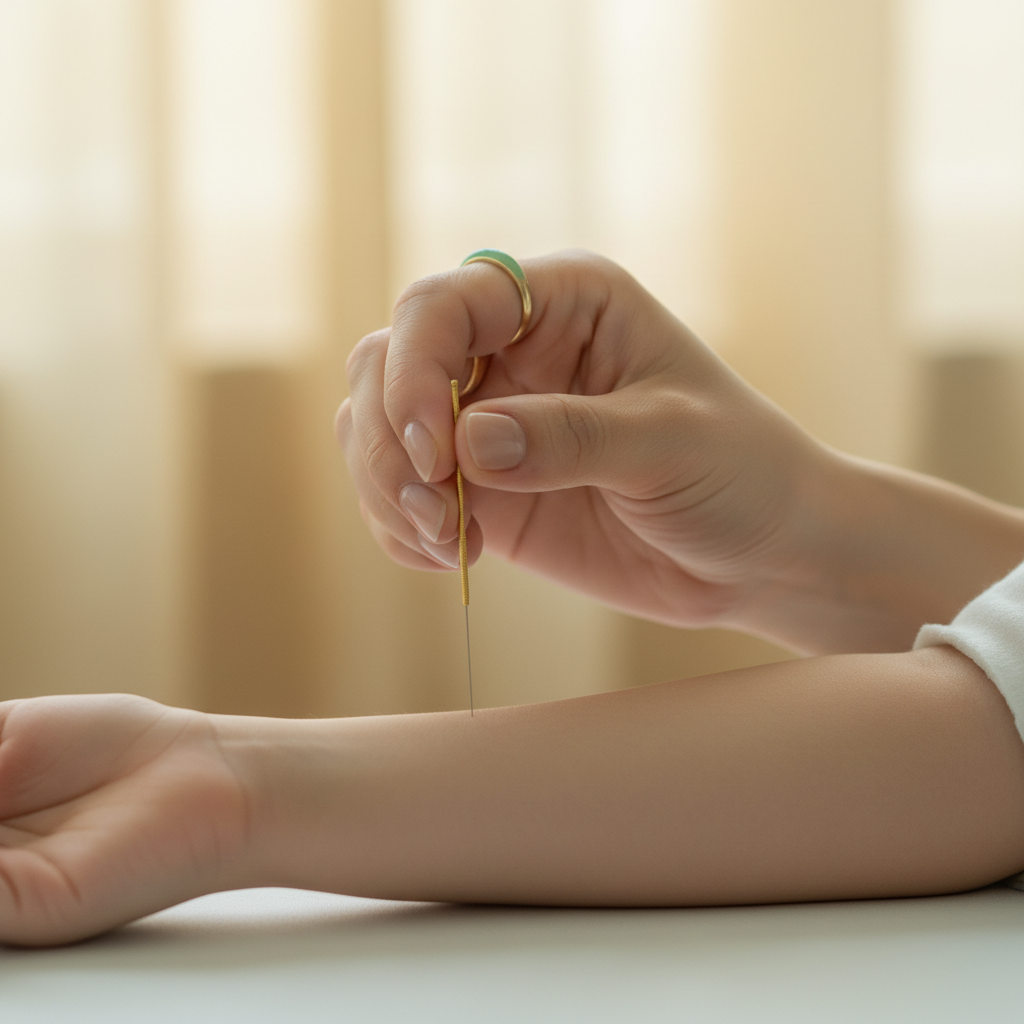
    A single, thin acupuncture needle held gently near a child's hand, with soft jade and gold tones.Medi-Chi logo
    PediatricsShonishinClinical SkillsTCM TheoryAcupuncture SafetyPractice Management

    Pediatric Acupuncture: Shōnishin and Gentle Techniques

    Medically Reviewed by Derek Doran, BHSc (Acupuncture) · AHPRA Registered · AACMA Member · Updated August 16, 2026

    August 16, 20267 min readBy Derek Doran

    Scope Note: The following information is intended for educational purposes for registered healthcare practitioners. It is not medical advice. Practitioners should exercise clinical judgement and comply with local regulations regarding pediatric care.

    Small Needles, Big Impact

    Working with kids in the clinic can be one of the most rewarding—and occasionally chaotic—parts of a practice. In Traditional Chinese Medicine (TCM), we view children as 'Pure Yang' (纯阳, Chún Yáng), meaning they are full of vitality, grow rapidly, and recover quickly. However, their Zang-Fu organs are still 'tender and fragile' (脏腑娇嫩, Zàng Fǔ Jiāo Nèn). This makes them prone to sudden shifts in health, but it also means they respond remarkably fast to very light stimulation.

    Pediatric acupuncture isn't just 'adult acupuncture with fewer needles.' It requires a shift in mindset, specific techniques like Shōnishin, and a deep understanding of the unique physiological patterns found in childhood.

    The Shōnishin Approach (小児鍼)

    Shōnishin, which literally translates to 'little children’s needle,' originated in Japan in the 17th century. The core philosophy is non-invasive stimulation. Instead of penetrating the skin, we use specialized tools to tap, scrape, and rub along the meridians.

    For the modern Australian practitioner, Shōnishin is often the 'hook' that builds trust with a nervous child (and their parents). The tools—Teishin (blunt needle), Enshin (round-headed needle), and Zanshin (arrow-headed needle)—are tactile and non-threatening.

    Clinical Application of Shōnishin

    The treatment usually starts with a general 'constitutional' brushing. This regulates the Wei Qi (Defensive Qi) and calms the nervous system.

    1. Back: Use a Yagure or Enshin to lightly scrape down the Bladder line from the neck to the sacrum.

    2. Limbs: Brush the Yang meridians downwards (sedating) or the Yin meridians upwards (tonifying) depending on the child's presentation.

    3. Chest/Abdomen: Gentle circular movements around Zhōng Wǎn CV-12 (中脘) to support digestion—the root of pediatric health.

    Evidence suggests that this rhythmic tactile stimulation may help regulate the autonomic nervous system in infants, potentially improving sleep and reducing irritability [4].

    Essential Pediatric Patterns and Points

    In the clinic, we mostly see issues involving the Lung and Spleen. Children have an inherent 'Spleen Deficiency' (脾常不足, Pí Cháng Bù Zú) because their digestive systems are still maturing.

    1. Digestive Weakness (Food Stagnation)

    Kids are prone to Jī Zhì (积滞) or food accumulation. This often presents as bloating, sour breath, and restless sleep.

    * Point Selection:

    * Zú Sān Lǐ ST-36 (足三里): The gold standard for tonifying the Spleen. In kids, a simple 10-second press or light Shōnishin tapping is often enough.

    * Sì Fèng (四缝): An extra point located at the midpoint of the proximal interphalangeal joints of the four fingers. Traditionally used for 'malnutrition' or chronic digestive upset.

    Bǎn Mén (板门): Located on the thenar eminence. We use pediatric Tui Na* here, rubbing from the base of the thumb toward the wrist to descend Qi and resolve stagnation.

    2. Recurrent Respiratory Issues

    When the Wei Qi is weak, kids catch every bug at daycare. The goal is to strengthen the 'Metal' (Lung) and 'Earth' (Spleen) elements.

    * Point Selection:

    Free Clinical Tool

    Turn This Knowledge Into a Treatment Plan

    Enter any Western diagnosis and get a complete TCM treatment protocol — acupuncture points, herbal formulas, moxibustion, cupping, and gua sha recommendations.

    * Fèi Shū BL-13 (肺俞): Gentle tapping or the use of a 'press-tack' (if the child is older and comfortable) helps consolidate Lung Qi.

    * Dà Zhuī GV-14 (大椎): Excellent for clearing heat if the child has a fever, or for warming the body if they are prone to 'Wind-Cold.'

    * Hé Gǔ LI-4 (合谷): Use with caution and very light touch to release the exterior.

    The 'To Needle or Not to Needle' Debate

    Many practitioners wonder if they should use filiform needles at all. The answer depends on the 'Clinical Window' of the child:

    * Infants (0–2 years): Almost exclusively Shōnishin and Tui Na. Their Qi is so close to the surface that penetration is rarely necessary.

    * Toddlers/Preschoolers (2–5 years): 'In-and-out' technique (rapid insertion and immediate removal) if they are brave, but Shōnishin remains the primary tool.

    * School-age (6+ years): Most can handle short retention (5–10 minutes) with thin needles (0.12mm to 0.16mm).

    Safety is paramount. Systematic reviews of pediatric acupuncture have found it to be very safe when performed by trained professionals, with adverse events being rare and usually minor (like bruising) [1].

    The Medi-Chi Advantage in Pediatric Care

    Managing a pediatric case requires careful tracking of developmental milestones and symptom flares. Within Medi-Chi, you can:

    * Document sensitivity: Note which children prefer Shōnishin versus filiform needles.

    Custom Formulas: Use the clinical decision support to adjust herbal dosages based on the child's weight or age (using formulas like Xiǎo Ér Chī Dà Wǎn* for digestion).

    * Patient Education: Share advice on 'Spleen-friendly' diets—like avoiding excessive 'Cold and Raw' foods—directly through the platform.

    A Note on Evidence

    While TCM has used these methods for centuries, Western clinical research is catching up. High-quality meta-analyses have shown acupuncture's potential in treating specific pediatric conditions like nocturnal enuresis (bed-wetting) [2]. However, researchers often note that more large-scale RCTs are needed to fully validate the efficacy of Shōnishin for behavioral issues like ADHD [3]. We should always frame our treatments as supportive care within a broader multidisciplinary framework.

    Practical Tips for the Clinic

    * Don't call them 'needles': Use words like 'taps,' 'pins,' or 'sleepy sticks.'

    * The 'Chicken' Method: Always demonstrate the sensation on the parent (or yourself) first.

    * Speed is your friend: If you are using filiform needles, have everything ready. The child’s patience is a finite resource.

    * Environment: A jade and gold minimalist clinic looks great to adults, but a few quiet toys can make a world of difference for a three-year-old.

    Pediatric acupuncture is about more than just treating a cough or a tummy ache; it’s about supporting a child's constitutional growth. By using gentle techniques like Shōnishin, we can provide a positive introduction to healthcare that lasts a lifetime.

    Frequently Asked Questions

    What is Shōnishin and how does it differ from standard acupuncture?

    Shōnishin is a specialized form of pediatric acupuncture that uses non-invasive tools to tap, scrape, or rub the skin. It does not involve piercing the skin, making it ideal for infants and needle-sensitive children.

    Is acupuncture safe for babies and small children?

    Safety is a priority. Systematic reviews indicate that when performed by registered practitioners, pediatric acupuncture is very safe with a low incidence of minor side effects like bruising or brief crying.

    How long do the needles stay in for a child?

    For children under 5, we rarely retain needles. We use 'in-and-out' techniques where the needle is inserted and immediately removed, or we stick to non-invasive Shōnishin tools. For older children, retention might last 5 to 15 minutes.

    All Citations Verified4/4

    Every PubMed citation in this article has been manually verified against its source.

    💡 💡 Tip: Press and hold on citation links to open them in your browser.

    Derek Doran, BHSc (Acupuncture)

    AHPRA Registered (CMR0002211465) · AACMA Member

    Derek is the founder of MediChi and a registered acupuncturist with clinical expertise in integrating Western diagnoses with Traditional Chinese Medicine treatment protocols.

    Clinically reviewed: August 16, 2026
    Found this useful? Share it

    Ready to Apply This in Clinic?

    Medi-Chi translates any Western diagnosis into a complete TCM treatment plan in seconds. Available in 10 languages for clinical practice worldwide.

    ✓ 10 Treatment Styles✓ PubMed Citations✓ 185+ Herbs & 65+ Formulas✓ No Credit Card Required

    Related Articles