The Modern Bardo
The text English readers know as the Tibetan Book of the Dead is really a book about gaps — the spaces between one situation ending and the next one settling. Six of them, and only three have anything to do with dying. This edition renders the teaching in plain modern English and asks the obvious question: what do you do with it on a Tuesday, and what do you do with it at a bedside.
The covers
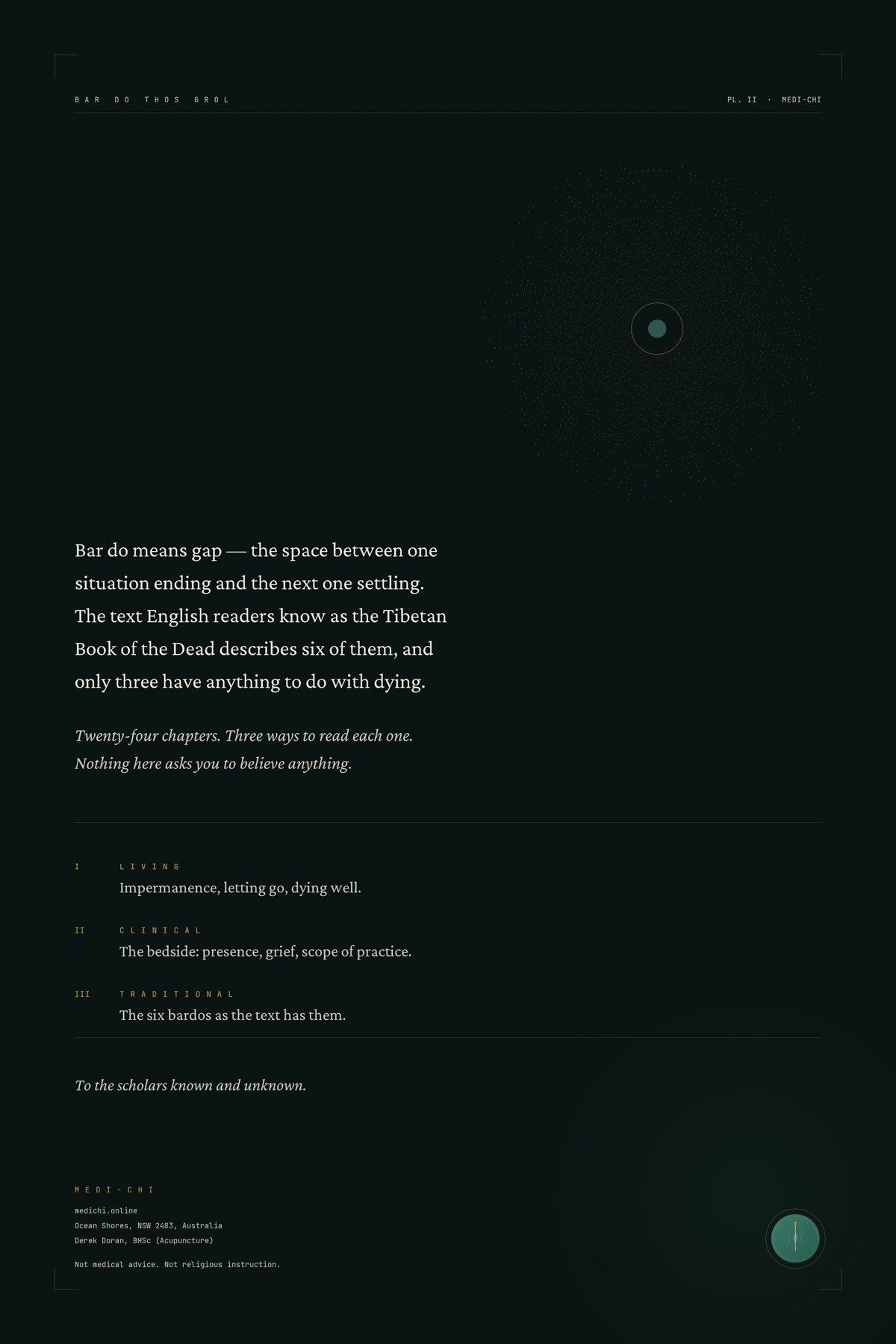
To the scholars known and unknown
To Karma Lingpa, who revealed the cycle in the mountains of southern Tibet in the fourteenth century, and to the terma tradition that carried it.
To the monastic copyists — generation after generation of them — who kept a manuscript lineage alive by hand, in cold rooms, for six hundred years.
To Lāma Kazi Dawa-Samdup, who first turned it into English, and to W. Y. Evans-Wentz, who published it in 1927 and put it in front of readers who had never heard of a bardo.
To the Tibetan and Western scholars, translators and teachers of the century since, whose work made a modern rendering possible and whose corrections made it honest.
And to the far greater number whose names were never written down — the readers at bedsides, the reciters, the copyists whom no colophon records — whose hands kept the text alive so that it could reach this page.
Known and unknown. This book is theirs before it is anyone's.
Three lenses, one book
Every chapter carries three commentary tracks. Pick one at the top of a chapter and the whole thing reframes. Reading one lens end to end is a complete book.
Living
Impermanence, letting go, dying well. No belief required.
Clinical
At the bedside: presence, communication, grief, scope of practice.
Traditional
The six bardos as the text has them, with modern commentary alongside.
The six bardos
24 of 24 chapters published. Part I is live now.
- 1
This lifeསྐྱེ་གནས་བར་དོ།ch 1–5
The bardo we are in right now — birth to death. Impermanence, attachment, and the habits that will still be running when everything else stops.
- 2
Dream and meditationch 6–8
The two rehearsal bardos. Sleep and stillness as the places where letting go can be practised while the stakes are low.
- 3
Dyingའཆི་ཁ་བར་དོ།ch 9–14
The dissolutions, the moment itself, and what the text asks of the people in the room.
- 4
Realityཆོས་ཉིད་བར་དོ།ch 15–19
The visions of the chönyid bardo, read the way the tradition itself reads them — as mind, not as visitors.
- 5
Becomingསྲིད་པ་བར་དོ།ch 20–22
Rebirth, continuity, and the long work of grief for those left behind.
- 6
Using it todaych 23–24
Daily practice, and bedside practice. What to actually do.
Medi-Chi · medichi.online
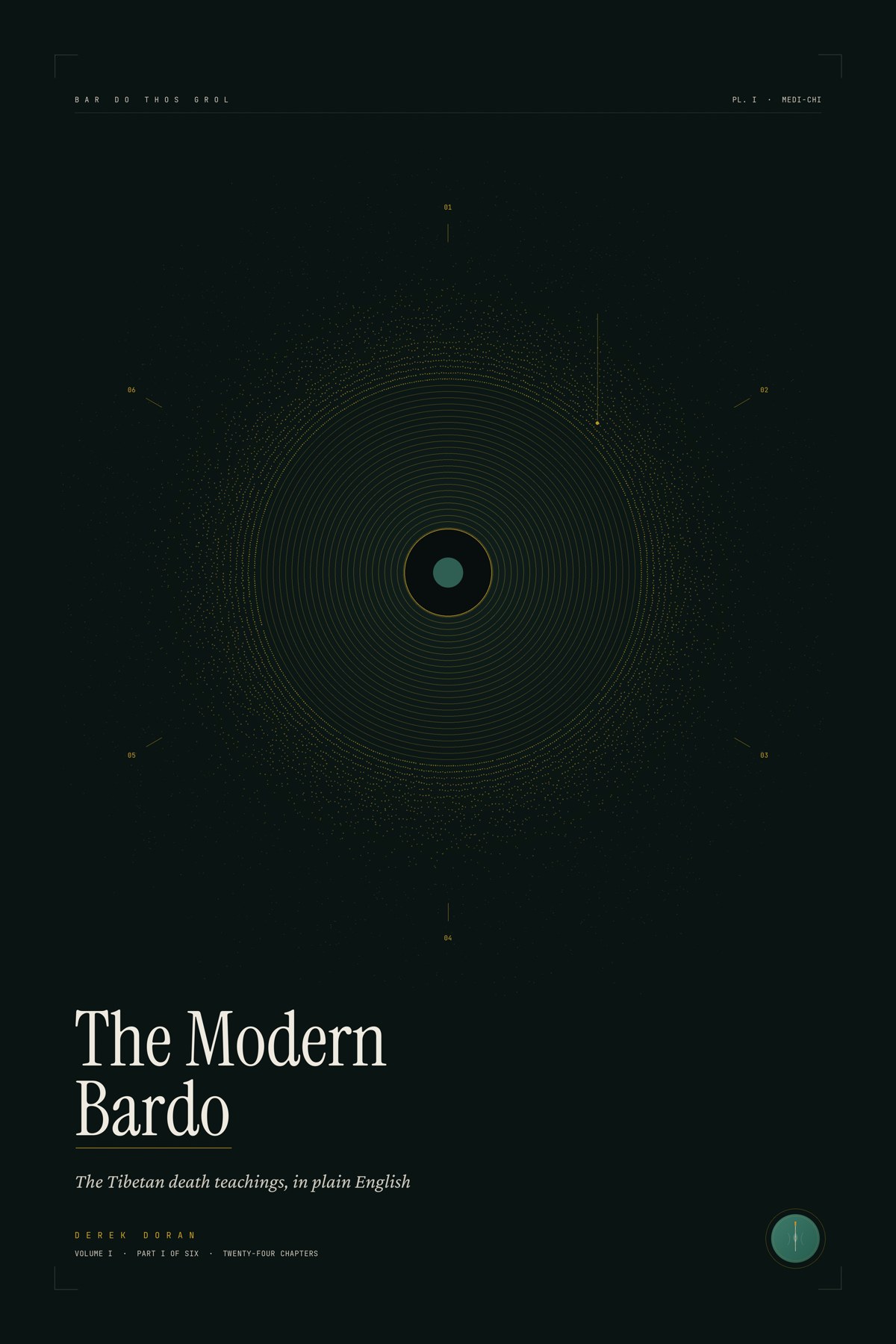
The Modern Bardo — front cover and dedication
© 2026 Medi-Chi. The Modern Bardo. All rights reserved.