    Annual subscribers now receive The Modern Nèi Jīng FREESubscribe AnnuallyClinical Education ToolThis platform provides educational resources for TCM practitioners and students. It does not issue medical certificates, prescriptions, or clinical diagnoses.
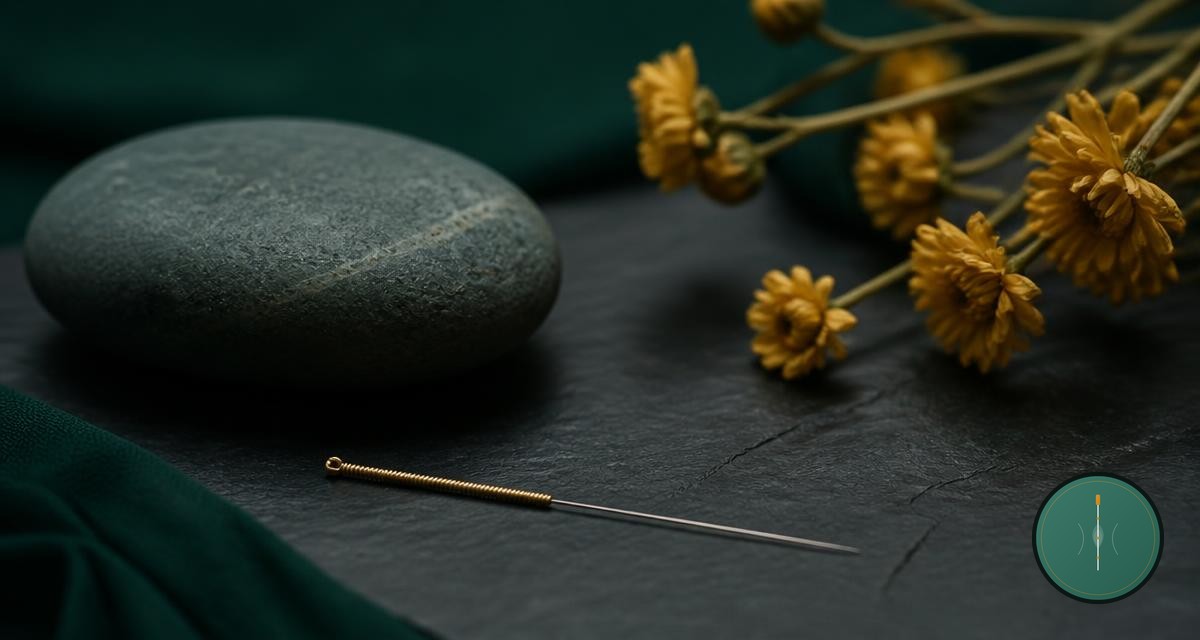
    A single gold-handled acupuncture needle on dark slate beside a smooth grey stone and dried chrysanthemum flowers, lit in jade and gold
    MigraineHeadacheEvidence-Based PracticePattern DifferentiationClinical PracticeLiver Yang

    Acupuncture for Migraine Prophylaxis: What the Evidence Supports, and How to Pattern It

    Medically Reviewed by Derek Doran, BHSc (Acupuncture) · AHPRA Registered · AACMA Member · Updated August 5, 2026

    August 5, 202611 min readBy Derek Doran

    Why migraine is worth getting right

    Migraine is one of the few conditions where a practitioner can point at the acupuncture evidence without hedging much. It is also one of the most common reasons people walk into a clinic after their GP has run out of options they can tolerate — propranolol flattens them, topiramate fogs them, amitriptyline leaves them groggy, and the newer CGRP drugs are either not funded for them or not yet tried.

    That puts prophylaxis, not abortive treatment, at the centre of the conversation. The question a patient is really asking is: can I have fewer of these?

    Scope note: this is a clinical reasoning article for practitioners, not a treatment protocol and not medical advice. New, changed, or "worst ever" headache needs medical assessment before anything else. See the red flags section.

    What the research actually found

    The Cochrane review (2016). Linde and colleagues reviewed 22 trials with nearly 5,000 participants and concluded that adding acupuncture to symptomatic treatment reduces migraine frequency, that acupuncture is at least as effective as prophylactic drug treatment, and that it is better tolerated. The comparison against sham showed a smaller but still present effect. Their summary phrasing is worth remembering verbatim in clinic: acupuncture can be "a valuable option" for patients willing to undertake it [1].

    The long-term trial (JAMA Internal Medicine, 2017). Zhao and colleagues randomised 249 patients with migraine without aura to true acupuncture, sham acupuncture, or a waiting list, treating over four weeks and following up out to 24 weeks. The true acupuncture group had a greater reduction in monthly migraine days that persisted well past the treatment course [2]. The persistence matters — it is the difference between a symptomatic effect and a prophylactic one.

    The BMJ trial (2020). Xu and colleagues compared 20 sessions of manual acupuncture against sham acupuncture and usual care in episodic migraine without aura, and found manual acupuncture superior to both for reducing migraine days [3]. Twenty sessions is a bigger dose than most patients expect, and that is a useful number to have when discussing a treatment plan.

    Tension-type headache, for contrast. The separate Cochrane review on tension-type headache prevention also found a benefit, with the caveat that the effect over sham is modest [4]. Worth knowing, because a lot of "migraine" presenting in clinic is a mixed picture.

    Being honest about the limits

    • Sham-controlled effects are consistently smaller than the effects against usual care or waiting list. Some of what patients experience is non-specific, and that is true of drug prophylaxis too.
    • Trials use fixed or semi-fixed point protocols. Real practice individualises, which is arguably better and definitely less tested.
    • Most trials studied episodic migraine without aura. Chronic migraine, medication-overuse headache, and migraine with aura are less well covered.
    • Nobody has shown acupuncture aborts an attack in progress as reliably as a triptan. Prophylaxis is the claim the evidence supports.

    Pattern differentiation

    Western "migraine" is a single label sitting across several quite different Chinese medical pictures. The patterns below are the ones that turn up most in practice.

    Liver Yáng rising (肝陽上亢)

    Throbbing pain, typically temporal or one-sided, worse with stress, anger, alcohol, or poor sleep. Irritability, red face, bitter taste, wiry pulse, red tongue edges. The classic pre-menstrual or high-stress migraine.

    Liver Fire flaring upward (肝火上炎)

    The same territory but hotter and more acute — severe pain, photophobia that is genuinely intolerable, constipation, red eyes, a rapid wiry pulse, yellow coat.

    Phlegm-Damp obstructing the clear Yáng (痰濕中阻)

    Heavy, muzzy, band-like head, nausea and vomiting prominent, worse in humidity or after rich food, foggy thinking, swollen tongue with a greasy coat, slippery pulse. This is the migraine that presents mostly as nausea.

    Blood stasis in the collaterals (瘀血阻絡)

    Fixed, stabbing, always the same spot, often post-traumatic or long-standing and treatment-resistant. Dark or purple tongue, possible sublingual vein distension, choppy pulse.

    Qì and Blood deficiency (氣血兩虛)

    Dull, draining headache that comes on with fatigue, overwork, after menstruation or a missed meal; better lying down; pale tongue, thin weak pulse. Often the post-attack state as much as the attack itself.

    Kidney deficiency (腎虛)

    Empty, hollow headache with dizziness, tinnitus, low back ache, worse in the evening. More common in perimenopausal and older patients.

    Most patients are a mix, and the mix moves across a menstrual cycle or a stressful month. Re-differentiate rather than locking in the pattern from visit one.

    Channel matters as much as pattern

    Where the pain sits should shape point selection:

    LocationChannelCommonly reasoned points
    Temporal / one-sidedShào YángGB-20, GB-8, GB-41, TB-5, Tài Yáng
    Frontal / supraorbitalYáng MíngST-8, LI-4, ST-44, Yìn Táng
    OccipitalTài Yáng (BL)BL-10, BL-60, SI-3, GB-20
    VertexJué YīnDU-20, LR-3, PC-6, Sì Shén Cōng

    A vertex headache treated as a Shào Yáng problem is a common early-career miss.

    Free Clinical Tool

    Turn This Knowledge Into a Treatment Plan

    Enter any Western diagnosis and get a complete TCM treatment protocol — acupuncture points, herbal formulas, moxibustion, cupping, and gua sha recommendations.

    Dosing and the treatment plan conversation

    The trials that worked used real courses of treatment, not three sessions and a shrug:

    1. Set the course up front. Weekly or twice-weekly for six to eight weeks is a defensible starting course, with the BMJ trial's 20 sessions as the upper end for stubborn cases.

    2. Measure something. Headache days per month, attack severity, and abortive medication use. A simple diary makes the review conversation objective instead of impressionistic.

    3. Review at six sessions. Meaningful prophylaxis usually shows as fewer or milder days, not the disappearance of migraine. If nothing has moved on the diary by then, re-differentiate or refer rather than repeating the same treatment.

    4. Never tell someone to stop their prophylactic or abortive medication. That decision belongs with the prescriber. Coordinate; do not counter-prescribe.

    5. Screen for medication-overuse headache. Regular use of acute medication on ten or more days a month is a different problem and needs the prescriber involved — acupuncture on top of an unaddressed overuse cycle disappoints everyone.

    Red flags — refer, do not needle

    Send for urgent medical assessment when you see:

    • Thunderclap onset — worst headache of their life, peaking within a minute.
    • New neurological signs: weakness, speech disturbance, new visual field loss, confusion, or aura that is unlike their usual aura.
    • Headache with fever, neck stiffness, or rash.
    • New headache over age 50, or new headache in pregnancy or postpartum.
    • Headache worse lying flat, on waking, or with cough and strain.
    • Headache after head trauma, or in someone immunosuppressed or with a cancer history.
    • Scalp tenderness and jaw claudication in an older patient — think giant cell arteritis, and treat it as urgent.

    None of these are "treat and see". Document the referral.

    Bringing it together in clinic

    A reasonable way to think through a new migraine patient:

    1. Rule out red flags, then establish the migraine diagnosis is actually settled with their GP or neurologist.

    2. Take the headache diary history — frequency, triggers, cycle relationship, medication use.

    3. Differentiate pattern and channel; they inform different halves of the prescription.

    4. Treat the pattern at root, the channel locally, and add a distal grounding point.

    5. Address the obvious driver honestly: sleep, alcohol, caffeine withdrawal cycles, screen posture, skipped meals. Half of migraine management happens outside the treatment room.

    6. Review against the diary at six sessions.

    Medi-Chi's pattern differentiation and point-reference tools are built for exactly this kind of cross-checking — pattern, channel, point actions, and classical sources side by side — with the clinical decision staying with you.

    The honest conclusion

    Migraine prophylaxis is the strongest ground acupuncture stands on outside musculoskeletal pain. The effect is real, it persists past the treatment course, and it is better tolerated than most drug prophylaxis. It is also not a cure, not an abortive, and not a reason to touch anybody's prescription. Say that clearly to patients and the treatment plan tends to land better anyway.

    References and sources

    All links checked on 5 August 2026.

    1. Linde K, Allais G, Brinkhaus B, et al. (2016). Acupuncture for the prevention of episodic migraine. Cochrane Database of Systematic Reviews, (6):CD001218. PubMed 27351677

    2. Zhao L, Chen J, Li Y, et al. (2017). The long-term effect of acupuncture for migraine prophylaxis: a randomized clinical trial. JAMA Internal Medicine, 177(4). PubMed 28241154

    3. Xu S, Yu L, Luo X, et al. (2020). Manual acupuncture versus sham acupuncture and usual care for prophylaxis of episodic migraine without aura: multicentre, randomised clinical trial. BMJ, 368:m697. PubMed 32213509

    4. Linde K, Allais G, Brinkhaus B, et al. (2016). Acupuncture for the prevention of tension-type headache. Cochrane Database of Systematic Reviews, (4):CD007587. PubMed 27092807

    5. National Institute for Health and Care Excellence. Headaches in over 12s: diagnosis and management (CG150). NICE CG150

    Frequently Asked Questions

    Does acupuncture actually prevent migraines?

    The Cochrane review of 22 trials found that acupuncture reduces migraine frequency, is at least as effective as prophylactic drug treatment, and is better tolerated. A JAMA Internal Medicine trial found the benefit persisted to 24 weeks after treatment, and a 2020 BMJ trial found manual acupuncture superior to both sham and usual care. Effects measured against sham needling are smaller than against usual care, so it is best described as an effective preventive option rather than a cure.

    How many acupuncture sessions are needed for migraine?

    The trials that showed benefit used real courses, not one or two visits. A defensible starting course is weekly or twice-weekly treatment for six to eight weeks, reviewed against a headache diary at around six sessions. The 2020 BMJ trial used 20 sessions, which is a reasonable upper end for stubborn cases.

    Which TCM patterns cause migraine?

    Most migraines differentiate into Liver Yang rising, Liver Fire flaring upward, Phlegm-Damp obstructing the clear Yang, Blood stasis in the collaterals, Qi and Blood deficiency, or Kidney deficiency. Pain location also matters: temporal pain points to Shao Yang, frontal to Yang Ming, occipital to Tai Yang, and vertex to Jue Yin. Patients are usually a mixture, and the mixture shifts across a cycle.

    When should a headache be referred instead of treated?

    Refer urgently for thunderclap onset, new neurological signs or unfamiliar aura, headache with fever or neck stiffness, new headache over age 50 or in pregnancy, headache worse lying flat or on waking, headache after head trauma, and scalp tenderness with jaw claudication in an older patient. Also involve the prescriber when acute medication is being used on ten or more days a month, which suggests medication-overuse headache.

    All Citations Verified5/5

    Every PubMed citation in this article has been manually verified against its source.

    💡 💡 Tip: Press and hold on citation links to open them in your browser.

    Derek Doran, BHSc (Acupuncture)

    AHPRA Registered (CMR0002211465) · AACMA Member

    Derek is the founder of MediChi and a registered acupuncturist with clinical expertise in integrating Western diagnoses with Traditional Chinese Medicine treatment protocols.

    Clinically reviewed: August 5, 2026

    Ready to Apply This in Clinic?

    Medi-Chi translates any Western diagnosis into a complete TCM treatment plan in seconds. Available in 10 languages for clinical practice worldwide.

    ✓ 10 Treatment Styles✓ PubMed Citations✓ 185+ Herbs & 65+ Formulas✓ No Credit Card Required

    Related Articles