The Modern Líng Shū
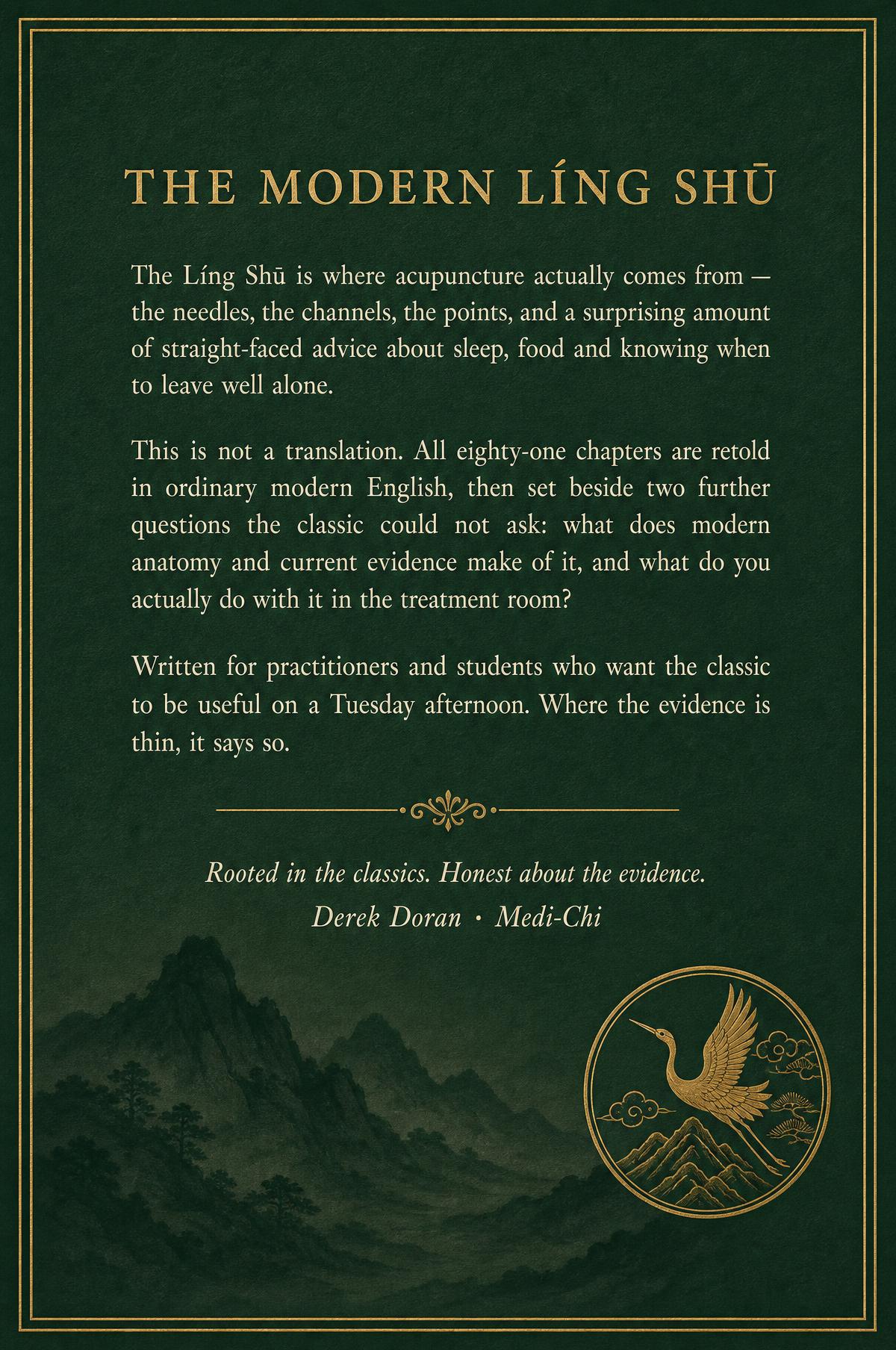
The second half of the Nèi Jīng is where acupuncture actually comes from — the needles, the channels, the points, and a surprising amount of straight-faced advice about sleep, food and knowing when to leave well alone. This edition gives you all 81 chapters in ordinary English, then asks the two questions the classic can't: what does modern anatomy make of it, and what do you do with it on a Tuesday afternoon.
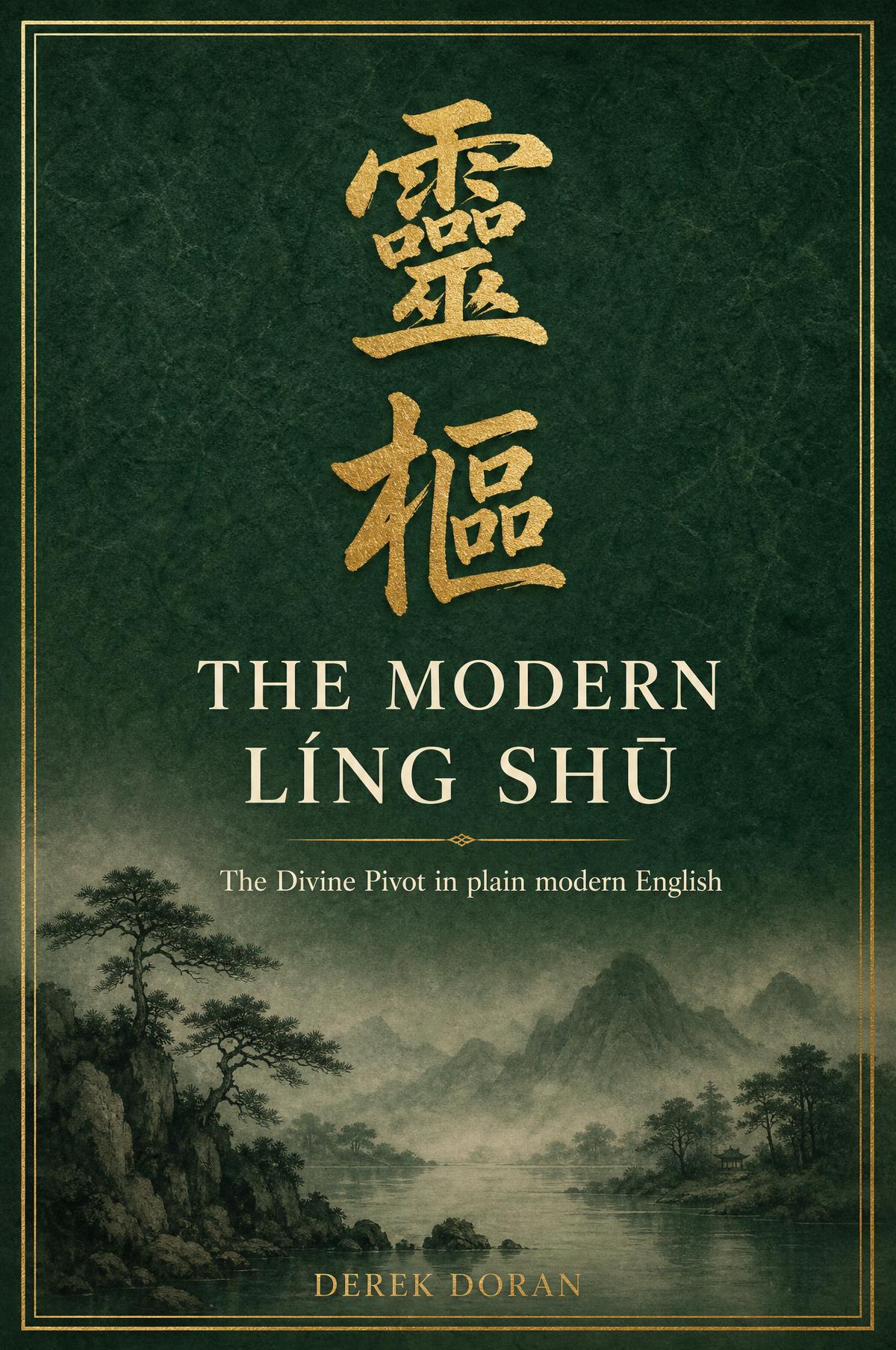
The covers
Four sections, every chapter
The same shape all the way through, so you always know where to look.
In plain language
What the chapter actually says, with the incense smoke cleared away.
What we now know
Anatomy, physiology and the current state of the acupuncture evidence — including where it is thin.
The Tao of it
The older idea underneath the clinical advice: pattern, timing, restraint.
In the room
Needling, handling and the lifestyle advice you can actually give.
Method and sources
This is an original modern work, not a translation. The root text — 靈樞, the second half of the Huángdì Nèi Jīng — is long out of copyright and freely paraphrased and cited here. Nothing is adapted from any in-copyright modern translation.
Chapter titles follow the received 81-chapter order as printed in the standard editions. Where the modern evidence is thin, mixed or negative, it says so; where a classical claim has not held up, that is stated plainly rather than quietly skipped.
Point locations follow the WHO Standard Acupuncture Point Locations in the Western Pacific Region (2008) — nothing here is drawn or estimated — and every research claim traces to an indexed paper. The full reference list gives the classical editions, the standards and every paper cited, each with its PubMed ID.
Educational content for practitioners and students. Nothing here is individual medical advice, and nothing in it replaces assessment by a registered health practitioner.
The nine parts
81 of 81 chapters published. The part divisions are editorial — the classic itself simply runs 1 to 81.
- 1
The needle itself九針ch 1–9
The nine needles, the transport points, the spirit that has to be present at both ends of the handle. Everything the rest of the book assumes you have already understood.
- 2
The map of the body經脈ch 10–18
Channels, divergences, sinews, bone measurements and the timing of circulation. The most anatomically concrete stretch of the whole classic.
- 3
Disease and where to meet it病ch 19–27
Seasonal qì, the five evils, fever, cold, madness, collapse and blockage — the classic's working case load.
- 4
Food, fluids and the body's economy腸胃ch 28–36
Gut measurements, what happens when eating stops, the seas of the body, swelling and the separation of the fluids.
- 5
Reading the surface外揣ch 37–45
Faces, complexions, blood vessels in the skin, dreams and the daily tide of symptoms — diagnosis by what is visible.
- 6
Constitution and lifespan天年ch 46–54
Why the same exposure makes one person ill and not another: organ shape, courage, pain tolerance and the arc of a life.
- 7
Flavour, guard qì and restraint五味ch 55–63
Diet as medicine, the defensive layer, the five prohibitions and the jade tablets — the chapters about knowing when not to needle.
- 8
Human types and the long illnesses陰陽二十五人ch 64–72
The twenty-five constitutional types, how chronic disease actually begins, sleep, speech and the visiting evils.
- 9
Skill, timing and the surgical end官能ch 73–81
What makes a competent practitioner, the movement of guard qì through the day, the eight winds, confusion, and the chapter on abscesses that ends the book.
Medi-Chi · medichi.online
The Modern Líng Shū — front and back covers
© 2026 Medi-Chi. The Modern Líng Shū. All rights reserved.