Chinese Herbal Medicine: A Beginner's Complete Guide
Medically Reviewed by Derek Doran, BHSc (Acupuncture) · AHPRA Registered · AACMA Member · Updated February 18, 2025
What Is Chinese Herbal Medicine?
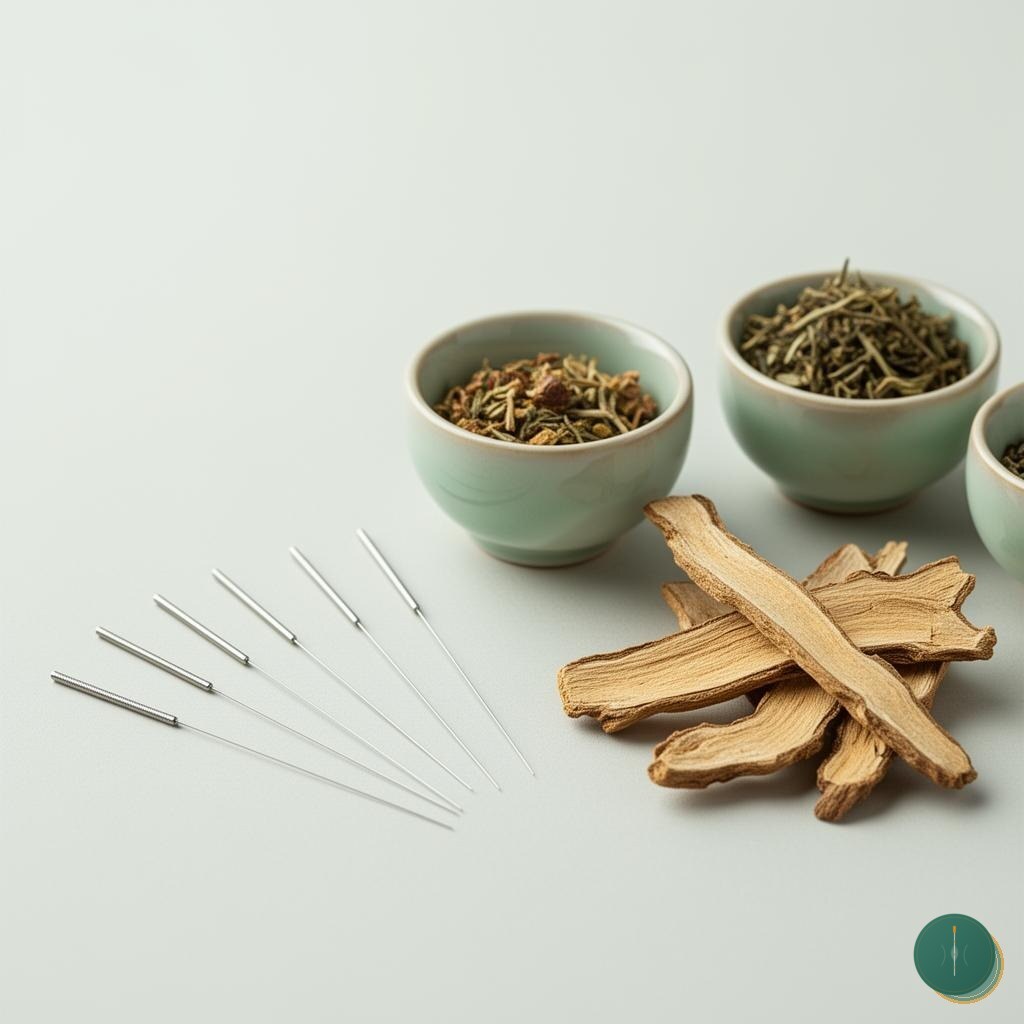
Chinese herbal medicine (中药, zhōngyào) is one of the oldest and most comprehensive systems of plant-based medicine in the world. With roots stretching back over 2,000 years to texts like the Shennong Ben Cao Jing (Divine Farmer's Materia Medica), it remains a cornerstone of Traditional Chinese Medicine alongside acupuncture, dietary therapy, and qigong.
Unlike Western herbalism, which often focuses on single herbs for specific symptoms, Chinese herbal medicine uses carefully crafted formulas — combinations of herbs that work synergistically to address the root pattern of illness.
Core Principles
The Four Natures (四气, Sì Qì)
Every herb is classified by its thermal nature:
- Hot (热) — warms the interior strongly (e.g., dried ginger)
- Warm (温) — gently warms (e.g., cinnamon bark)
- Cool (凉) — mildly clears heat (e.g., chrysanthemum)
- Cold (寒) — strongly clears heat and inflammation (e.g., coptis rhizome)
The Five Flavours (五味, Wǔ Wèi)
Each flavour has a therapeutic action:
- Sour — astringes and consolidates (prevents leakage of fluids)
- Bitter — drains and dries (clears heat and dampness)
- Sweet — tonifies and harmonises (builds Qi and Blood)
- Pungent — disperses and moves (promotes circulation)
- Salty — softens and purges (dissolves masses)
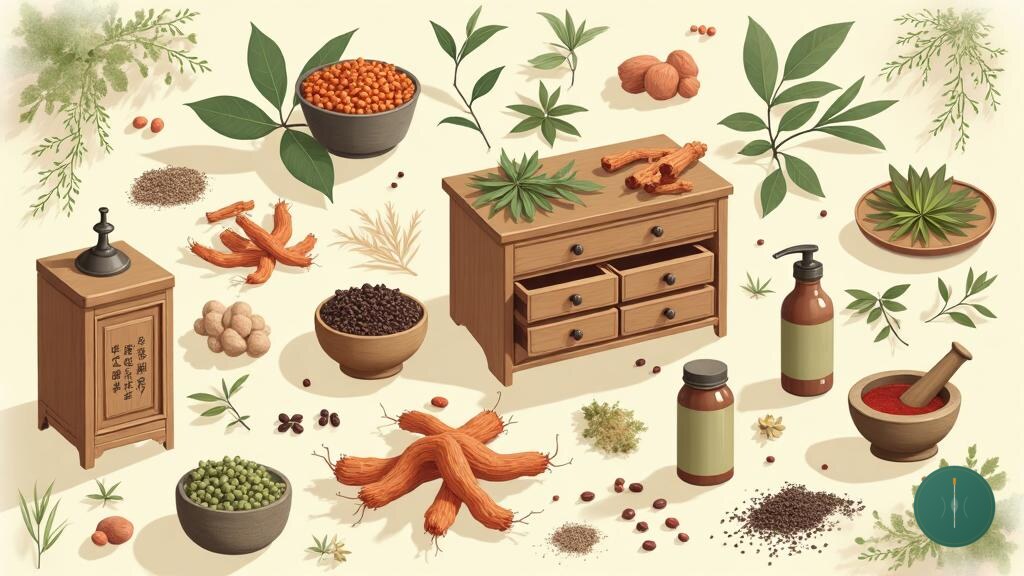
Essential Herbs Every Beginner Should Know
1. Ginseng (人参, Rén Shēn)
The "king of herbs" in TCM. Powerfully tonifies Qi, strengthens the Spleen and Lung, and generates fluids. Used for fatigue, weakness after illness, and poor appetite (Peng et al., 2012).
2. Astragalus (黄芪, Huáng Qí)
A premier immune-boosting herb that tonifies Wei Qi (defensive energy). Commonly used for frequent colds, chronic fatigue, and recovery from illness. Modern research confirms its immunomodulatory properties (Block & Mead, 2003).
3. Goji Berries (枸杞子, Gǒu Qǐ Zǐ)
Nourishes Liver and Kidney Yin, brightens the eyes, and tonifies Blood. Rich in antioxidants, beta-carotene, and zeaxanthin. One of the few TCM herbs that crossed into mainstream wellness.
Turn This Knowledge Into a Treatment Plan
Enter any Western diagnosis and get a complete TCM treatment protocol — acupuncture points, herbal formulas, moxibustion, cupping, and gua sha recommendations.
4. Liquorice Root (甘草, Gān Cǎo)
Called the "great harmoniser," it appears in more formulas than any other herb. Moderates harsh herbs, tonifies Qi, and soothes the throat. It exemplifies the TCM principle of balance within a formula.
5. Angelica Root (当归, Dāng Guī)
The most important Blood-tonifying herb, often called "female ginseng." Used for menstrual irregularities, anaemia, and post-partum recovery. Also promotes circulation and alleviates pain.
How Formulas Work
A classical TCM formula follows a hierarchy:
| Role | Function | Example in Si Jun Zi Tang |
|---|---|---|
| Emperor (君) | Primary therapeutic action | Ginseng (tonifies Qi) |
| Minister (臣) | Supports the emperor | Atractylodes (strengthens Spleen) |
| Assistant (佐) | Addresses secondary patterns or reduces side effects | Poria (drains dampness) |
| Envoy (使) | Harmonises and directs the formula | Liquorice (harmonises all herbs) |
This architecture ensures formulas are balanced, targeted, and safe — a sophistication developed over millennia of clinical experience.
Modern Research Highlights
Chinese herbal medicine is increasingly studied using modern clinical trial methodology:
- Huang Qin Tang (a 4-herb formula) has been shown in Phase II trials to reduce chemotherapy-related diarrhoea (Lam et al., 2010)
- Yu Ping Feng San demonstrated immunomodulatory effects in preventing recurrent respiratory infections (Du et al., 2015)
- Dan Shen (Salvia miltiorrhiza) contains compounds that improve coronary blood flow, now used in conventional cardiology in China (Sun et al., 2005)
Safety Considerations
- Always consult a qualified TCM practitioner rather than self-prescribing
- Some herbs interact with pharmaceutical medications (e.g., liquorice with blood pressure drugs)
- Quality control matters — purchase only from reputable, tested sources
- Inform your doctor about any herbs you are taking
Getting Started
The best way to explore Chinese herbal medicine is through a consultation with a licensed TCM practitioner who can assess your individual constitution and create a personalised formula. Tools like MediChi can help you understand the herbs and formulas recommended for your pattern.
Frequently Asked Questions
What is Chinese herbal medicine?
Are Chinese herbs safe to take with Western medications?
How long does Chinese herbal medicine take to work?
All Citations Verified5/5
Every PubMed citation in this article has been manually verified against its source.
💡 💡 Tip: Press and hold on citation links to open them in your browser.
Derek Doran, BHSc (Acupuncture)
AHPRA Registered (CMR0002211465) · AACMA Member
Derek is the founder of MediChi and a registered acupuncturist with clinical expertise in integrating Western diagnoses with Traditional Chinese Medicine treatment protocols.
Clinically reviewed: February 18, 2025