10 Evidence-Based Benefits of Acupuncture: What Science Says
Medically Reviewed by Derek Doran, BHSc (Acupuncture) · AHPRA Registered · AACMA Member · Updated February 20, 2025
What Is Acupuncture?
Acupuncture is a key component of Traditional Chinese Medicine (TCM) that involves inserting thin needles into specific points on the body. These acupuncture points lie along pathways called meridians, which TCM theory describes as channels through which vital energy (Qi) flows.
While the traditional explanation involves balancing Qi, modern neuroscience suggests acupuncture works by stimulating nerves, muscles, and connective tissue — triggering the release of endorphins and modulating pain signals.
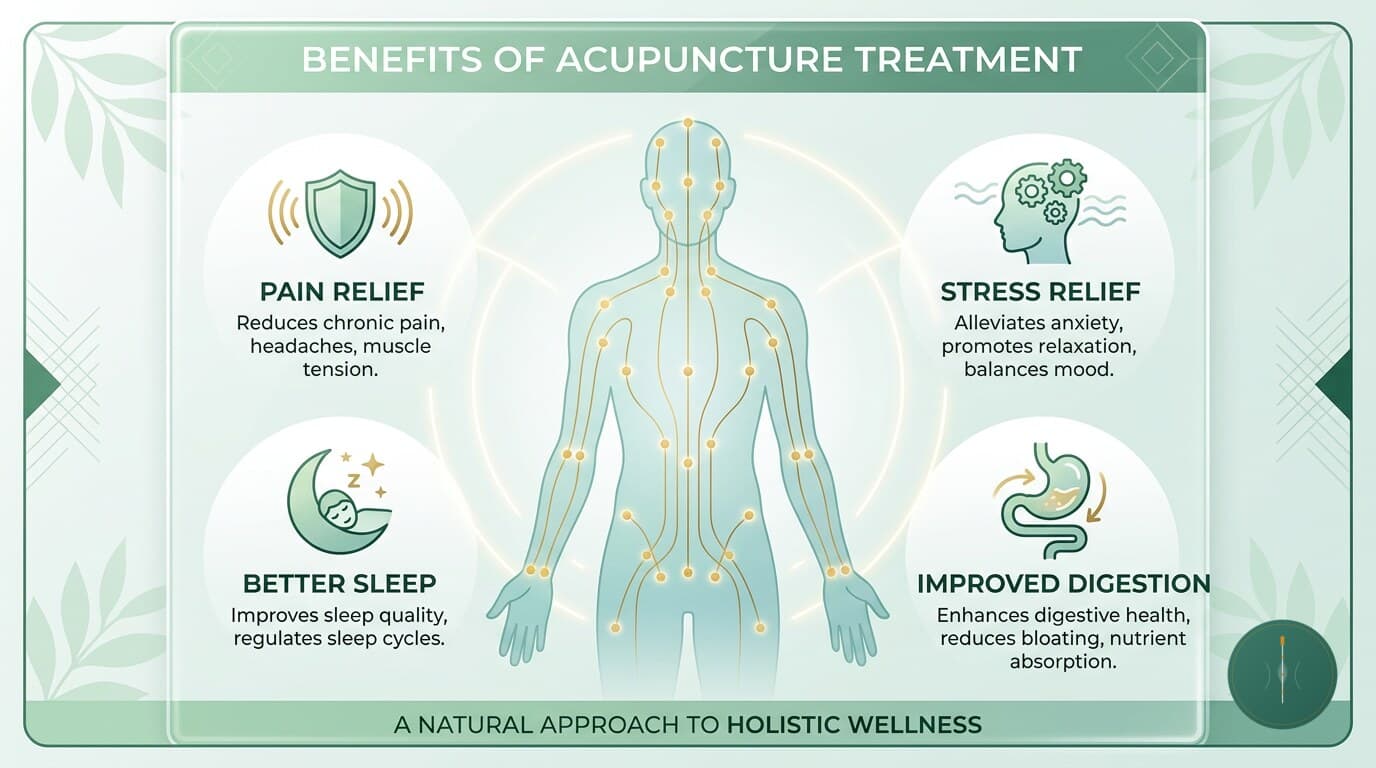
1. Chronic Pain Relief
The most well-studied benefit of acupuncture is pain management. A landmark meta-analysis published in the Archives of Internal Medicine (2012) reviewed 29 randomised controlled trials involving nearly 18,000 patients and found acupuncture significantly more effective than sham acupuncture for (Vickers et al., 2012):
- Back pain — reduction in Visual Analogue Scale (VAS) scores by 30–50%
- Neck pain — improvement in both pain intensity and range of motion
- Osteoarthritis — especially knee osteoarthritis, with sustained benefits at 6 months
- Chronic headaches — both tension-type and migraine
2. Migraine Prevention
The Cochrane Collaboration reviewed 22 trials and concluded that acupuncture is at least as effective as prophylactic drug therapy for migraines, with fewer side effects (Linde et al., 2016). Patients receiving acupuncture had significantly fewer headache days per month compared to those receiving no treatment.
3. Stress and Anxiety Reduction
Acupuncture has been shown to downregulate the hypothalamic-pituitary-adrenal (HPA) axis, the body's central stress response system. A systematic review of clinical research found acupuncture effective for reducing anxiety symptoms across multiple anxiety disorders (Amorim et al., 2018).
4. Nausea and Vomiting
The point PC6 (Neiguan) on the inner wrist is one of the most-researched acupuncture points. WHO recognises acupuncture at PC6 as effective for:
- Chemotherapy-induced nausea
- Post-operative nausea and vomiting (PONV)
- Morning sickness during pregnancy
5. Improved Sleep Quality
Multiple studies show acupuncture increases nocturnal melatonin secretion and improves sleep quality as measured by the Pittsburgh Sleep Quality Index (PSQI) (Spence et al., 2004). A systematic review of 46 trials found acupuncture superior to no treatment and comparable to sleep medications — without the side effects (Cao et al., 2009).
6. Fertility Support
Acupuncture is increasingly used as a complementary therapy alongside IVF and other assisted reproduction technologies. Research published in the British Medical Journal suggests acupuncture administered around the time of embryo transfer may improve pregnancy rates by increasing uterine blood flow and reducing stress hormones (Manheimer et al., 2008).
Turn This Knowledge Into a Treatment Plan
Enter any Western diagnosis and get a complete TCM treatment protocol — acupuncture points, herbal formulas, moxibustion, cupping, and gua sha recommendations.
7. Digestive Health
Acupuncture at points like ST36 (Zusanli) has been shown to regulate gastric motility, reduce inflammation markers, and alleviate symptoms of:
- Irritable Bowel Syndrome (IBS)
- Functional dyspepsia
- Acid reflux (GERD)
8. Immune System Support
Research demonstrates that acupuncture can modulate both innate and adaptive immune responses. Studies show increased natural killer (NK) cell activity and improved T-cell counts following regular acupuncture sessions, suggesting a role in immune regulation (Arranz et al., 2007).
9. Mental Health Support
Emerging evidence supports acupuncture as an adjunct treatment for depression. A large trial published in PLOS Medicine found that acupuncture combined with counselling significantly reduced depression scores compared to usual care alone (MacPherson et al., 2013).
10. Post-Surgical Recovery
The American Society of Anesthesiologists recognises acupuncture as a complementary approach for post-operative pain management. Studies show it can reduce opioid consumption by 20–30% after surgery, helping to minimise side effects and accelerate recovery (Sun et al., 2008).
The WHO Endorsement
The World Health Organization recognises acupuncture as effective or potentially effective for over 100 conditions, including allergic rhinitis, dental pain, labour induction, and tennis elbow. This endorsement, based on controlled clinical trials, has helped establish acupuncture as a legitimate therapeutic modality worldwide.
Safety Profile
When performed by a trained practitioner using sterile, single-use needles, acupuncture is remarkably safe. A systematic review of over 1 million treatments found the incidence of serious adverse events to be 0.05 per 10,000 treatments — making it one of the safest medical interventions available (White, 2004).
The Bottom Line
Acupuncture is no longer just an alternative therapy — it's an evidence-informed practice supported by rigorous clinical research. Whether you're managing chronic pain, seeking stress relief, or supporting fertility, acupuncture offers a low-risk, potentially high-reward complement to conventional medicine.
Frequently Asked Questions
What is acupuncture?
Does acupuncture hurt?
What conditions can acupuncture treat?
Is acupuncture safe?
How many acupuncture sessions do I need?
All Citations Verified10/10
Every PubMed citation in this article has been manually verified against its source.
💡 💡 Tip: Press and hold on citation links to open them in your browser.
Derek Doran, BHSc (Acupuncture)
AHPRA Registered (CMR0002211465) · AACMA Member
Derek is the founder of MediChi and a registered acupuncturist with clinical expertise in integrating Western diagnoses with Traditional Chinese Medicine treatment protocols.
Clinically reviewed: February 20, 2025