
17. Points and point categories
腧穴
WHO nomenclature, the cùn measuring system, and the classical point categories that do most of the work in a prescription.
Key terms
- Cùn寸
- Proportional body inch — always the patient's, never yours.
- Five shū pointswǔ shū xué五输穴
- Jǐng, Yíng, Shū, Jīng, Hé — from fingertip/toe to elbow/knee.
- Yuán and Luò原络
- Source and connecting points; paired as host-guest.
- Bèi shū and Mù背俞/募
- Back-transport and front-collecting points for each organ.
Naming and locating
Medi-Chi uses WHO Standard Acupuncture Point Locations throughout, so LU7 is LU7 wherever you trained. Location is by proportional measurement plus palpation: the cùn is defined on the patient's own body, and the final centimetre is found by feel — a genuine point usually announces itself as a depression, a change in tissue tone, or tenderness.
The categories that earn their place
You can build most prescriptions from a handful of categories, each with a characteristic clinical use.
- ·Five shū — jǐng for mental agitation and acute reversal, yíng for heat, shū for heaviness and joint pain, jīng for cough and voice, hé for the Fǔ and for diarrhoea.
- ·Yuán — tonify or regulate the organ; the first choice in deficiency.
- ·Luò — chronic and emotional patterns, and the paired channel.
- ·Xì-cleft — acute pain and, on the Yīn channels, bleeding.
- ·Bèi shū and Mù — direct organ treatment; palpate both, treat the tender one.
- ·Influential points — the eight huì for bone, marrow, sinew, vessel, Qì, Blood, Zàng and Fǔ.
- ·Confluent points of the eight extras — SP4/PC6, SI3/BL62, GB41/TE5, LU7/KI6.
Extras and ā shì
Extra points sit outside the fourteen channels — Yìn Táng, Tài Yáng, Sì Shén Cōng, Zǐ Gōng, Huá Tuó Jiā Jǐ, and the rest. Ā shì points are simply where it hurts, and the Líng Shū's instruction to needle where the tenderness is has never been superseded.
In the treatment room
- Palpate every point before needling. Point location memorised from a chart and point location found on a body are different skills.
- Four to eight well-chosen points usually beat sixteen. Prescription bloat is the commonest beginner habit.
Chapter quiz
4 key terms from this chapter. Your best score is kept on this device and shown in the study plan.
Read alongside
From the Medi-Chi library — included with an annual subscription.
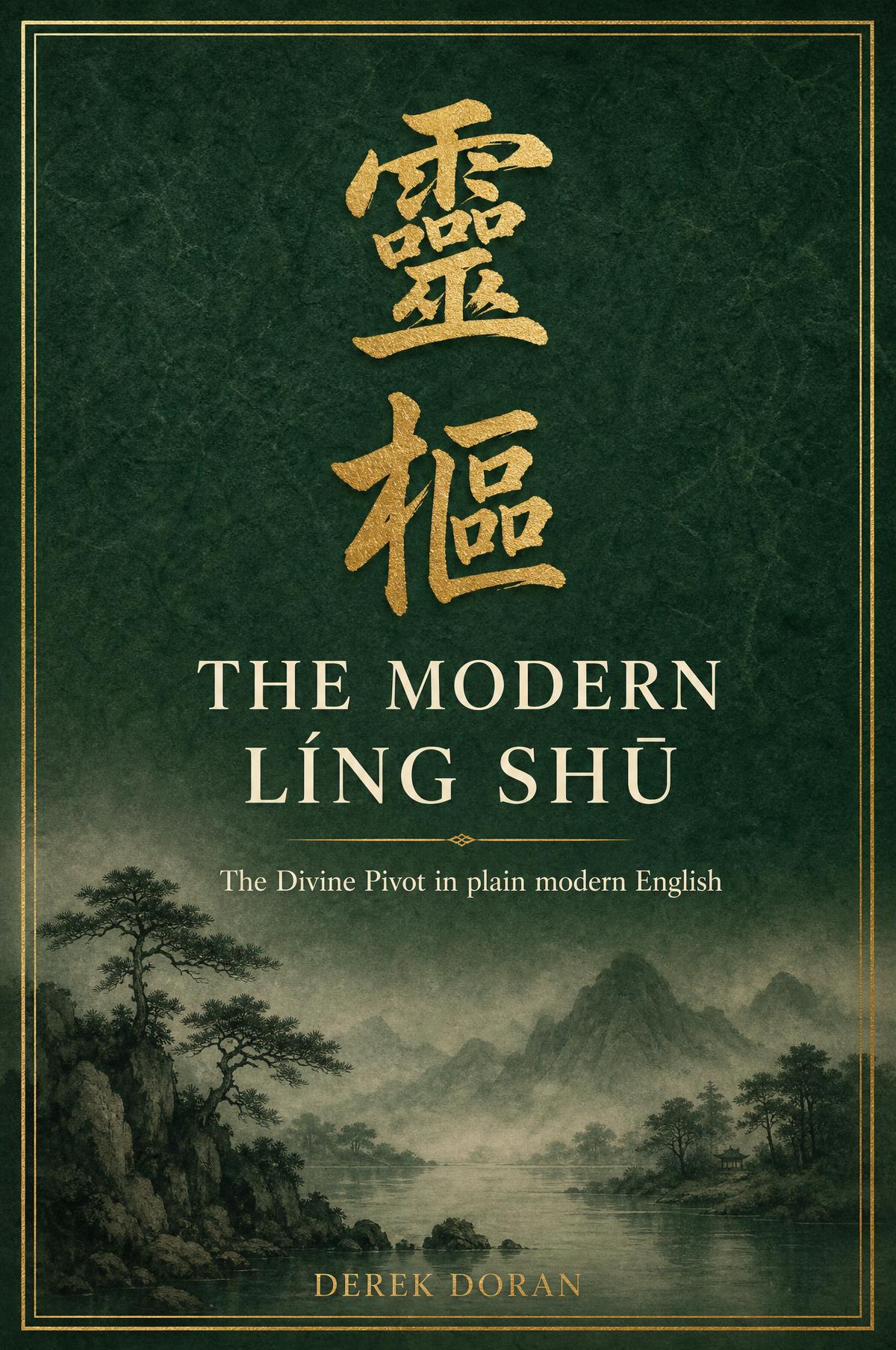
The Modern Líng Shū
The Divine Pivot — all 81 chapters
The Líng Shū names the point categories — Shū-Stream, transport and command points — and what each is for.
Sources
- WHO Standard Acupuncture Point Locations in the Western Pacific Region (2008)
- Huángfǔ Mì, Zhēn Jiǔ Jiǎ Yǐ Jīng 針灸甲乙經 (c. 282 CE)