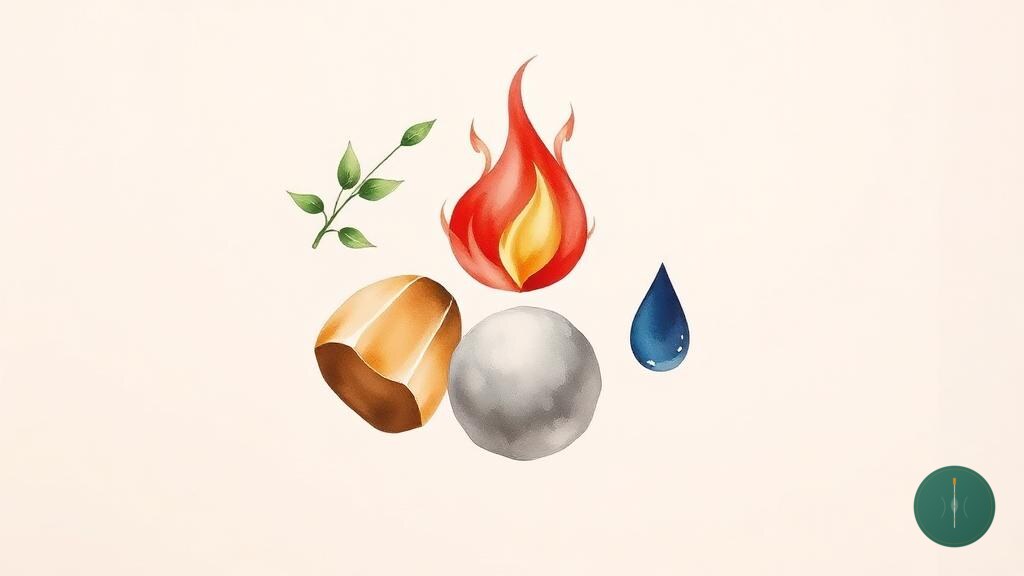
The Five Elements Theory: Wood, Fire, Earth, Metal & Water in TCM
Medically Reviewed by Derek Doran, BHSc (Acupuncture) · AHPRA Registered · AACMA Member · Updated February 24, 2025
Overview
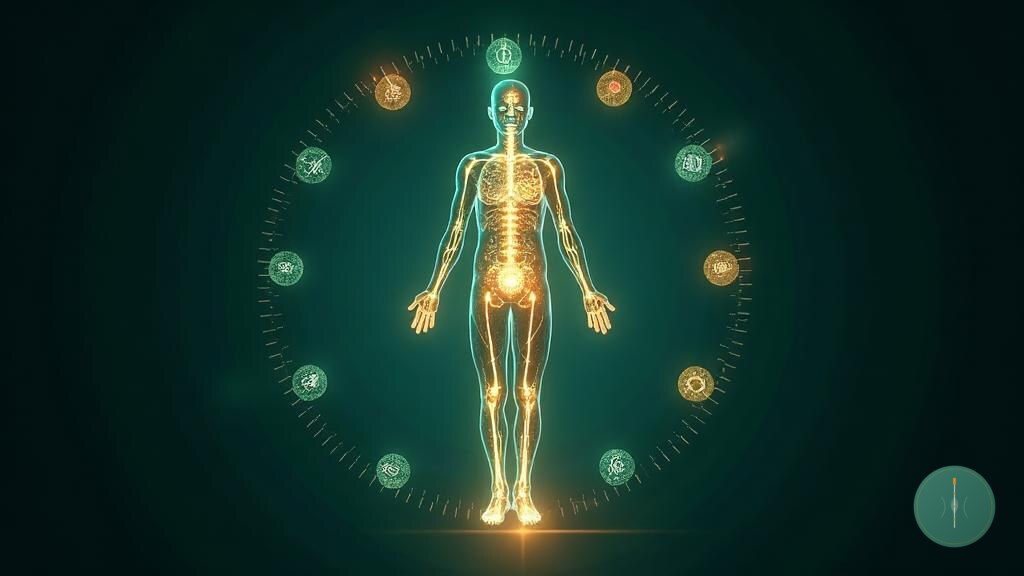
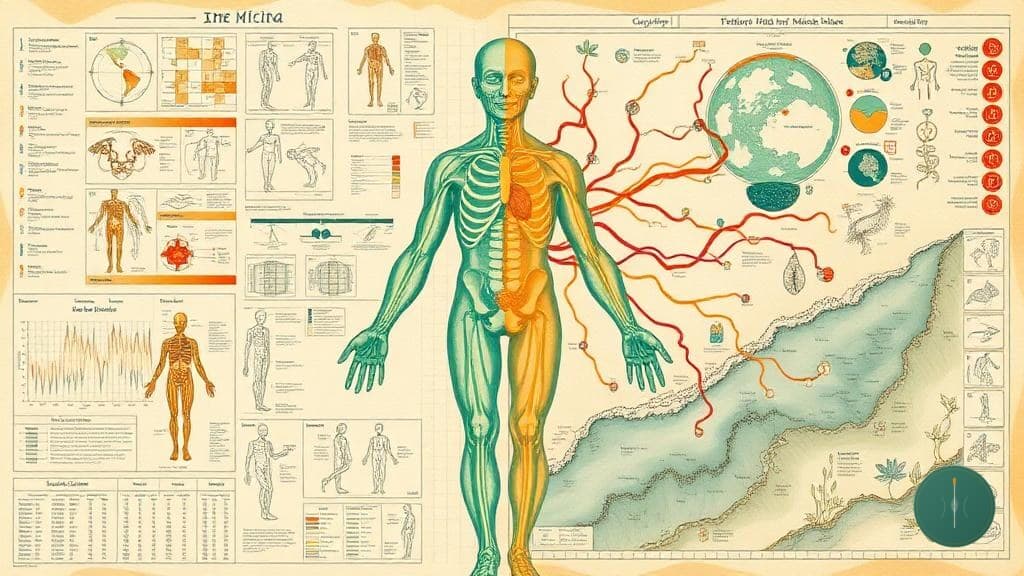
The Five Elements (五行, wǔ xíng) — Wood, Fire, Earth, Metal, and Water — are a cornerstone of Traditional Chinese Medicine philosophy. More accurately translated as "Five Phases" or "Five Movements," this theory describes how natural phenomena relate to one another in dynamic cycles of generation and control.
In TCM, the Five Elements provide a framework for understanding the relationships between organs, emotions, tissues, senses, and the natural world.
The Five Elements at a Glance
| Element | Organ (Yin/Yang) | Emotion | Season | Colour | Taste |
|---|---|---|---|---|---|
| Wood | Liver / Gallbladder | Anger | Spring | Green | Sour |
| Fire | Heart / Small Intestine | Joy | Summer | Red | Bitter |
| Earth | Spleen / Stomach | Worry | Late Summer | Yellow | Sweet |
| Metal | Lung / Large Intestine | Grief | Autumn | White | Pungent |
| Water | Kidney / Bladder | Fear | Winter | Black | Salty |
The Generating Cycle (相生, Xiāng Shēng)
Also called the "mother-son" cycle, each element nourishes the next:
Wood → Fire → Earth → Metal → Water → Wood
- Wood feeds Fire (wood fuels flame)
- Fire creates Earth (ash becomes soil)
- Earth bears Metal (minerals form in earth)
- Metal collects Water (condensation on metal)
- Water nourishes Wood (water grows trees)
Clinical example: If a patient has Lung (Metal) deficiency, a practitioner might also tonify the Spleen (Earth) — because Earth is the "mother" of Metal.
The Controlling Cycle (相克, Xiāng Kè)
Each element keeps another in check, preventing excess:
Wood → Earth → Water → Fire → Metal → Wood
- Wood parts Earth (roots break soil)
- Earth dams Water (embankments control floods)
- Water quenches Fire
- Fire melts Metal
- Metal chops Wood
Clinical example: Liver (Wood) overacting on Spleen (Earth) is one of the most common patterns in TCM — seen as stress-related digestive problems (Li et al., 2013).
Pathological Cycles
When the controlling cycle goes wrong, two patterns emerge:
Turn This Knowledge Into a Treatment Plan
Enter any Western diagnosis and get a complete TCM treatment protocol — acupuncture points, herbal formulas, moxibustion, cupping, and gua sha recommendations.
Over-Acting (相乘, Xiāng Chéng)
An element excessively controls another. Example: strong Liver Wood over-controlling a weak Spleen Earth — manifesting as irritability combined with bloating and loose stools.
Insulting (相侮, Xiāng Wǔ)
The controlled element rebels against its controller. Example: Lung Metal, normally controlling Liver Wood, is too weak — allowing Liver to "insult" the Lung, presenting as coughing triggered by emotional stress.
Five Elements in Diagnosis
TCM practitioners use the Five Element framework to:
1. Identify root patterns: Emotional symptoms combined with physical signs often point to a specific element imbalance
2. Predict disease progression: If Kidney Water is depleted, Liver Wood (the "son") will eventually suffer too
3. Guide treatment strategy: Decide whether to tonify the mother, sedate the child, or restrain the controller
4. Understand constitutional types: Some people naturally tend toward one element — a "Wood type" may be decisive but anger-prone
Seasonal Living
The Five Elements also guide lifestyle recommendations:
- Spring (Wood): Time for growth, movement, and creative projects. Eat green, leafy vegetables. Avoid stagnation.
- Summer (Fire): Peak activity and social connection. Stay hydrated. Eat bitter foods to clear Heart heat.
- Late Summer (Earth): Grounding and nourishment. Favour warm, cooked foods. Avoid excessive worry.
- Autumn (Metal): Letting go and consolidation. Eat pungent foods to support the Lungs. Practice breathing exercises.
- Winter (Water): Rest and conservation. Nourish the Kidneys with warming, salty foods. Sleep early.
Modern Relevance
While the Five Elements theory is metaphorical rather than literal, it provides a remarkably useful clinical framework. Many patterns it describes — such as the stress-digestion connection (Wood over-controlling Earth) — align well with modern psychosomatic research on the gut-brain axis (Cryan & O'Mahony, 2011).
Frequently Asked Questions
What are the Five Elements in Chinese medicine?
How are the Five Elements used clinically?
Are the Five Elements the same as the Western four elements?
All Citations Verified2/2
Every PubMed citation in this article has been manually verified against its source.
💡 💡 Tip: Press and hold on citation links to open them in your browser.
Derek Doran, BHSc (Acupuncture)
AHPRA Registered (CMR0002211465) · AACMA Member
Derek is the founder of MediChi and a registered acupuncturist with clinical expertise in integrating Western diagnoses with Traditional Chinese Medicine treatment protocols.
Clinically reviewed: February 24, 2025