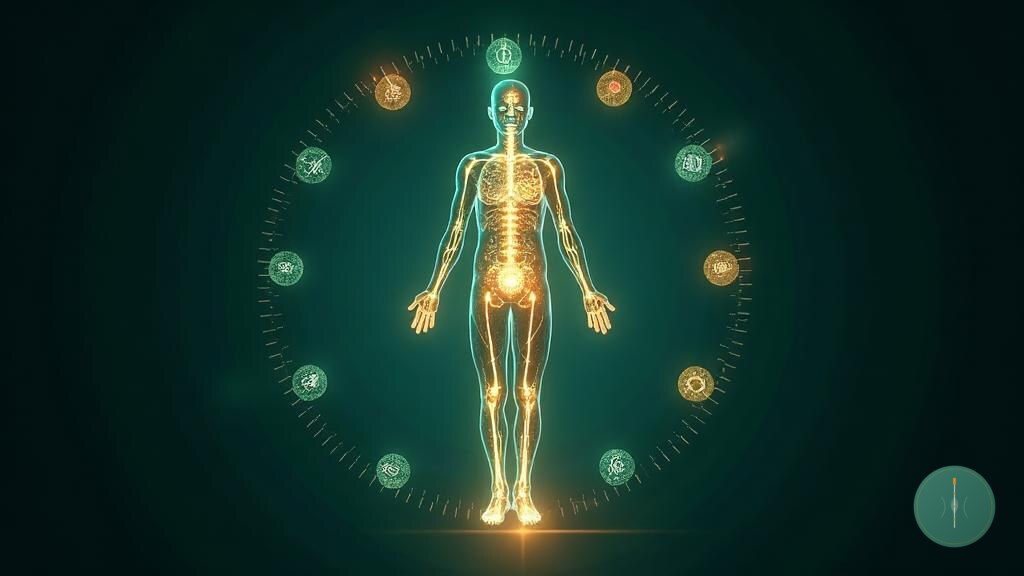
Meridian Theory Explained: The Energy Pathways of TCM
Medically Reviewed by Derek Doran, BHSc (Acupuncture) · AHPRA Registered · AACMA Member · Updated February 22, 2025
This article is part of our main reference guide. Read the full guide for the complete, continually updated version.
What Are Meridians?
In Traditional Chinese Medicine, meridians (经络, jīngluò) are a network of pathways through which Qi (vital energy) and Blood flow to nourish every tissue and organ in the body. Think of them as the body's energetic circulatory system — invisible to the eye but central to health and disease in TCM theory.
The meridian system connects the interior (organs) with the exterior (skin, muscles, limbs), creating an integrated whole where every part influences every other part.
The 12 Primary Meridians
The body has 12 primary or "regular" meridians, each associated with a major organ system. They are arranged in pairs — one Yin and one Yang — and flow in a continuous circuit:
Yin Meridians (Run Along Inner Surfaces)
| Meridian | Chinese Name | Element | Peak Hours |
|---|---|---|---|
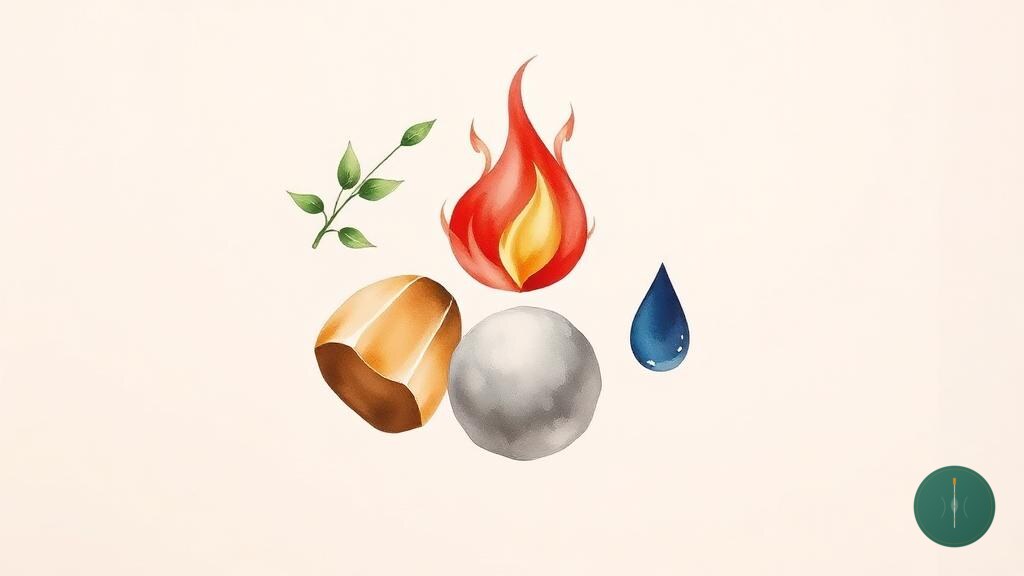
| Lung | 手太阴肺经 | Metal | 3–5 AM |
| Spleen | 足太阴脾经 | Earth | 9–11 AM |
| Heart | 手少阴心经 | Fire | 11 AM–1 PM |
| Kidney | 足少阴肾经 | Water | 5–7 PM |
| Pericardium | 手厥阴心包经 | Fire | 7–9 PM |
| Liver | 足厥阴肝经 | Wood | 1–3 AM |
Yang Meridians (Run Along Outer Surfaces)
| Meridian | Chinese Name | Element | Peak Hours |
|---|---|---|---|
| Large Intestine | 手阳明大肠经 | Metal | 5–7 AM |
| Stomach | 足阳明胃经 | Earth | 7–9 AM |
| Small Intestine | 手太阳小肠经 | Fire | 1–3 PM |
| Bladder | 足太阳膀胱经 | Water | 3–5 PM |
| San Jiao (Triple Burner) | 手少阳三焦经 | Fire | 9–11 PM |
| Gallbladder | 足少阳胆经 | Wood | 11 PM–1 AM |
The Body Clock (子午流注)
Qi circulates through all 12 meridians in a 24-hour cycle, spending approximately 2 hours in each channel. This is the Chinese Body Clock (子午流注, zǐwǔ liúzhù), and it explains why certain symptoms appear at specific times:
- Waking between 3–5 AM? The Lung meridian is most active — possibly related to grief, respiratory issues, or Lung Qi deficiency
- Afternoon energy crash at 3–5 PM? The Bladder meridian peak — could indicate Kidney Yang deficiency
- Unable to fall asleep at 11 PM–1 AM? The Gallbladder channel — suggesting Liver-Gallbladder disharmony
The 8 Extraordinary Vessels
Beyond the 12 primary meridians, TCM describes 8 extraordinary vessels (奇经八脉) that serve as reservoirs of Qi and Blood:
1. Du Mai (Governing Vessel) — runs up the spine, governs all Yang meridians
2. Ren Mai (Conception Vessel) — runs up the front midline, governs all Yin meridians
3. Chong Mai (Penetrating Vessel) — the "sea of blood," regulates menstruation
Turn This Knowledge Into a Treatment Plan
Enter any Western diagnosis and get a complete TCM treatment protocol — acupuncture points, herbal formulas, moxibustion, cupping, and gua sha recommendations.
4. Dai Mai (Belt Vessel) — the only horizontal channel, binds all vertical meridians
5. Yin Wei Mai — links all Yin channels
6. Yang Wei Mai — links all Yang channels
7. Yin Qiao Mai — regulates Yin of the lower limbs and sleep
8. Yang Qiao Mai — regulates Yang of the lower limbs and wakefulness
What Does Modern Science Say?
The existence of meridians remains one of the most debated topics in integrative medicine. Several interesting findings have emerged:
- Fascial Planes: Researchers have noted that 80% of acupuncture points correspond to intermuscular or intramuscular connective tissue planes (Langevin & Yandow, 2002)
- Electrical Conductance: Studies show measurably lower electrical resistance along meridian pathways compared to surrounding tissue (Ahn et al., 2008)
- Primo Vascular System: Korean researchers have identified a novel vascular system (Bonghan ducts) that may correspond to meridian pathways, though this remains controversial (Stefanov et al., 2013)
- fMRI Studies: Brain imaging reveals that stimulating specific acupuncture points activates corresponding brain regions predicted by meridian theory (Huang et al., 2012)
Clinical Significance
Understanding meridians helps practitioners:
- Diagnose: Pain along a specific meridian pathway points to which organ system is affected
- Treat distally: A headache caused by Gallbladder channel pathology can be treated by needling GB41 on the foot
- Predict: Symptoms that appear at specific times suggest which meridian is involved
- Connect symptoms: Seemingly unrelated symptoms (e.g., hip pain + bitter taste + indecisiveness) may all point to one meridian pattern
Exploring Further
The meridian system is a profound map of the body's interconnectedness. Whether understood as literal energy channels or as a clinical framework refined over millennia, meridians remain an indispensable tool for TCM diagnosis and treatment.
Frequently Asked Questions
What are meridians in Chinese medicine?
Do meridians have a scientific basis?
What happens when a meridian is blocked?
All Citations Verified4/4
Every PubMed citation in this article has been manually verified against its source.
💡 💡 Tip: Press and hold on citation links to open them in your browser.
Derek Doran, BHSc (Acupuncture)
AHPRA Registered (CMR0002211465) · AACMA Member
Derek is the founder of MediChi and a registered acupuncturist with clinical expertise in integrating Western diagnoses with Traditional Chinese Medicine treatment protocols.
Clinically reviewed: February 22, 2025