    Annual subscribers now receive The Modern Nèi Jīng FREESubscribe AnnuallyClinical Education ToolThis platform provides educational resources for TCM practitioners and students. It does not issue medical certificates, prescriptions, or clinical diagnoses.
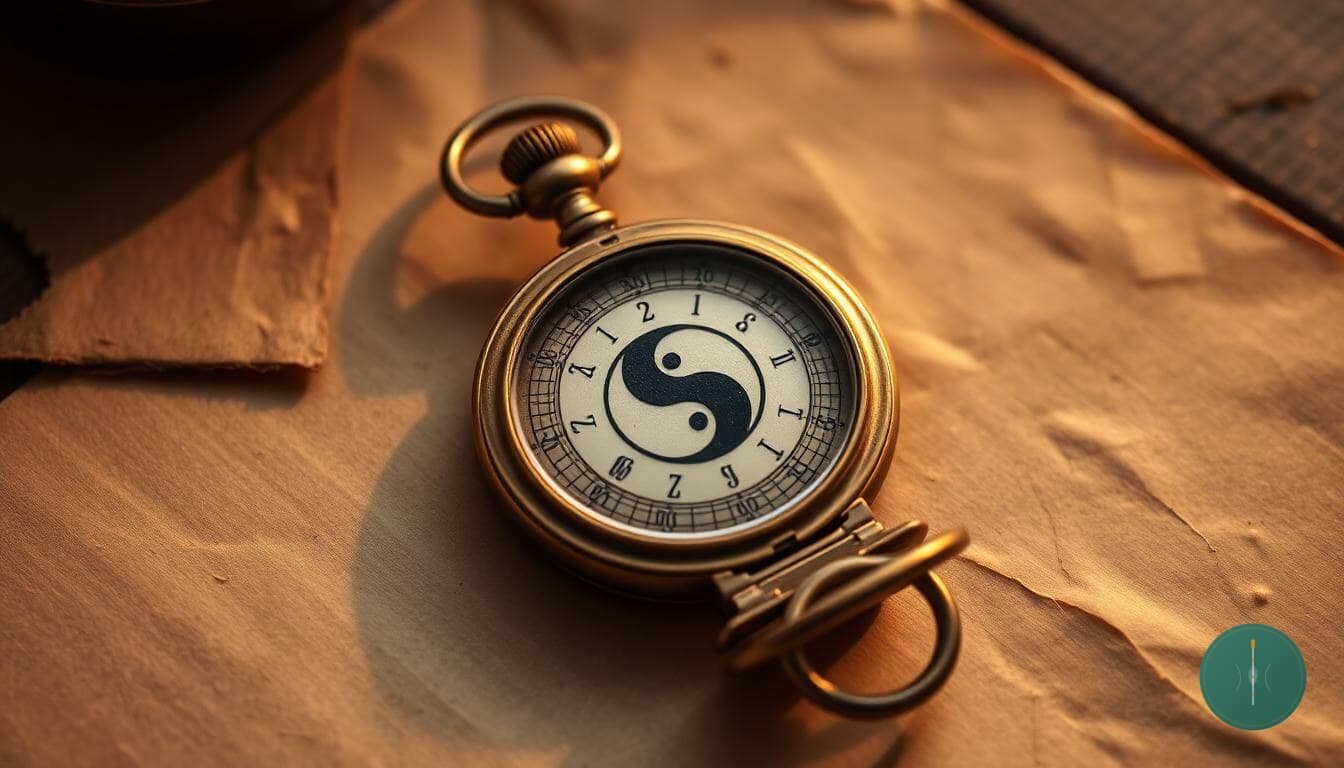
    Stylised Chinese body clock illustrating the 24-hour Qi flow through the twelve organ channels
    ChronoacupunctureBody ClockClassical TCMCircadian RhythmPoint Selection

    Your Body Has a Schedule: Horary Acupuncture and the Chinese Body Clock

    Medically Reviewed by Derek Doran, BHSc (Acupuncture) · AHPRA Registered · AACMA Member · Updated April 3, 2026

    March 20, 20269 min readBy MediChi Editorial

    Your Organs Run on a Clock

    Every morning at 5:47 AM, Maria wakes gasping. Not from nightmares — from a cough that materialises like clockwork, then vanishes by breakfast. Her pulmonologist found nothing on the CT scan. Her allergist shrugged.

    A Chinese medicine practitioner would have asked one question: "What time?"

    In TCM, that answer — between 3 and 5 AM — immediately points to the Lung meridian, which reaches its peak Qi flow during those pre-dawn hours. Maria's body wasn't broken; it was speaking in time.

    The 子午流注 System

    Zǐ Wǔ Liú Zhù (子午流注) — literally "midnight-noon flow and ebb" — is a chronoacupuncture system at least 800 years old. It maps the body's Qi circulation through the 12 primary meridians in a 24-hour cycle, with each meridian governing a 2-hour window:

    TimeMeridianPeak Function
    3–5 AMLung (LU)Qi distribution, immune defence
    5–7 AMLarge Intestine (LI)Elimination, letting go
    7–9 AMStomach (ST)Digestion, nourishment
    9–11 AMSpleen (SP)Transformation, thought clarity
    11 AM–1 PMHeart (HT)Shén clarity, joy
    1–3 PMSmall Intestine (SI)Discernment, sorting pure from impure
    3–5 PMBladder (BL)Fluid metabolism, memory
    5–7 PMKidney (KI)Essence storage, willpower
    7–9 PMPericardium (PC)Emotional protection, intimacy
    9–11 PMSan Jiao (SJ)Thermoregulation, endocrine balance
    11 PM–1 AMGallbladder (GB)Decision-making, bile flow
    1–3 AMLiver (LR)Blood storage, detoxification

    The clinical principle is elegantly simple: treating a meridian during its peak time amplifies the effect. Needling LU-8 (the horary point of the Lung channel) at 4 AM is — according to classical theory — significantly more potent than the same needle at 4 PM.

    Modern Chronobiology Agrees

    This isn't just ancient theory. Modern research has confirmed that virtually every organ system operates on circadian rhythms (Patke et al., 2020; PMID: 32139536):

    • Cortisol peaks between 6–8 AM (Large Intestine / Stomach time)
    • Melatonin secretion begins around 9 PM (San Jiao time)
    • Liver detoxification enzymes peak in the early morning hours (Liver time: 1–3 AM)
    • Heart attacks cluster between 6 AM and noon

    A landmark study mapped rhythmic gene expression across 13 tissue types, finding that 82% of protein-coding genes show circadian oscillation in at least one tissue (Ruben et al., 2019; PMID: 30742123). The body isn't just vaguely cyclical — it runs a precise, organ-specific schedule that mirrors the Chinese Body Clock with remarkable fidelity.

    The Na Zi Method: Horary Point Selection

    The Na Zi method (納子法) is the simplest horary technique: during each meridian's peak time, needle the horary point — the Five-Shū point whose element matches its own meridian's element.

    For example:

    • Lung (Metal) → LU-8 Jīng Qú (Metal point of Metal meridian) → needle during 3–5 AM
    • Stomach (Earth) → ST-36 Zú Sān Lǐ (Earth point of Earth meridian) → needle during 7–9 AM
    • Kidney (Water) → KI-10 Yīn Gǔ (Water point of Water meridian) → needle during 5–7 PM

    The logic: when a meridian's Qi is at flood tide and you stimulate the point that resonates with its native element, the therapeutic signal is maximally amplified. It's the difference between shouting into an empty room and speaking into a tuned resonance chamber.

    靈龜八法: The Sacred Turtle's Eight Methods

    For the Extraordinary Vessels, a more sophisticated calculation — Ling Gui Ba Fa (靈龜八法) — uses the Heavenly Stems and Earthly Branches of both the day and the hour to determine which of the eight Extraordinary Vessel opening points is "accessible."

    This system requires calendar math: combining the Stem-Branch values of the current day and hour to calculate an index that points to one of eight master points (SI-3, BL-62, SJ-5, GB-41, LU-7, KI-6, PC-6, SP-4). Each opens its corresponding Extraordinary Vessel and paired vessel.

    Free Clinical Tool

    Turn This Knowledge Into a Treatment Plan

    Enter any Western diagnosis and get a complete TCM treatment protocol — acupuncture points, herbal formulas, moxibustion, cupping, and gua sha recommendations.

    In clinical practice, this means the practitioner checks the calendar before the patient even walks in. The treatment isn't just personalised to symptoms — it's personalised to the moment.

    Clinical Patterns: What Waking Times Reveal

    One of the most clinically useful applications of the Body Clock is diagnostic timing:

    • Waking 1–3 AM → Liver (frustration, unresolved anger, Blood Heat)
    • Waking 3–5 AM → Lung (grief, Qi/Yin deficiency, Wei Qi weakness)
    • Energy crash 9–11 AM → Spleen Qi deficiency (brain fog, loose stool)
    • Afternoon slump 3–5 PM → Bladder / Kidney (adrenal fatigue pattern)
    • Anxiety 7–9 PM → Pericardium (emotional guarding, chest tightness)
    • Insomnia after 11 PM → Gallbladder Heat (racing thoughts, indecision)

    These aren't folk correlations. The lipid metabolism work of Pan et al. (2018) confirmed that disrupted circadian rhythms in hepatic lipid processing correlate directly with the 1–3 AM Liver window (PMID: 29666418).

    Seasonal Layering

    Horary acupuncture doesn't exist in isolation. Classical texts layer seasonal considerations over the daily clock:

    • Spring (Wood) → Support Liver/Gallbladder, address Wind invasion
    • Summer (Fire) → Clear Heart Heat, calm the Shén
    • Late Summer (Earth) → Strengthen Spleen transformation
    • Autumn (Metal) → Consolidate Lung Qi, moisten dryness
    • Winter (Water) → Conserve Kidney essence, nourish Yin

    A practitioner using the full system considers: the current season, the day's Stem-Branch, the hour's Stem-Branch, and the patient's presenting pattern — then selects points that align all four layers. It's chronotherapy long before the term existed.

    Practical Application in 2026

    You don't need to wake patients at 4 AM. Modern horary practice adapts:

    1. Schedule treatments strategically — morning appointments for Lung/LI/ST conditions, afternoon for BL/KI

    2. Use the opposing meridian — if the peak time is impractical, treat the meridian 12 hours opposite (e.g., BL points for Lung conditions at 3–5 PM)

    3. Diagnostic questioning — always ask when symptoms worsen; the Body Clock gives you the meridian

    4. Self-care timing — advise patients to do breathing exercises during Lung time, eat their biggest meal during Stomach time, rest during Kidney time

    The Chinese Body Clock isn't mystical — it's the original circadian medicine. And the data increasingly supports what classical practitioners knew through centuries of observation: the body heals differently depending on when you intervene.


    Explore the interactive Horary Acupuncture Clock to see real-time meridian activity and point recommendations for any date and time.

    Frequently Asked Questions

    What is the Chinese body clock in acupuncture?

    The Chinese body clock (Zi Wu Liu Zhu) maps each of the twelve organ-meridians to a two-hour window when its Qi is at peak strength. Treating during a meridian's horary window — or its opposite — amplifies clinical effect, especially for chronic patterns.

    How does horary acupuncture differ from standard point selection?

    Standard point selection is based on syndrome differentiation alone. Horary acupuncture adds a temporal dimension, choosing points and meridians according to the time of day, lunar phase, or stem-branch calendar to align treatment with peak Qi flow.

    Is horary acupuncture supported by modern research?

    Chronobiology confirms circadian rhythms in cortisol, melatonin, and organ function that align with several Chinese body-clock windows. While more research is needed, the underlying premise — that physiology varies by time of day — is well established.

    All Citations Verified3/3

    Every PubMed citation in this article has been manually verified against its source.

    💡 💡 Tip: Press and hold on citation links to open them in your browser.

    Derek Doran, BHSc (Acupuncture)

    AHPRA Registered (CMR0002211465) · AACMA Member

    Derek is the founder of MediChi and a registered acupuncturist with clinical expertise in integrating Western diagnoses with Traditional Chinese Medicine treatment protocols.

    Clinically reviewed: April 3, 2026
    Found this useful? Share it

    Ready to Apply This in Clinic?

    Medi-Chi translates any Western diagnosis into a complete TCM treatment plan in seconds. Available in 10 languages for clinical practice worldwide.

    ✓ 10 Treatment Styles✓ PubMed Citations✓ 185+ Herbs & 65+ Formulas✓ No Credit Card Required

    Related Articles