    Annual subscribers now receive The Modern Nèi Jīng FREESubscribe AnnuallyClinical Education ToolThis platform provides educational resources for TCM practitioners and students. It does not issue medical certificates, prescriptions, or clinical diagnoses.
    Close-up clinical view of a patient's tongue revealing colour, coating and shape used in Shé Zhěn diagnosis
    Tongue DiagnosisDiagnosticsClinical SkillsClassical TCMPattern Differentiation

    Tongue Diagnosis: A Practitioner's Visual Guide to Shé Zhěn

    Medically Reviewed by Derek Doran, BHSc (Acupuncture) · AHPRA Registered · AACMA Member · Updated April 3, 2026

    March 19, 202614 min readBy MediChi Editorial

    Why the Tongue Matters

    In Western medicine, doctors peer inside the body with MRI scans and blood panels. In Traditional Chinese Medicine, the body reveals itself through something far more immediate: the tongue.

    Tongue diagnosis (Shé Zhěn, 舌诊) is arguably the single most clinically reliable observation method in TCM. Unlike pulse taking — which requires years to refine — tongue reading provides visible, reproducible signs that even early-career practitioners can begin to interpret with accuracy.

    "Examine the tongue to know the condition of the organs; observe its colour to understand the nature of the disease."

    Āo Shì Shāng Hán Jīn Jìng Lù (敖氏伤寒金镜录), 1341 CE

    The tongue is unique among organs: it is the only internal muscular organ visible from outside the body. Its colour, shape, moisture, and coating change dynamically with the patient's internal state — often before other symptoms become apparent.


    The Two Pillars: Tongue Body & Tongue Coating

    Tongue diagnosis is divided into two fundamental categories, each revealing different clinical information:

    1. Tongue Body (Shé Zhì, 舌质)

    The tongue body reflects the state of Qì, Blood, Yīn, and the Zàng-Fǔ organs. It changes more slowly and indicates the patient's underlying constitution and chronic patterns.

    FeatureAppearanceClinical Significance
    Colour — PaleLighter than normal pinkQì deficiency, Blood deficiency, or internal Cold
    Colour — RedDeeper red than normalHeat pattern (excess or deficiency)
    Colour — CrimsonDeep red, almost scarletExtreme Heat, Yíng or Blood level Heat
    Colour — PurpleBluish-purple tingeBlood stasis, severe Cold, or chronic pain
    Colour — BlueCyanotic appearanceExtreme Cold, Blood stasis, or cardiac insufficiency
    Shape — SwollenEnlarged, may press against teethSpleen Qì deficiency, Dampness, or Phlegm retention
    Shape — ThinNarrower than normalBlood or Yīn deficiency
    Shape — Teeth-markedScalloped edges from teeth indentationSpleen Qì deficiency (often seen with swelling)
    Shape — StiffRigid, difficulty protrudingInternal Wind, Heat in Pericardium, or stroke prodrome
    Shape — DeviatedTongue deviates to one sideInternal Wind or pre-stroke pattern
    Shape — TremblingFine tremor on protrusionSpleen Qì deficiency or internal Wind
    Shape — Short/contractedCannot be fully extendedExtreme Cold, severe deficiency, or internal Wind

    2. Tongue Coating (Shé Tāi, 舌苔)

    The tongue coating reflects the state of the Stomach and Spleen and the presence or absence of pathogenic factors. It changes more quickly than the tongue body and is particularly useful for tracking acute conditions.

    FeatureAppearanceClinical Significance
    Thin whiteLight, even white layerNormal; or early-stage exterior condition
    Thick whiteDense white coatingCold-Damp accumulation, internal Cold
    YellowYellowish tinge or full yellowHeat pattern (the darker the yellow, the more Heat)
    Thick greasy/stickyDense, difficult to scrape offPhlegm-Damp or Food stagnation
    DryRough, sandpaper-like textureHeat consuming fluids, or Yīn deficiency
    Wet/slipperyExcessively moistDamp accumulation, Yáng deficiency
    Peeled/geographicPatchy absence of coatingStomach Yīn deficiency, or Kidney Yīn deficiency
    No coating (mirror tongue)Completely bare, shiny surfaceSevere Stomach/Kidney Yīn deficiency
    GreyGreyish discolourationEither extreme Cold or extreme Heat
    BlackDark/black coatingCritical — extreme Cold or extreme Heat (burnt)

    💡 Clinical tip: A coating that changes from thin white → thick yellow over several days tells a clear story: an exterior Wind-Cold invasion that has transformed into interior Heat. Always note coating changes between visits.


    Organ Mapping: The Tongue as a Diagnostic Mirror

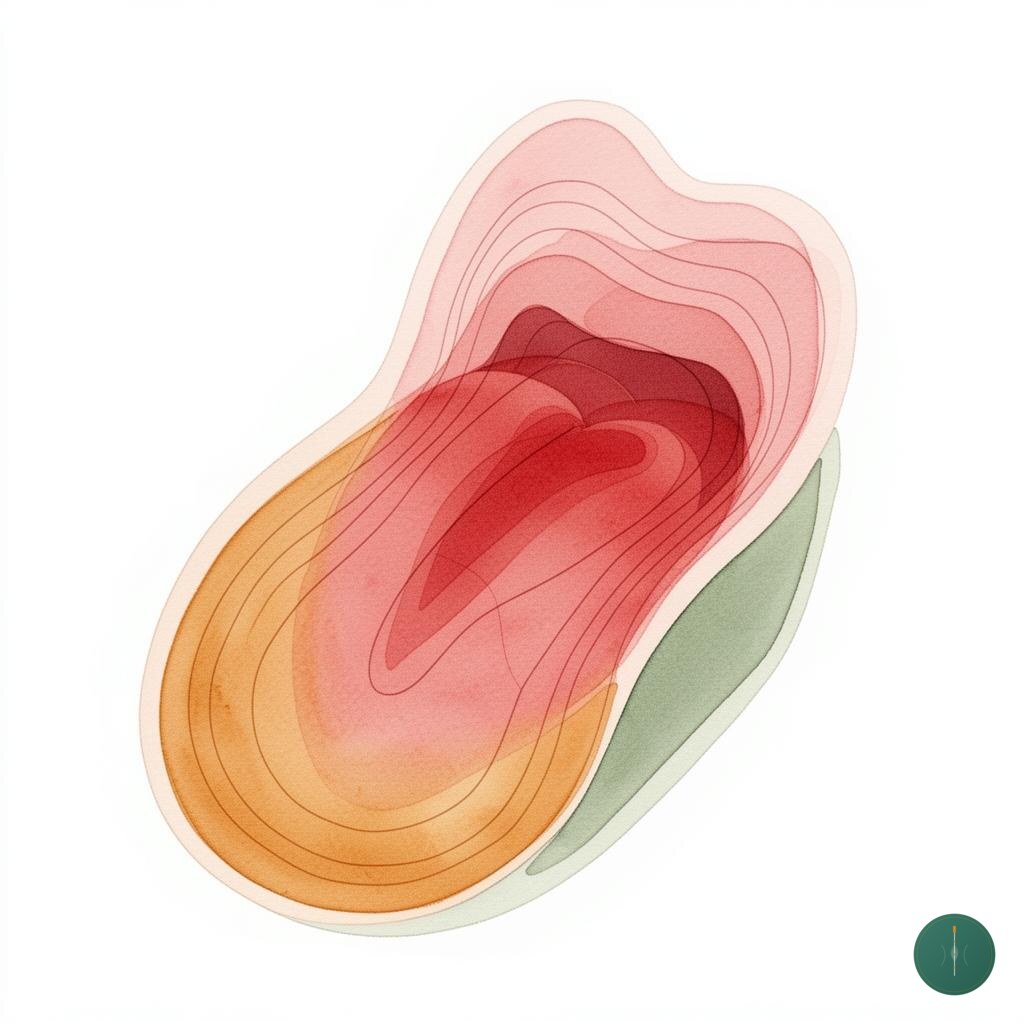
    One of tongue diagnosis's most powerful features is its topographic organ map. Each region of the tongue corresponds to specific Zàng-Fǔ organ systems:

    • Tip → Heart (and Lung, lateral tip areas)
    • Centre → Stomach and Spleen
    • Sides → Liver and Gallbladder
    • Root → Kidney, Bladder, and Intestines

    Clinical Application of Organ Zones

    A patient presenting with a red tip and normal body elsewhere suggests Heart Fire or emotional agitation. Thick greasy coating in the centre points to Dampness and Food stagnation in the Middle Jiāo. Purple sides indicate Liver Blood stasis — correlating with hypochondriac pain or menstrual irregularity.

    This topographic mapping system means you can often identify the affected organ system within seconds of tongue protrusion, before you have even taken the pulse.


    Common Clinical Tongue Patterns

    Here are some of the most frequently encountered tongue presentations in clinical practice, with their pattern differentiation:

    Spleen Qì Deficiency

    • Body: Pale, swollen, teeth-marked
    • Coating: Thin white
    • Associated symptoms: Fatigue, loose stools, poor appetite, bruising easily

    Liver Qì Stagnation

    • Body: Normal colour or slightly dusky at sides
    • Coating: Thin white or slightly thick
    • Associated symptoms: Hypochondriac distension, sighing, emotional volatility, irregular menstruation

    Yīn Deficiency with Empty Heat

    • Body: Red, thin, possibly cracked
    • Coating: Peeled or absent, dry
    • Associated symptoms: Night sweats, five-palm heat, insomnia, dry mouth at night

    Damp-Heat in the Middle Jiāo

    • Body: Red
    • Coating: Thick, yellow, greasy
    • Associated symptoms: Epigastric fullness, nausea, bitter taste, scanty dark urine

    Blood Stasis

    • Body: Purple or dark with possible purple spots/petechiae
    • Coating: Variable
    • Associated symptoms: Fixed, stabbing pain; dark menstrual blood with clots; dark complexion

    Reliability and Modern Research

    A key question in integrative practice is: how reliable is tongue diagnosis?

    Kim et al. (2008) conducted a landmark study examining inter- and intrapractitioner reliability of TCM tongue inspection. They found that agreement levels were generally low for complex characteristics but acceptable for dichotomous features like presence of coating or cracks — highlighting the need for standardised terminology and training.

    Free Clinical Tool

    Turn This Knowledge Into a Treatment Plan

    Enter any Western diagnosis and get a complete TCM treatment protocol — acupuncture points, herbal formulas, moxibustion, cupping, and gua sha recommendations.

    More recently, Wang et al. (2020) used smartphone-based tongue photography to test reliability of tongue coating diagnosis among TCM practitioners, finding that digital standardisation significantly improved inter-rater agreement. This points to a future where technology augments — rather than replaces — clinical observation.

    In the field of automated diagnosis, Tania et al. (2019) published a comprehensive review of advances in computer-aided tongue diagnosis, identifying strong correlations between algorithmically extracted tongue features and TCM pattern classifications. Lo et al. (2012) further demonstrated that automatic tongue diagnosis systems achieved substantial agreement with experienced practitioners for core features like tongue colour and coating thickness.

    The clinical applications extend to specific disease detection. Hsu et al. (2019) used an automatic tongue diagnosis system to identify discriminating tongue features in type 2 diabetes mellitus patients, finding significantly higher prevalence of thick fur, yellow fur colour, and bluish tongue body — validating classical TCM associations between Dampness-Heat patterns and metabolic disorders.

    For a comprehensive overview of the field, Xie et al. (2022) reviewed the full landscape of digital tongue image analyses for health assessment, covering image acquisition, segmentation, feature extraction, and clinical correlation studies.


    Examination Technique: Best Practices

    To ensure accurate tongue diagnosis, follow these clinical protocols:

    1. Natural lighting: Always examine the tongue under natural daylight or a standardised daylight-spectrum lamp. Incandescent and fluorescent lighting distort colour assessment.

    2. Patient preparation: Ask the patient to avoid coffee, tea, coloured foods (berries, beetroot), and tongue scraping for at least one hour before examination.

    3. Protrusion method: Ask the patient to open their mouth and gently extend the tongue without straining. Excessive force can alter colour (turning it redder) and shape.

    4. Time limit: Observe within 15–30 seconds. Prolonged protrusion causes the tongue to redden and dry out, distorting your reading.

    5. Medication awareness: Note medications that may alter tongue appearance — antibiotics can cause black hairy tongue; bismuth (Pepto-Bismol) causes temporary black discolouration; corticosteroids may cause oral thrush mimicking thick white coating.

    6. Serial observation: The greatest diagnostic value comes from tracking changes across visits. Photograph the tongue at each session using consistent lighting and angle.


    Integrating Tongue Diagnosis with Other Pillars

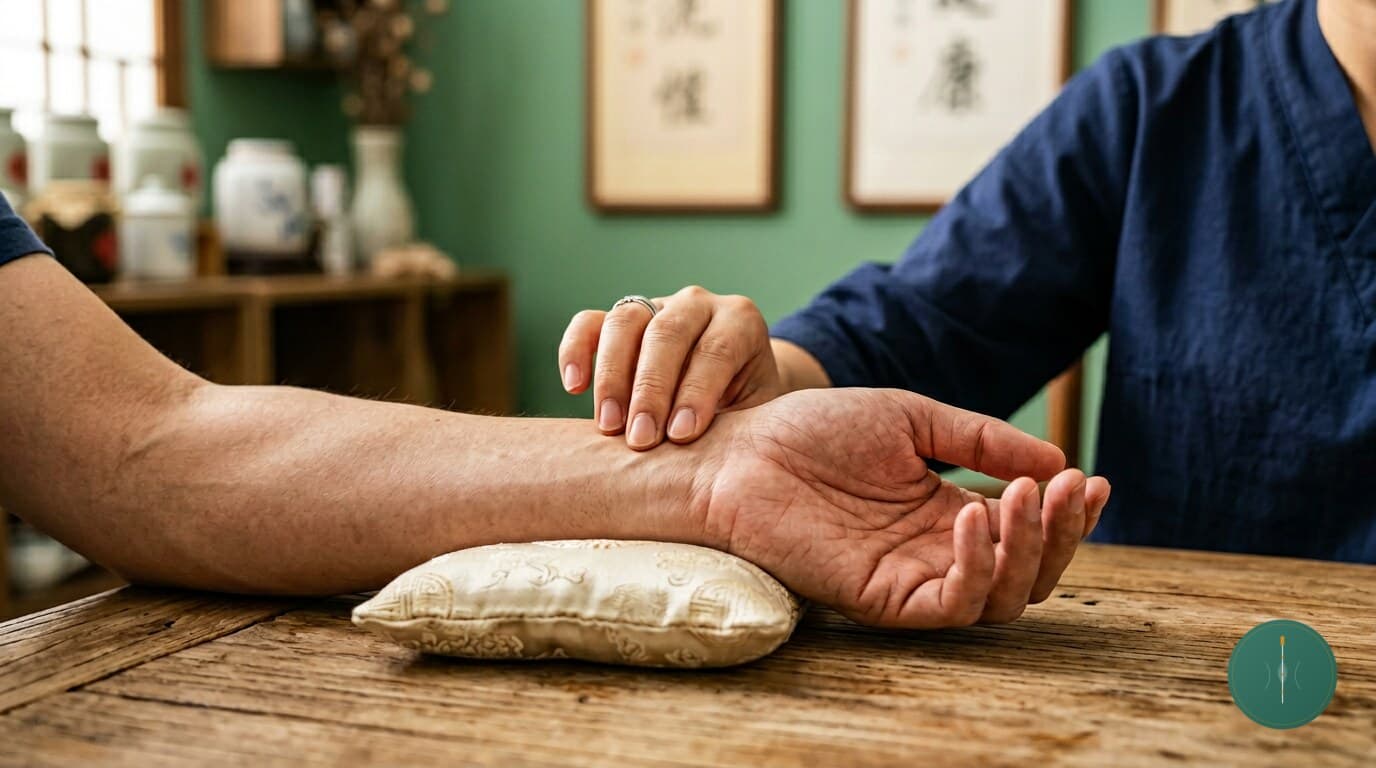
    Tongue diagnosis is most powerful when combined with the other three pillars of TCM assessment:

    • With pulse diagnosis: A pale tongue with a thin, weak pulse confirms Blood deficiency; a red tongue with a rapid, wiry pulse points to Liver Fire.
    • With inquiry: Patient-reported symptoms provide context. A red-tipped tongue gains significance when the patient reports insomnia, palpitations, and anxiety (Heart Fire pattern).
    • With inspection: Overall complexion, body habitus, and movement quality complement tongue findings. A sallow complexion with a pale, teeth-marked tongue strongly confirms Spleen deficiency.

    The four diagnostic methods function as a system of mutual confirmation (Hù Zhèng, 互证). No single finding should be interpreted in isolation — the clinical picture emerges from the convergence of multiple signs.


    Using MediChi for Pattern Differentiation

    MediChi's AI-powered diagnostic tool integrates tongue findings into comprehensive pattern differentiation. Describe your patient's tongue presentation — for example, "pale swollen tongue with teeth marks and thin white coating" — alongside their symptoms, and receive evidence-based TCM pattern analysis with treatment recommendations including acupuncture points, herbal formulas, and dietary guidance.

    Frequently Asked Questions

    What can a tongue tell you about your health?

    In TCM, the tongue reflects the state of internal organs, the balance of Yin and Yang, and the presence of pathogenic factors. The tongue body colour indicates Blood and Qi status, the coating reveals digestive health and pathogen presence, and the shape shows fluid metabolism and organ vitality.

    What does a white tongue coating mean in Chinese medicine?

    A thin white coating is normal and indicates healthy digestion. A thick white coating suggests Cold or Dampness patterns — often seen with poor digestion, bloating, or loose stools. A white greasy coating points to Phlegm-Damp accumulation.

    What does a red tongue mean?

    A red tongue body indicates Heat in the body. If the sides are redder, it suggests Liver Fire (often linked to stress and irritability). A red tip indicates Heart Fire (anxiety, insomnia). A uniformly red tongue with little coating suggests Yin Deficiency with Empty Heat.

    All Citations Verified6/6

    Every PubMed citation in this article has been manually verified against its source.

    💡 💡 Tip: Press and hold on citation links to open them in your browser.

    Derek Doran, BHSc (Acupuncture)

    AHPRA Registered (CMR0002211465) · AACMA Member

    Derek is the founder of MediChi and a registered acupuncturist with clinical expertise in integrating Western diagnoses with Traditional Chinese Medicine treatment protocols.

    Clinically reviewed: April 3, 2026
    Found this useful? Share it

    Ready to Apply This in Clinic?

    Medi-Chi translates any Western diagnosis into a complete TCM treatment plan in seconds. Available in 10 languages for clinical practice worldwide.

    ✓ 10 Treatment Styles✓ PubMed Citations✓ 185+ Herbs & 65+ Formulas✓ No Credit Card Required

    Related Articles