    Annual subscribers now receive The Modern Nèi Jīng FREESubscribe AnnuallyClinical Education ToolThis platform provides educational resources for TCM practitioners and students. It does not issue medical certificates, prescriptions, or clinical diagnoses.
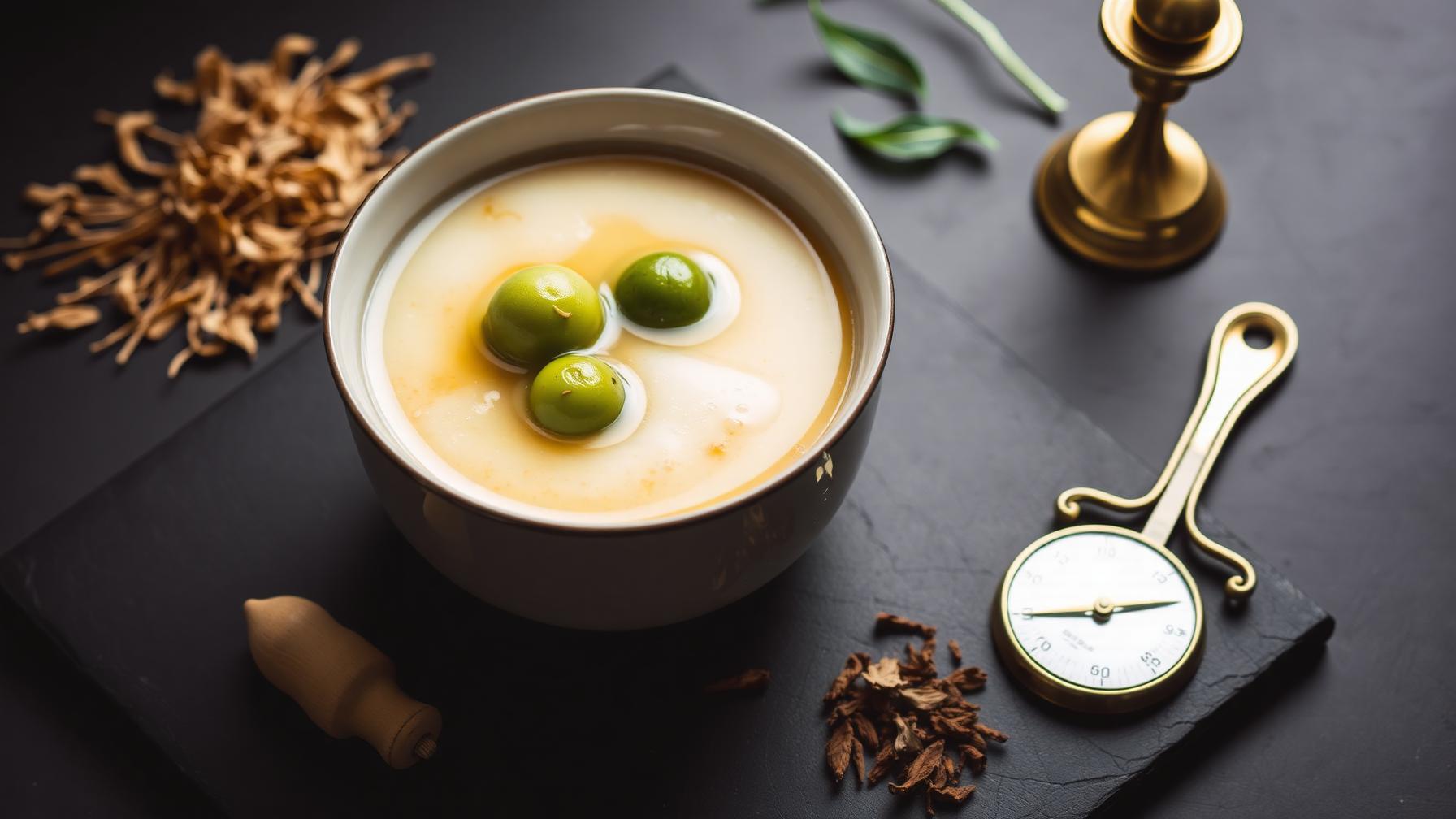
    A warm bowl of congee with green garnish on dark slate, dried herbs and a small brass scale beside itMedi-Chi logo
    Dietary TherapyNutritionDigestionIntegrative PracticeTCM Cookbooks

    Digestive Complaints: Where TCM Dietetics and Modern Nutrition Actually Meet

    Medically Reviewed by Derek Doran, BHSc (Acupuncture) · AHPRA Registered · AACMA Member · Updated September 14, 2026

    September 14, 20267 min readBy Derek Doran

    Scope note: Educational content for practitioners and students. Not medical advice, and not a substitute for dietetic referral where a patient needs formal nutritional assessment.

    Two vocabularies, one plate

    Modern clinical nutrition describes food by composition — macronutrients, fibre, fermentable carbohydrates, micronutrient density. TCM dietetics describes food by what it does to the person eating it: warming or cooling, moistening or drying, easy or hard to transform.

    These are not competing claims about the same thing. One is a description of the food, the other a description of the response. In digestive care, where two patients can react very differently to an identical meal, the second description is often the more clinically useful one.

    The overlap is mostly about preparation

    Where the two frameworks converge hardest is not on ingredients but on how food is prepared and eaten:

    • Cooked, warm, and soft is easier to digest than raw, cold, and fibrous. TCM frames this as supporting transformation; a modern gastroenterologist frames it as reducing mechanical and fermentative load. Same advice.
    • Regular, moderate meals beat erratic large ones. Classical dietetics is unambiguous about this, and so is every modern functional-gut protocol.
    • Eating conditions matter — unhurried, seated, not while stressed. This is a standard part of classical advice and increasingly a standard part of gut-brain axis discussion.

    That overlap is worth naming explicitly to patients, because it makes the advice feel less like a competing belief system and more like two traditions arriving at the same place.

    Free Clinical Tool

    Turn This Knowledge Into a Treatment Plan

    Enter any Western diagnosis and get a complete TCM treatment protocol — acupuncture points, herbal formulas, moxibustion, cupping, and gua sha recommendations.

    Writing advice patients will actually follow

    The failure mode of dietary advice is abstraction. "Avoid cold, raw foods" is a category; "swap the morning smoothie for warm congee three days a week" is an instruction.

    That is the reason the Medi-Chi cookbooks are organised by pattern rather than by ingredient. Each recipe is tagged to the presentation it suits, so you can hand a patient two or three specific dishes instead of a list of prohibitions:

    • The Winter volume leans on slow-cooked, warming dishes for patients who present cold and depleted.
    • The Summer volume covers lighter, cooling, hydrating options for heat and damp-heat presentations.

    Keeping it inside scope

    Dietary advice is within scope for Chinese medicine practitioners, but weight-loss claims, treatment of eating disorders, and management of diagnosed malabsorption or inflammatory bowel disease all warrant medical or dietetic involvement. Red-flag symptoms — unexplained weight loss, bleeding, persistent vomiting, nocturnal symptoms — go to a doctor first, every time.

    Background reading

    The classical rationale behind most of this sits in the Modern Nèi Jīng, which discusses food, season and constitution in plain English. Both cookbooks and the Nèi Jīng are included with an annual subscription.

    Frequently Asked Questions

    Is TCM dietary therapy compatible with modern clinical nutrition?

    Largely, yes. The two frameworks describe different things — composition versus the individual's response — and in digestive care they converge strongly on meal regularity, preparation method, and eating conditions.

    Are the Medi-Chi cookbooks organised by condition?

    They are organised by TCM pattern, with each recipe tagged to the presentation it suits, so advice can be matched to the patient rather than to a diagnosis label.

    When should a patient with digestive symptoms be referred?

    Any red-flag presentation — unexplained weight loss, bleeding, persistent vomiting, nocturnal symptoms, or a suspected eating disorder — should be referred for medical assessment before dietary work continues.

    💡 💡 Tip: Press and hold on citation links to open them in your browser.

    Derek Doran, BHSc (Acupuncture)

    AHPRA Registered (CMR0002211465) · AACMA Member

    Derek is the founder of MediChi and a registered acupuncturist with clinical expertise in integrating Western diagnoses with Traditional Chinese Medicine treatment protocols.

    Clinically reviewed: September 14, 2026

    Found this useful? Share it

    Ready to Apply This in Clinic?

    Medi-Chi translates any Western diagnosis into a complete TCM treatment plan in seconds. Available in 10 languages for clinical practice worldwide.

    ✓ 10 Treatment Styles✓ PubMed Citations✓ 185+ Herbs & 65+ Formulas✓ No Credit Card Required

    Related Articles