    Annual subscribers now receive The Modern Nèi Jīng FREESubscribe AnnuallyClinical Education ToolThis platform provides educational resources for TCM practitioners and students. It does not issue medical certificates, prescriptions, or clinical diagnoses.
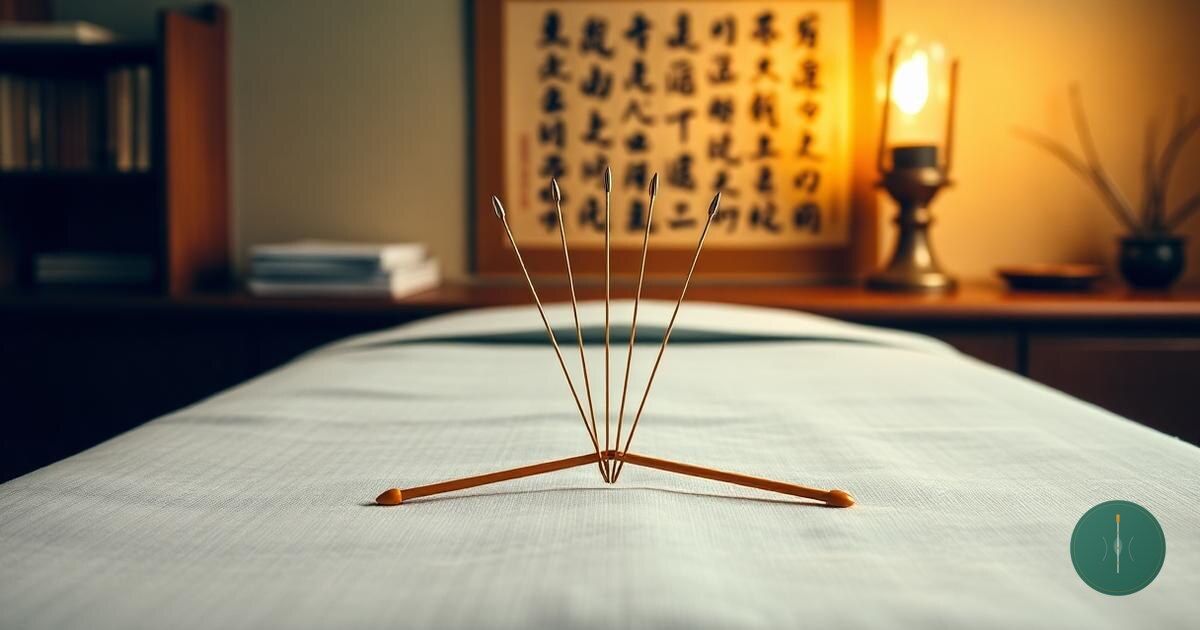
    Three precisely placed acupuncture needles arranged in the classical Jin Three-Needle pattern on the scalp
    AcupunctureJin Three-NeedleNeurologyRehabilitationChinese Medicine

    Jin's Three-Needle Technique (靳三针): The Minimalist Acupuncture System That Changed Chinese Neurology

    Medically Reviewed by Derek Doran, BHSc (Acupuncture) · AHPRA Registered · AACMA Member · Updated April 3, 2026

    April 3, 202612 min readBy MediChi Clinical Team

    The Philosophy of Three

    In classical Chinese numerology, three (三 sān) represents completeness — the unity of Heaven, Earth, and Humanity. Professor Jìn Ruì (靳瑞, 1932–2024) transformed this philosophical principle into a clinical methodology that has influenced Chinese acupuncture for over four decades.

    Where most acupuncture systems rely on complex multi-point prescriptions, Jin's approach is radically minimalist: three needles, precisely placed, synergistically chosen. The result is a system that is both easier to learn and, according to published clinical trials, remarkably effective for neurological and rehabilitation conditions.


    Origins at Guangzhou University

    Jin Rui began developing his Three-Needle system in the 1970s at Guangzhou University of Chinese Medicine (广州中医药大学), where he served as professor of acupuncture for over 40 years. Drawing on classical texts including the Nèi Jīng and Nán Jīng, he identified recurring three-point combinations that appeared across multiple historical sources and tested them systematically in clinical practice.

    By the 1980s, his standardised groupings had been adopted across Guangdong province's TCM hospitals. Today, Jin's Three-Needle Technique is taught at over 30 TCM universities in China and has been the subject of more than 500 published clinical studies.


    Core Needle Groupings

    Neurological Prescriptions

    The neurological groupings represent the heart of Jin's system and his greatest contribution to clinical acupuncture:

    Zhì Sān Zhēn (智三针 — Intellectual Three Needles) uses three of the four Sì Shén Cōng (四神聪) extra points — anterior, left, and right — to stimulate the cerebral cortex. This is Jin's flagship prescription, most commonly used for intellectual disability, ADHD, and cognitive delay in children.

    Nǎo Sān Zhēn (脑三针 — Brain Three Needles) targets the occipital cortex via GV-17 (Nǎo Hù) and bilateral GB-19 (Nǎo Kōng). Research has demonstrated its utility in cerebral palsy and post-stroke rehabilitation, often combined with Zhì Sān Zhēn for comprehensive CNS treatment.

    Shé Sān Zhēn (舌三针 — Tongue Three Needles) addresses speech disorders by needling three points at Shàng Lián Quán and 0.8 cun bilaterally. Post-stroke aphasia, dysarthria, and dysphagia are primary indications.

    Musculoskeletal Prescriptions

    Shǒu Sān Zhēn (手三针 — Hand Three Needles): LI-4, LI-11, and SJ-5 for upper limb paralysis and weakness.

    Zú Sān Zhēn (足三针 — Foot Three Needles): ST-36, SP-6, and LR-3 for lower limb disorders.

    Jiān Sān Zhēn (肩三针 — Shoulder Three Needles): LI-15, SI-9, and SJ-14 surrounding the glenohumeral joint for frozen shoulder and post-stroke subluxation.

    Xī Sān Zhēn (膝三针 — Knee Three Needles): The two Eyes of the Knee (EX-LE4 and ST-35) plus SP-10 for osteoarthritis and knee rehabilitation.


    The Evidence Base

    Post-Stroke Rehabilitation

    A 2024 study published in Medicine investigated Jin's three needles combined with mirror therapy for post-stroke upper limb dysfunction. The combination significantly improved brain function recovery compared to conventional rehabilitation alone.

    Free Clinical Tool

    Turn This Knowledge Into a Treatment Plan

    Enter any Western diagnosis and get a complete TCM treatment protocol — acupuncture points, herbal formulas, moxibustion, cupping, and gua sha recommendations.

    A standardised randomised controlled trial published in Zhongguo Zhen Jiu (2023) confirmed that Jin's three-needle protocols for stroke produced statistically significant improvements in motor function outcomes.

    Neuropsychiatric Applications

    Li et al. (2022) published a study protocol in Frontiers in Psychiatry evaluating Jin's three-needle therapy versus placebo acupuncture for post-stroke anxiety, demonstrating the system's expanding evidence base beyond motor rehabilitation.

    A 2025 RCT protocol published in PLoS One is investigating Jin's three-needle versus sham acupuncture for mild-to-moderate depression, reflecting growing interest in the technique's neuropsychiatric applications.

    Parkinson's Disease

    Liu et al. (2024) published in BMJ Open a multicentre, randomised, assessor-blinded protocol evaluating Jin's three-needle technique for motor symptoms and anxiety in Parkinson's disease — the largest planned trial of the system to date.

    Paediatric Neurology

    A 2025 clinical observation in Zhongguo Zhen Jiu demonstrated that combining Jin's three-needle therapy with game therapy produced significant improvements in children with autism spectrum disorder, highlighting the system's versatility in paediatric applications.


    Clinical Principles

    Less Is More

    Jin's system embodies a principle increasingly supported by acupuncture research: fewer, well-chosen needles may outperform diffuse multi-point protocols. By limiting each prescription to three points, the practitioner can:

    1. Focus therapeutic intention on the primary pathology

    2. Reduce patient discomfort and treatment anxiety

    3. Standardise protocols for clinical research

    4. Train students more efficiently

    Synergistic Grouping Logic

    Each three-needle group follows specific Chinese medical logic:

    • Local + distal + systemic: e.g., Wèi Sān Zhēn combines CV-12 (local), PC-6 (distal anti-nausea), ST-36 (systemic digestive support)
    • Surrounding the lesion: e.g., Jiān Sān Zhēn encircles the shoulder joint from three angles
    • Cortical targeting: e.g., Zhì Sān Zhēn stimulates three scalp points overlying the cerebral cortex

    Integration with Modern Practice

    Jin's Three-Needle system integrates well with other modalities:

    • Electroacupuncture: Many Jin groupings (especially musculoskeletal ones) are frequently augmented with electrical stimulation
    • Rehabilitation therapy: The mirror therapy study demonstrates effective combination with physiotherapy
    • Scalp acupuncture: The neurological groupings share anatomical territory with Jiao's scalp acupuncture zones
    • Game therapy: Paediatric applications combine needle treatment with play-based engagement

    Explore Jin's Three-Needle System

    Frequently Asked Questions

    What is Jin's Three-Needle Technique?

    Jin's Three-Needle Technique (靳三针) is a systematised acupuncture method developed by Professor Jin Rui at Guangzhou University of Chinese Medicine. It uses precisely defined groups of three acupuncture points to target specific conditions, particularly neurological and rehabilitation-focused disorders.

    How many needle groupings are in the Jin Three-Needle system?

    The standard system contains over 16 named three-needle groupings, each targeting a specific body region or clinical condition — including Zhi San Zhen (Intellectual Three Needles), Nao San Zhen (Brain Three Needles), Shou San Zhen (Hand Three Needles), and more.

    What conditions is Jin's Three-Needle most effective for?

    The system is most extensively researched for post-stroke rehabilitation, cerebral palsy in children, speech disorders, cognitive delay, Parkinson's disease, and musculoskeletal conditions such as frozen shoulder and knee osteoarthritis.

    Is there research evidence for Jin's Three-Needle Technique?

    Yes. Multiple randomised controlled trials and systematic reviews have been published in peer-reviewed journals including Medicine, BMJ Open, and Frontiers in Psychiatry, investigating its effects on stroke recovery, Parkinson's disease, depression, and autism spectrum disorder.

    All Citations Verified6/6

    Every PubMed citation in this article has been manually verified against its source.

    💡 💡 Tip: Press and hold on citation links to open them in your browser.

    Derek Doran, BHSc (Acupuncture)

    AHPRA Registered (CMR0002211465) · AACMA Member

    Derek is the founder of MediChi and a registered acupuncturist with clinical expertise in integrating Western diagnoses with Traditional Chinese Medicine treatment protocols.

    Clinically reviewed: April 3, 2026

    Found this useful? Share it

    Ready to Apply This in Clinic?

    Medi-Chi translates any Western diagnosis into a complete TCM treatment plan in seconds. Available in 10 languages for clinical practice worldwide.

    ✓ 10 Treatment Styles✓ PubMed Citations✓ 185+ Herbs & 65+ Formulas✓ No Credit Card Required

    Related Articles