    Annual subscribers now receive The Modern Nèi Jīng FREESubscribe AnnuallyClinical Education ToolThis platform provides educational resources for TCM practitioners and students. It does not issue medical certificates, prescriptions, or clinical diagnoses.
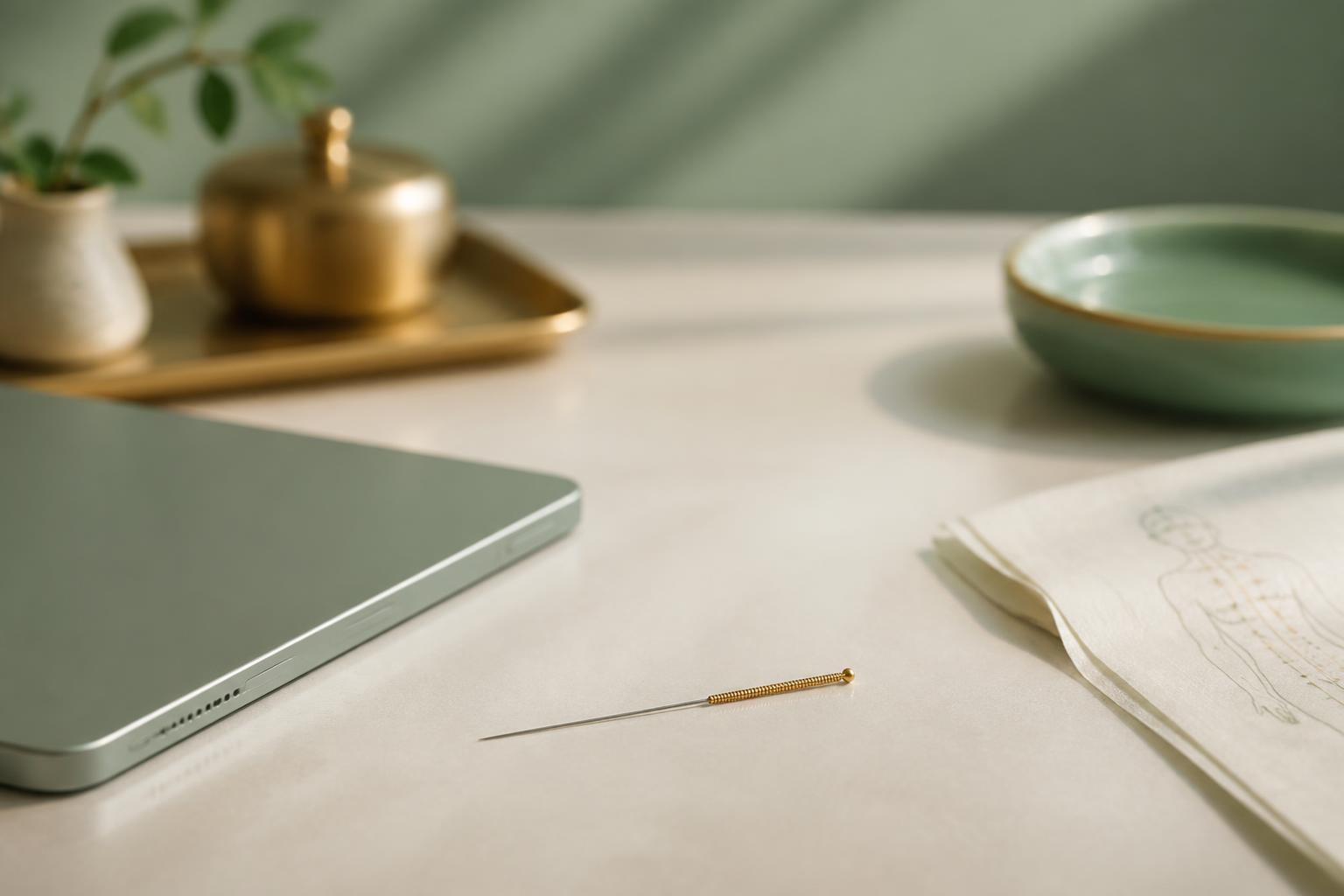
    A single acupuncture needle beside a small brass compass and folded parchment on a jade surface — no text
    Medi-ChiPractitioner ToolsClinical Decision SupportTCM SoftwareSubscription

    Medi-Chi for Practitioners Worldwide: A Clinical Decision-Support Platform for TCM

    Medically Reviewed by Derek Doran, BHSc (Acupuncture) · AHPRA Registered · AACMA Member · Updated July 12, 2026

    July 12, 20267 min readBy Derek Doran

    Chinese medicine has spent two thousand years turning careful observation into pattern. What it has not always had is a way to keep every one of those patterns — across every style — at your fingertips during a busy clinic day. That is what Medi-Chi is for.

    This is a plain rundown of what a Medi-Chi practitioner subscription gives you, whether you are a licensed acupuncturist in Portland or Prague, a BAcC member in Bristol, or an NCCAOM diplomate in New York.

    What Medi-Chi is (and what it is not)

    Medi-Chi is a clinical decision-support platform for practising acupuncturists. It is not a self-diagnosis app, not a wiki, and not a replacement for the years you have already spent training. It is a structured second pair of eyes — one that has read the classics, remembers the point cautions, and can generate a clean patient handout while you are still washing your hands between clients.

    Globally, use of traditional and complementary medicine keeps climbing — the WHO Global Report on Traditional and Complementary Medicine documents integration into national health systems across every WHO region [1]. Practitioners now work alongside GPs, physios, psychologists, and oncologists. That's where a tool like Medi-Chi earns its keep: it translates cleanly between what a patient's referring doctor wrote down and the classical pattern you're actually treating.

    The 14-style diagnosis engine

    Most clinical software forces you into one lineage. Medi-Chi does the opposite. Enter symptoms once and see how the presentation looks through:

    • Standard TCM pattern differentiation (biànzhèng)
    • Five Element constitutional acupuncture
    • Stems and Branches (Nà Zǐ / Nà Jiǎ)
    • Saam four-needle prescriptions
    • Master Tung's Magic Points
    • Dr Tan's Balance Method
    • Japanese meridian therapy (Manaka, Kiiko style influences)
    • Korean Sasang and hand acupuncture
    • Auricular acupuncture (NADA, Battlefield, French systems)
    • Esoteric and sacred-geometry approaches
    • and a handful more, including horary (Ling Gui Ba Fa) and modern integrative frameworks

    You can compare two styles side by side to spot where the reasoning agrees and where it diverges. That's rare in one tool, and it's the fastest way to check your own bias in a case.

    Classical-text referenced reasoning

    Every AI-generated diagnosis in Medi-Chi cites the named classical source it draws from — the Sù Wèn, Líng Shū, Shāng Hán Lùn, Jīn Guì Yào Lüè, Nán Jīng, and others. If a pattern reasoning line reads "Liver Qi invades Spleen (Shāng Hán Lùn line 100)", you can go and read that line. No hand-waving, no vague "traditional wisdom".

    This matters for two reasons. First, it keeps the output honest — the LLM can't drift into invented classics. Second, it doubles as CPD: junior practitioners see the source texts show up in the same window as the modern prescription and gradually build fluency.

    Point-safety data built in

    Every point in the reference has needling depth ranges, anatomical cautions, and contraindications — including thorax, abdomen, and cranial-base points where depth-related pneumothorax risk is real. The WHO's benchmarks for the practice of acupuncture set the international baseline for safe technique [2]; Medi-Chi's point database is structured to line up with that standard so you can hand it to a supervising practitioner or an insurer and it will look familiar.

    Practitioner Subscription

    Unlock the Full Practitioner Toolkit

    The 14-style diagnosis engine, classical-text referenced reasoning, point-safety data, clinical handouts, the research database, and the practitioner PDF library — all behind one subscription. 7-day free trial, no card required.

    You'll see a small ruler icon and an amber alert on high-risk points — a nudge, not a lecture.

    Clinical handouts you can actually give a patient

    Every diagnosis output can be turned into a print-optimised patient handout: patient-friendly explanation of the pattern, the treatment plan in plain language, home-care advice, and clinic branding if you've set up a practitioner profile. The handouts auto-save as you edit and print cleanly to A4 or Letter.

    There's a separate library of one-pager PDF forms behind the paywall on the Practitioner Resources page — fillable, bilingual, and printable — for jurisdictions where funding paperwork slows the whole clinic down.

    The evidence base, on tap

    Acupuncture for chronic pain now has one of the strongest evidence bases of any allied-health intervention: Vickers and colleagues' individual patient-data meta-analysis pulled 39 trials and 20,827 patients and confirmed an effect on back and neck pain, knee osteoarthritis, and chronic headache that persists at 12 months [3]. Medi-Chi's Research Database sits over PubMed and Cochrane with a Firecrawl-backed synthesis layer so you can pull the latest trial data straight into a consultation, cited and dated.

    The pieces that quietly save you time

    • Tongue diagnosis — upload a phone photo, get colour, coating, and shape features extracted for your notes.
    • Horary / Body Clock — Nà Zǐ, Nà Jiǎ, Ling Gui Ba Fa, all in one place with the correct calendar maths done for you.
    • Saved cases — pin, tag, and annotate your diagnostic history so a returning patient is a two-click lookup.
    • Global search — one search bar across points, patterns, formulas, blog articles, and your own cases, with shareable URLs.
    • Offline access — the last 200 records cache to your device for house calls and hospital shifts with no signal.
    • 10 language interface — Chinese characters preserved for pulse and point names, so nothing is lost in translation.

    Privacy, ethics, and the boring stuff

    Medi-Chi runs on managed infrastructure with row-level security on every table — you only ever see your own patient data. Guest mode lets you run a case with no identifiers at all. The platform is designed to align with the health-privacy expectations of AHPRA, NCCAOM, and BAcC codes of conduct: no advertising testimonials on your profile, no outcome claims, and every AI output flagged as clinical decision support, not diagnosis in the medical-legal sense.

    What it costs, and how to try it

    There's a 7-day free trial with no card required — you get the full practitioner feature set. After that, a monthly or annual subscription unlocks continued access, plus the Modern Nèi Jīng commentary on annual plans. Full detail lives on the Practitioner Pricing page.

    If you want to see the diagnosis engine before committing, start a case in guest mode from the home page — it costs nothing and you can screenshot the output for a colleague.

    The short version

    Medi-Chi is what happens when a clinician who wanted the classics, the modern evidence, and a printable handout in the same window sat down and built it. If any of that sounds like something your clinic day would benefit from, start the trial — no card, no lock-in.

    Frequently Asked Questions

    Who is Medi-Chi built for?

    AHPRA-registered Chinese medicine practitioners in Australia, NCCAOM diplomates and state-licensed acupuncturists in the US, BAcC members in the UK, and equivalent registered acupuncturists worldwide. It is a clinical decision-support and practice-management tool, not a replacement for professional judgement.

    What does the subscription actually unlock?

    The 14-acupuncture-style diagnosis engine (TCM, Five Element, Stems and Branches, Saam, Master Tung, Dr Tan balance method, Japanese, Korean, esoteric, and more), classical-text referenced pattern reasoning, point-safety data, clinical handouts, tongue-scan tools, and the practitioner research database.

    Does Medi-Chi make the diagnosis for me?

    No. Medi-Chi surfaces likely pattern differentiations, cites the classical texts they come from, and suggests style-specific point prescriptions. The clinician always makes the final decision. Every AI output cites named classical sources such as the Sù Wèn, Líng Shū, or Shāng Hán Lùn so you can check the reasoning.

    Do you store patient data?

    Only what you enter into a saved case, and it is scoped to your account with row-level security. You can work in guest mode with no patient identifiers if your jurisdiction requires it. All patient-identifying fields (name, DOB, contact) are handled under health-privacy safeguards.

    All Citations Verified3/3

    Every PubMed citation in this article has been manually verified against its source.

    💡 💡 Tip: Press and hold on citation links to open them in your browser.

    Derek Doran, BHSc (Acupuncture)

    AHPRA Registered (CMR0002211465) · AACMA Member

    Derek is the founder of MediChi and a registered acupuncturist with clinical expertise in integrating Western diagnoses with Traditional Chinese Medicine treatment protocols.

    Clinically reviewed: July 12, 2026

    Found this useful? Share it

    Unlock the Full Practitioner Toolkit

    The 14-style diagnosis engine, classical-text referenced reasoning, point-safety data, clinical handouts, the research database, and the practitioner PDF library — all behind one subscription.

    • 14-style diagnosis engine with classical citations
    • Point-safety data & clinical handouts
    • Full practitioner PDF library
    • Research database & case saving

    Starting at A$29.99/mo · No card required for trial · Cancel anytime

    Related Articles