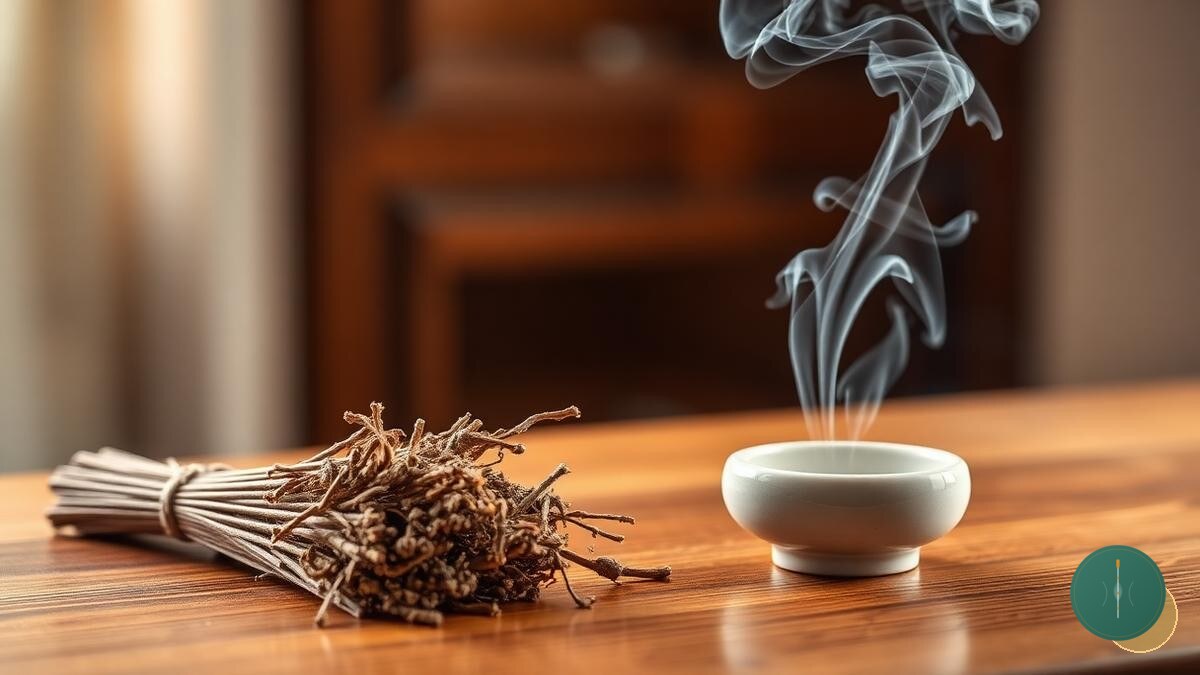
Moxibustion Explained: The Complete Clinical Guide to Warming Therapy
Medically Reviewed by Derek Doran, BHSc (Acupuncture) · AHPRA Registered · AACMA Member · Updated April 7, 2026
The Forgotten Half of Chinese Medicine
The Chinese character for acupuncture is 针灸 (zhēn jiǔ) — literally "needle and moxa." Yet in Western clinics, moxibustion is often an afterthought, something used occasionally rather than systematically. This is a clinical mistake.
In the Nèi Jīng, moxibustion is described as indispensable: "When needling fails to cure, moxibustion is appropriate" (针所不为,灸之所宜). The Běn Cǎo Cóng Xīn states that moxa "penetrates all twelve channels and can reach diseases that herbs and needles cannot." For Cold patterns, Yang deficiency, and chronic conditions, moxibustion is not merely complementary — it is primary.
What Is Moxibustion?
Moxibustion involves burning Artemisia argyi (艾草, ài cǎo — Chinese mugwort) on or near acupuncture points. The combustion produces:
- Infrared radiation at wavelengths (3–4 μm) that penetrate 10 mm into tissue — deeper than conventional heat therapy
- Volatile compounds including cineole, thujone, and terpenes with demonstrated anti-inflammatory properties
- Far-infrared energy that resonates with biological tissue at cellular level
This is not simply "heating a point." The specific wavelength and chemical profile of burning mugwort creates effects that cannot be replicated with a heat lamp or hot pack.
Types of Moxibustion
1. Direct Moxibustion (直接灸)
A small cone of moxa punk (loose moxa fibre) is placed directly on the skin and ignited.
Scarring (化脓灸, huà nóng jiǔ): The cone burns completely, creating a blister and eventually a small scar. Historically used for chronic conditions including tuberculosis, asthma, and epilepsy. Still practised in Japan (known as okyu) but rare in Western clinics due to infection risk and patient consent concerns.
Non-scarring (非化脓灸): The cone is removed or extinguished before the skin blisters. The patient feels intense, penetrating warmth. Commonly used on ST36, CV4, and GV4 for tonification.
2. Indirect Moxibustion (间接灸)
A substance is placed between the moxa cone and the skin:
| Medium | Chinese Name | Primary Indications |
|---|---|---|
| Ginger slice | 隔姜灸 | Cold-Damp patterns, nausea, diarrhoea, abdominal pain |
| Garlic slice | 隔蒜灸 | Toxic swellings, early-stage abscesses, insect bites |
| Salt | 隔盐灸 | Collapse of Yang, acute diarrhoea, cold limbs (CV8 only) |
| Aconite cake | 隔附子饼灸 | Kidney Yang deficiency, impotence, infertility, chronic fatigue [^fuzi-safety] |
[^fuzi-safety]: Safety note — Fu Zi (Aconite) is TGA-restricted in Australia. Aconite cake moxibustion uses the herb as an external indirect medium between the moxa cone and the skin — it is not ingested and the alkaloids are not absorbed in clinically meaningful amounts. Even so, only use commercially prepared (Zhi) Fu Zi cakes from a registered supplier, never raw Aconite. Internal Fu Zi prescribing remains contraindicated in pregnancy, heat patterns, and cardiac arrhythmia, and is restricted to registered Chinese Medicine practitioners under AHPRA/TGA regulation.
3. Moxa Stick (艾条灸)
The most common technique in modern practice. A compressed moxa stick is held 2–3 cm above the skin. Three subtypes:
- Mild warming (温和灸): Stationary above the point for 5–15 minutes
- Pecking (雀啄灸): Rhythmic up-and-down movement
- Circling (回旋灸): Small rotations over an area
4. Warming Needle (温针灸)
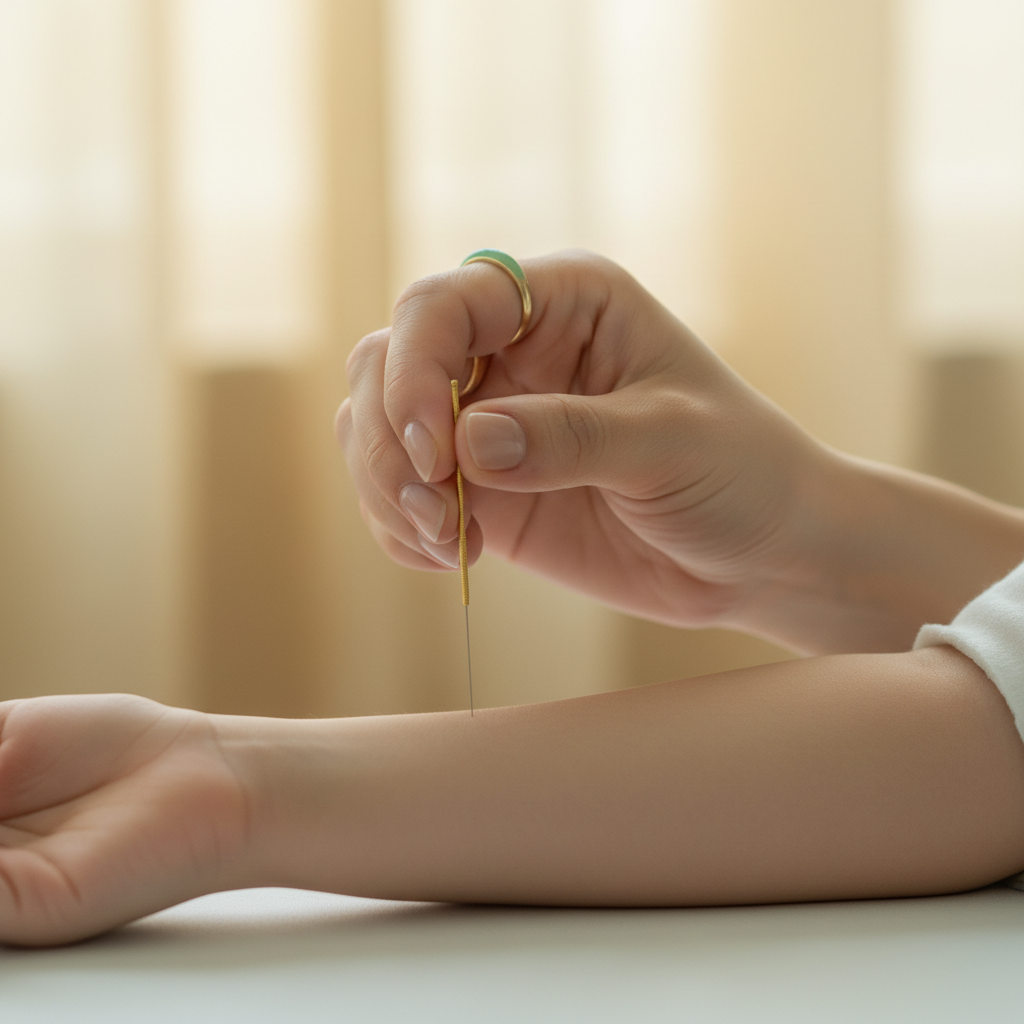
An acupuncture needle is inserted, and a ball of moxa is attached to the handle and ignited. This combines needling and moxibustion simultaneously — the heat conducts down the needle shaft into the point. Particularly effective for Bi syndrome (痹证) and Cold-type musculoskeletal pain.
5. Smokeless Moxa
Carbonised moxa sticks that produce minimal smoke. Clinically convenient for enclosed treatment rooms but debated among traditionalists — the volatile compounds from genuine Artemisia smoke may contribute to therapeutic effects.
Key Points for Moxibustion
Not every acupuncture point responds equally to moxa. The classical points most associated with moxibustion:
| Point | Name | Primary Moxa Indication |
|---|---|---|
| ST36 | 足三里 Zú Sān Lǐ | Tonify Qi and Blood, strengthen immunity, longevity point |
| CV4 | 关元 Guān Yuán | Warm Kidney Yang, infertility, chronic fatigue |
| CV8 | 神阙 Shén Què | Rescue collapsed Yang, chronic diarrhoea (salt moxa only) |
| GV4 | 命门 Mìng Mén | Strengthen Mingmen fire, warm the lower back |
| GV14 | 大椎 Dà Zhuī | Expel Wind-Cold, boost Wei Qi, early-stage cold/flu |
| BL23 | 肾俞 Shèn Shū | Kidney Yang deficiency, low back pain, tinnitus |
| BL67 | 至阴 Zhì Yīn | Breech presentation correction (specific protocol) |
| SP6 | 三阴交 Sān Yīn Jiāo | Gynaecological Cold, dysmenorrhea, promote labour |
Classical principle: "If you want to be safe and well, keep ST36 always warm with moxa" (若要安,三里常不干) — Biǎn Què Xīn Shū
The Evidence Base
IBS with Diarrhoea
A landmark RCT published in Annals of Internal Medicine (Bao et al., 2022) followed 344 IBS-D patients over 24 weeks. Moxibustion at ST25, CV12, and ST36 showed significant improvement in IBS-SSS scores compared to sham, with effects persisting at 12-week follow-up. This remains one of the highest-quality moxa trials to date.
Primary Dysmenorrhea
A 2025 systematic review and meta-analysis (Song & Chen, 2025) pooling data from multiple RCTs found that moxibustion significantly reduced VAS pain scores and improved prostaglandin levels compared to controls. The review noted that moxibustion at SP6, CV4, and CV6 was the most common effective protocol.
Rheumatoid Arthritis
An RCT by Liao et al. (2023) demonstrated that moxibustion reduced DAS28-CRP scores and inflammatory markers in RA patients, with proposed mechanisms involving downregulation of pro-inflammatory cytokines TNF-α and IL-6.
Turn This Knowledge Into a Treatment Plan
Enter any Western diagnosis and get a complete TCM treatment protocol — acupuncture points, herbal formulas, moxibustion, cupping, and gua sha recommendations.
Allergic Rhinitis
A Bayesian network meta-analysis (Chen K et al., 2023) comparing different moxa techniques for allergic rhinitis found that heat-sensitive moxibustion (热敏灸) ranked highest in efficacy among all moxa types studied.
Hypertension
A community-based RCT (Zhou X et al., 2023) tested moxibustion as an adjunct for primary hypertension, finding clinically meaningful reductions in both systolic and diastolic blood pressure compared to standard care alone.
Breech Presentation
The use of moxibustion at BL67 to correct breech presentation is one of the most well-known TCM interventions in obstetrics. Sarsmaz et al. (2022) confirmed a cephalic version rate significantly higher than spontaneous version in the control group, supporting earlier Cochrane review findings.
Heat-Sensitive Moxibustion (热敏灸)
Developed by Professor Chen Rixin at Jiangxi University of TCM, heat-sensitive moxibustion has become one of the most researched moxa innovations:
1. Identify heat-sensitive points — hold a lit moxa stick over acupuncture points and observe the patient's response. Heat-sensitive points produce unusual sensations: penetrating warmth, radiating heat, distant warmth in unrelated body areas, or a "sinking" feeling
2. Treat until sensation extinguishes — unlike standard moxa (which uses fixed time), heat-sensitive moxa continues until the special sensation disappears (the point "desensitises"), often 30–60 minutes
3. Individualised point selection — the sensitised points change based on the patient's current pathology, making each treatment unique
This approach has been adopted by over 200 hospitals in China and was recognised as a National Key Technology by the Chinese Ministry of Science and Technology.
Contraindications and Safety
Absolute contraindications:
- Heat/Excess patterns (unless combined with cooling strategies)
- Over the abdomen and lumbosacral region during pregnancy (except BL67 for breech)
- Over areas of numbness or reduced sensation (neuropathy, DM)
- Open wounds, inflamed skin, or infected areas
Relative contraindications:
- Facial moxibustion (risk of scarring)
- Yin-deficiency with Empty Heat (use with caution — may aggravate)
- Enclosed rooms without ventilation (smoke inhalation risk)
Safety measures:
- Always ask about heat sensitivity before treating
- Keep a small cup of water nearby to catch falling ash
- Use a moxa extinguisher — never leave a burning stick unattended
- Document any skin reactions in patient notes
Integrating Moxibustion into Clinical Practice
For practitioners who primarily needle, adding moxibustion expands your therapeutic range significantly:
Cold/Yang-deficient presentations: Moxa is the primary tool. Warming needle on BL23 + GV4 for Kidney Yang deficiency. Salt moxa on CV8 for collapsed Yang.
Chronic, deficient conditions: Where needling alone produces limited results, adding moxa to ST36, CV4, and BL20 can transform outcomes over a course of treatment.
Immune support: Regular moxa on ST36 and GV14 has been used in China during seasonal illness outbreaks. Research supports upregulation of white blood cell counts and immunoglobulin levels.
Musculoskeletal Cold-Bi: Warming needle on local points + moxa box over the affected region. Particularly effective for chronic knee, shoulder, and lumbar pain that worsens in cold weather.
Explore More on MediChi
- Acupuncture Points Reference — Full point database with moxa indications
- AI Diagnosis Tool — Generate treatment plans including moxibustion recommendations
- Herbal Medicine Guide — Explore warming herbs that complement moxa therapy
- Five Elements Theory — Understand the Fire element's role in moxibustion
Frequently Asked Questions
What is moxibustion in Chinese medicine?
What conditions is moxibustion best for?
Is moxibustion safe?
What does the research say about moxibustion?
All Citations Verified6/6
Every PubMed citation in this article has been manually verified against its source.
💡 💡 Tip: Press and hold on citation links to open them in your browser.
Derek Doran, BHSc (Acupuncture)
AHPRA Registered (CMR0002211465) · AACMA Member
Derek is the founder of MediChi and a registered acupuncturist with clinical expertise in integrating Western diagnoses with Traditional Chinese Medicine treatment protocols.
Clinically reviewed: April 7, 2026