Qi, Blood, Yin & Yang: The Four Pillars of TCM Health
Medically Reviewed by Derek Doran, BHSc (Acupuncture) · AHPRA Registered · AACMA Member · Updated February 25, 2025
The Foundation of TCM
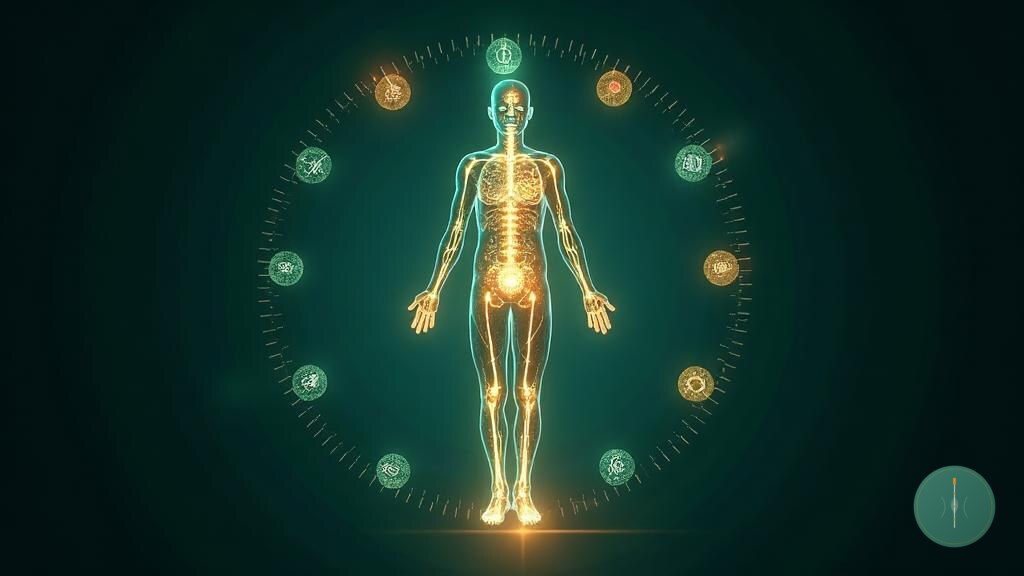
In Traditional Chinese Medicine, health is understood not as the absence of disease, but as the harmonious balance of fundamental substances and forces within the body. Four concepts form the bedrock of all TCM theory and practice: Qi, Blood, Yin, and Yang (Matos et al., 2021).
Every TCM diagnosis ultimately describes an imbalance in one or more of these substances. Every treatment aims to restore their equilibrium.
Qi (气) — Vital Energy
Qi is the most fundamental concept in Chinese medicine — and also the most misunderstood. Often translated as "vital energy" or "life force," Qi is better understood as the functional activity of the body.
Types of Qi
- Yuan Qi (Source Qi) — inherited from parents, stored in the Kidneys, determines constitutional strength
- Gu Qi (Food Qi) — derived from digestion, produced by the Spleen
- Zong Qi (Gathering Qi) — combines food and air Qi in the chest, powers breathing and circulation
- Wei Qi (Defensive Qi) — circulates on the body's surface, protects against pathogens (similar to immune function). Modern research confirms that acupuncture can modulate innate and adaptive immune responses, supporting the traditional concept of Wei Qi as a defensive barrier (Liu et al., 2024)
- Zheng Qi (Upright Qi) — the body's overall resistance to disease
Signs of Qi Imbalance
| Pattern | Symptoms |
|---|---|
| Qi Deficiency | Fatigue, weak voice, spontaneous sweating, poor appetite, pale tongue |
| Qi Stagnation | Distension, mood swings, sensation of a lump in the throat, sighing |
| Qi Sinking | Prolapse of organs, chronic diarrhoea, bearing-down sensations |
| Rebellious Qi | Qi flowing the wrong direction — nausea, vomiting, hiccups, coughing |
Research using Korean constitutional medicine has shown that patients presenting with Spleen-Qi deficiency patterns have measurably lower resting metabolic rates, providing objective physiological correlates for this classical TCM concept (Mun et al., 2017). Network pharmacology studies have also begun mapping the biological pathways underlying Spleen Qi deficiency to specific gene and protein networks (Wang et al., 2020).
Systematic reviews of qigong — a practice explicitly designed to cultivate and regulate Qi — have confirmed significant improvements in fatigue outcomes across multiple clinical populations (Wang et al., 2021).
Blood (血, Xuè)
In TCM, Blood is more than the red fluid in your veins. It is the material counterpart to Qi — nourishing, moistening, and anchoring the mind.
Key Functions
- Nourishes all tissues, organs, and the complexion
- Houses the Shen (mind/spirit) — adequate Blood ensures clear thinking and emotional stability
- Moistens the skin, eyes, tendons, and hair
Signs of Blood Imbalance
| Pattern | Symptoms |
|---|---|
| Blood Deficiency | Pale complexion, dizziness, dry skin and hair, scanty periods, insomnia, anxiety |
| Blood Stasis | Sharp fixed pain, dark complexion, purple lips or tongue, varicose veins, heavy clotted periods |
| Blood Heat | Heavy bleeding, skin rashes, restlessness, feeling of heat in the body |
Modern biomarker research is increasingly validating the Blood Stasis concept, identifying hemorheological changes, platelet activation markers, and microcirculatory dysfunction in patients diagnosed with this TCM pattern (Park et al., 2023).
The Qi-Blood Relationship
TCM holds that "Qi is the commander of Blood; Blood is the mother of Qi." This means:
- Qi moves Blood — if Qi stagnates, Blood stagnates too
- Blood nourishes Qi — Blood deficiency eventually leads to Qi deficiency
- They are inseparable in clinical practice
Yin (阴) and Yang (阳)
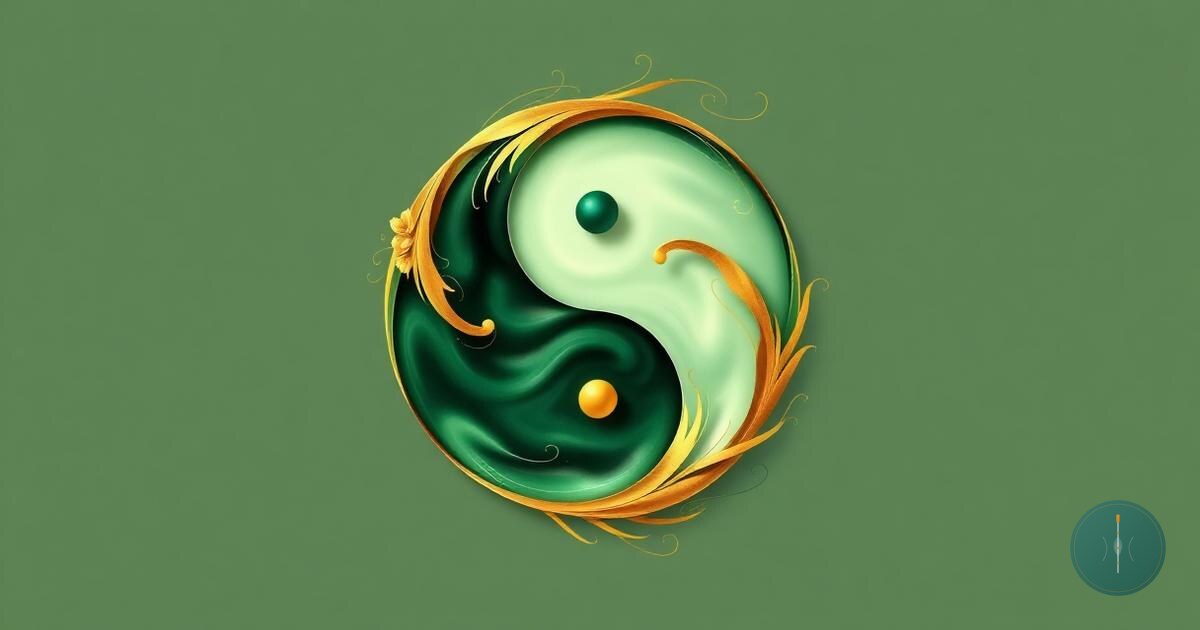
Yin and Yang represent the fundamental duality present in all phenomena. They are not substances but complementary aspects of everything:
| Yin | Yang |
|---|---|
| Rest | Activity |
| Cold | Hot |
| Interior | Exterior |
| Substance | Function |
| Night | Day |
| Nourishing | Transforming |
Yin in the Body
Yin represents the body's cooling, moistening, and nourishing aspects. It includes the physical structures, fluids, and substances that prevent overheating and drying out.
Turn This Knowledge Into a Treatment Plan
Enter any Western diagnosis and get a complete TCM treatment protocol — acupuncture points, herbal formulas, moxibustion, cupping, and gua sha recommendations.
Yin Deficiency symptoms: Night sweats, hot flushes, dry mouth and throat at night, restless sleep, feeling of heat in palms and soles (five-palm heat), a thin and rapid pulse.
Yang in the Body
Yang represents the body's warming, activating, and transforming functions. It is the metabolic fire that drives all physiological processes.
Yang Deficiency symptoms: Feeling cold, cold limbs, pale complexion, fatigue worse in the morning, loose stools, frequent pale urination, a deep and slow pulse.
The Yin-Yang Balance
Health exists when Yin and Yang are in dynamic equilibrium — not static, but constantly adjusting like a thermostat. Disease arises when this balance is disrupted:
- Excess Yang → heat signs (fever, red face, irritability)
- Excess Yin → cold signs (chills, lethargy, fluid retention)
- Deficient Yin → relative heat (night sweats, dry symptoms)
- Deficient Yang → relative cold (cold extremities, fatigue)
This concept of dynamic balance maps closely to the modern understanding of homeostasis. Emerging research on the Yin-Yang framework in immunology demonstrates how pro-inflammatory and anti-inflammatory pathways mirror the Yang-Yin polarity, providing a molecular basis for this ancient model (Yan, 2018).
A clinical study also found that beta-glucan supplementation improved Protective Qi (Wei Qi) deficiency symptoms in adults, suggesting that TCM pattern-based interventions can produce measurable immunological outcomes (Levy et al., 2021).
How These Concepts Work Together
Consider a patient with:
- Fatigue and poor appetite → Qi deficiency (Spleen)
- Pale face and insomnia → Blood deficiency
- Cold limbs → Yang deficiency (Kidney)
A TCM practitioner would identify this as a pattern of Spleen Qi and Blood deficiency with underlying Kidney Yang deficiency — and create a treatment plan addressing all three aspects through acupuncture, herbal medicine, and dietary guidance.
Why It Matters
Understanding Qi, Blood, Yin, and Yang transforms TCM from a collection of mysterious treatments into a coherent, logical medical system. These four concepts provide the language for describing what's happening in the body and, more importantly, what to do about it.
Frequently Asked Questions
What is the difference between Qi and Blood in TCM?
What are Yin and Yang in simple terms?
How do you know if you have a Qi deficiency?
All Citations Verified8/8
Every PubMed citation in this article has been manually verified against its source.
💡 💡 Tip: Press and hold on citation links to open them in your browser.
Derek Doran, BHSc (Acupuncture)
AHPRA Registered (CMR0002211465) · AACMA Member
Derek is the founder of MediChi and a registered acupuncturist with clinical expertise in integrating Western diagnoses with Traditional Chinese Medicine treatment protocols.
Clinically reviewed: February 25, 2025