Acupuncture for Myofascial Pain & Trigger Points: A Clinical Guide
Medically Reviewed by Derek Doran, BHSc (Acupuncture) · AHPRA Registered · AACMA Member · Updated April 3, 2026
What Is Myofascial Pain Syndrome?
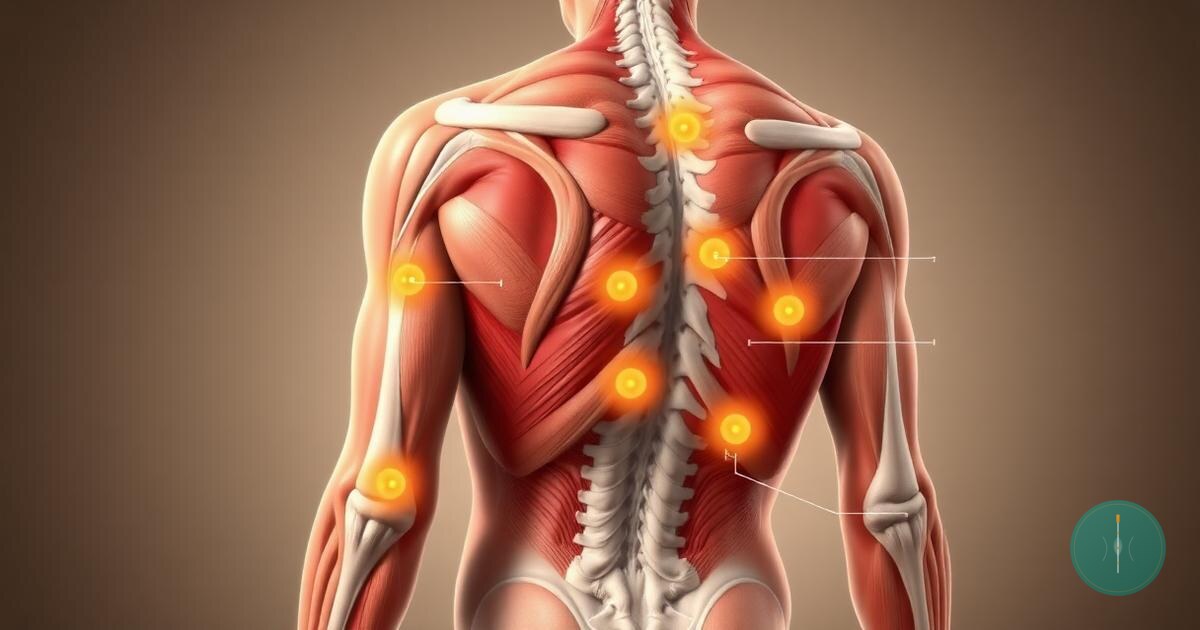
Myofascial pain syndrome (MPS) is one of the most common causes of chronic musculoskeletal pain, affecting an estimated 85% of patients presenting to pain clinics. It is characterised by the presence of myofascial trigger points (MTrPs) — hyperirritable spots within taut bands of skeletal muscle that produce local and referred pain, motor dysfunction, and autonomic phenomena.
The pioneering work of Janet Travell and David Simons mapped trigger point referral patterns throughout the body, creating a clinical framework that remains foundational today.
Understanding Trigger Points
What Are Trigger Points?
A myofascial trigger point is a palpable nodule within a taut band of muscle fibre. When compressed, it produces:
- Local tenderness at the point itself
- Referred pain in a characteristic, predictable pattern
- Local twitch response — a brief, involuntary contraction of the muscle fibres
- Restricted range of motion in the affected muscle
Active vs. Latent Trigger Points
| Type | Characteristics |
|---|---|
| Active | Spontaneously painful; reproduces the patient's chief complaint when pressed |
| Latent | Only painful on palpation; may still restrict movement and weaken the muscle |
Latent trigger points can become active through overuse, trauma, stress, or sustained postures — a common pathway in office workers, athletes, and post-surgical patients.
Modern Pathophysiology
Current evidence suggests trigger points arise from dysfunctional motor endplates where excessive acetylcholine release causes sustained sarcomere contraction. This creates local ischaemia, energy crisis, and release of sensitising substances (bradykinin, substance P, CGRP) that lower the pain threshold — the so-called integrated hypothesis (Shah et al., 2015).
Acupuncture & Trigger Points: The Connection
Historical Overlap
A landmark study found that 92% of common trigger point locations correspond to classical acupuncture points, with similar pain referral patterns. This suggests the two systems independently identified the same clinically significant anatomical structures (Dorsher, 2009).
TCM Interpretation
In TCM terms, trigger points represent areas of Qi and Blood stagnation (气滞血瘀) within the muscle channels (经筋, jīngjīn). The sinew channels — a distinct meridian subsystem described in the Huangdi Neijing — map closely to myofascial planes and provide the theoretical basis for treating musculoskeletal pain.
Key TCM patterns associated with myofascial pain include:
- Qi and Blood Stagnation — fixed, stabbing pain worse with pressure
- Wind-Cold-Damp Bi Syndrome — pain aggravated by weather changes
- Liver Blood Deficiency — muscle cramps, spasms, and poor recovery
- Kidney Deficiency — chronic weakness of sinews and bones
Clinical Needling Techniques
1. Traditional Acupuncture (TCM)
Uses classical point prescriptions based on pattern differentiation and meridian theory. Needles are inserted to obtain De Qi sensation (aching, heaviness, distension) and retained for 20–30 minutes.
Advantages: Addresses root pattern; treats both local and systemic factors; well-established safety profile.
2. Dry Needling
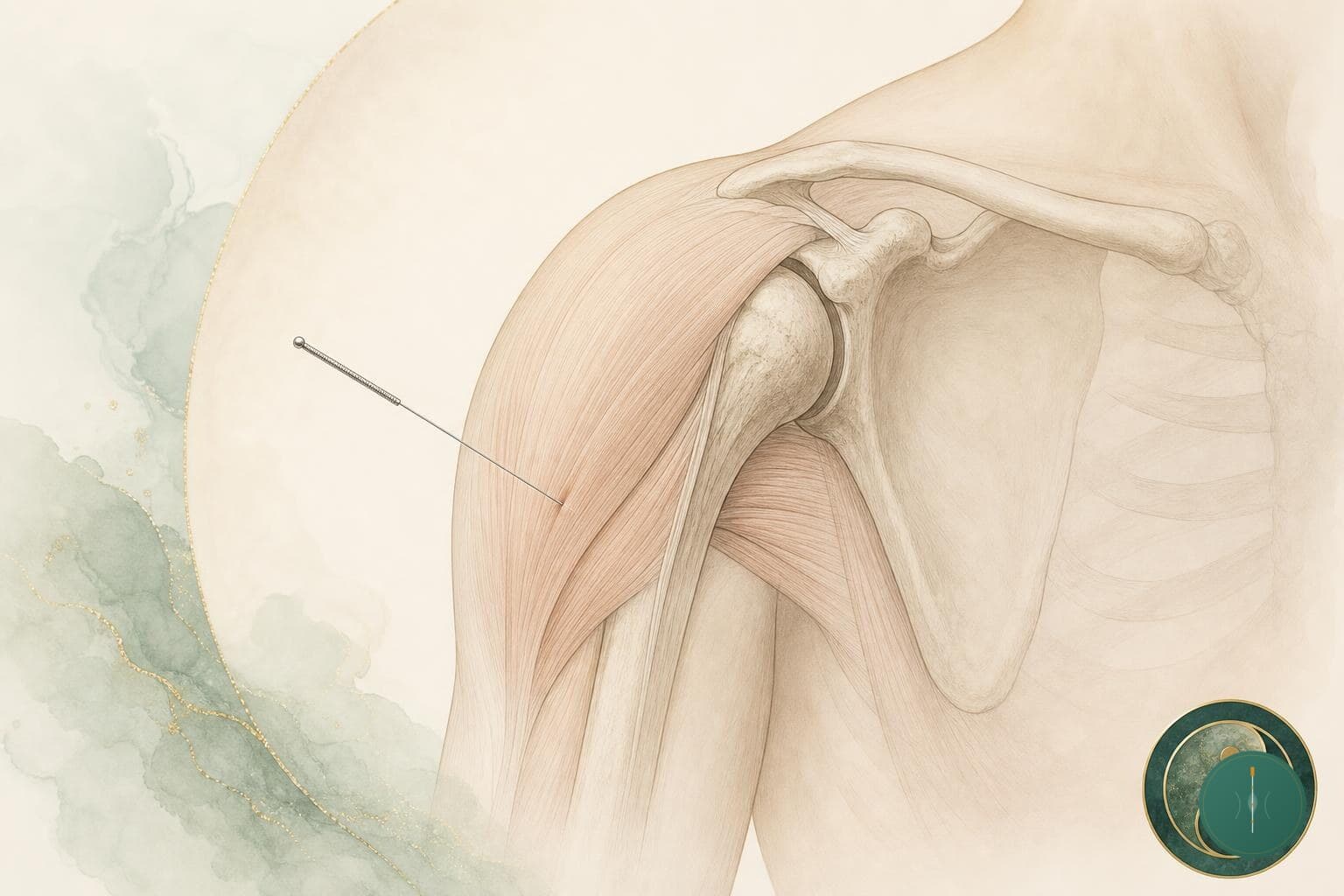
Direct needling into the trigger point, aiming to elicit a local twitch response (LTR). The LTR is associated with disruption of dysfunctional motor endplates and immediate pain reduction. A systematic review confirmed dry needling's effectiveness for reducing trigger point pain (Cummings & White, 2001).
Advantages: Precise targeting of specific trigger points; rapid symptom relief; easily combined with exercise rehabilitation.
3. Electroacupuncture
Electrical stimulation applied through acupuncture needles at trigger points. A randomised clinical trial comparing dry needling, trigger point electroacupuncture, and motor point electroacupuncture for trapezius MPS found all three significantly reduced pain, with electroacupuncture showing additional benefits for muscle relaxation (Moro et al., 2024).
4. Ashi Point Needling
The TCM concept of Ashi points (阿是穴, "ah yes" points) — tender spots that don't correspond to named acupuncture points — predates the modern trigger point concept by over a thousand years. Sun Simiao described needling wherever pain is found, which is functionally identical to trigger point dry needling.
Common Presentations & Point Protocols
Upper Trapezius / Neck-Shoulder Pain
One of the most common trigger point locations. Refers pain to the temporal region, behind the eye, and along the neck.
| Point | Location | Function |
|---|---|---|
| GB-21 (Jianjing) | Midpoint of the upper trapezius | Releases trapezius trigger points, descends Qi |
| GB-20 (Fengchi) | Suboccipital region | Relieves cervicogenic headache and neck tension |
| SI-14 (Jianwaishu) | Medial to the superior angle of the scapula | Releases levator scapulae and rhomboids |
| TE-15 (Tianliao) | Midpoint of the supraspinous fossa | Relaxes supraspinatus, relieves shoulder pain |
Frozen Shoulder (Adhesive Capsulitis)
TCM pattern: Qi and Blood stagnation in the shoulder channels, often with underlying Liver-Kidney deficiency.
| Point | Location | Function |
|---|---|---|
| LI-15 (Jianyu) | Anterior deltoid depression | Opens the shoulder joint, clears the channel |
| TE-14 (Jianliao) | Posterior deltoid depression | Benefits the shoulder, resolves stasis |
| SI-9 (Jianzhen) | Below the posterior shoulder joint | Releases infraspinatus, relieves posterior pain |
| Jianneiling (Extra) | Anterior axillary fold | Releases subscapularis, restores internal rotation |
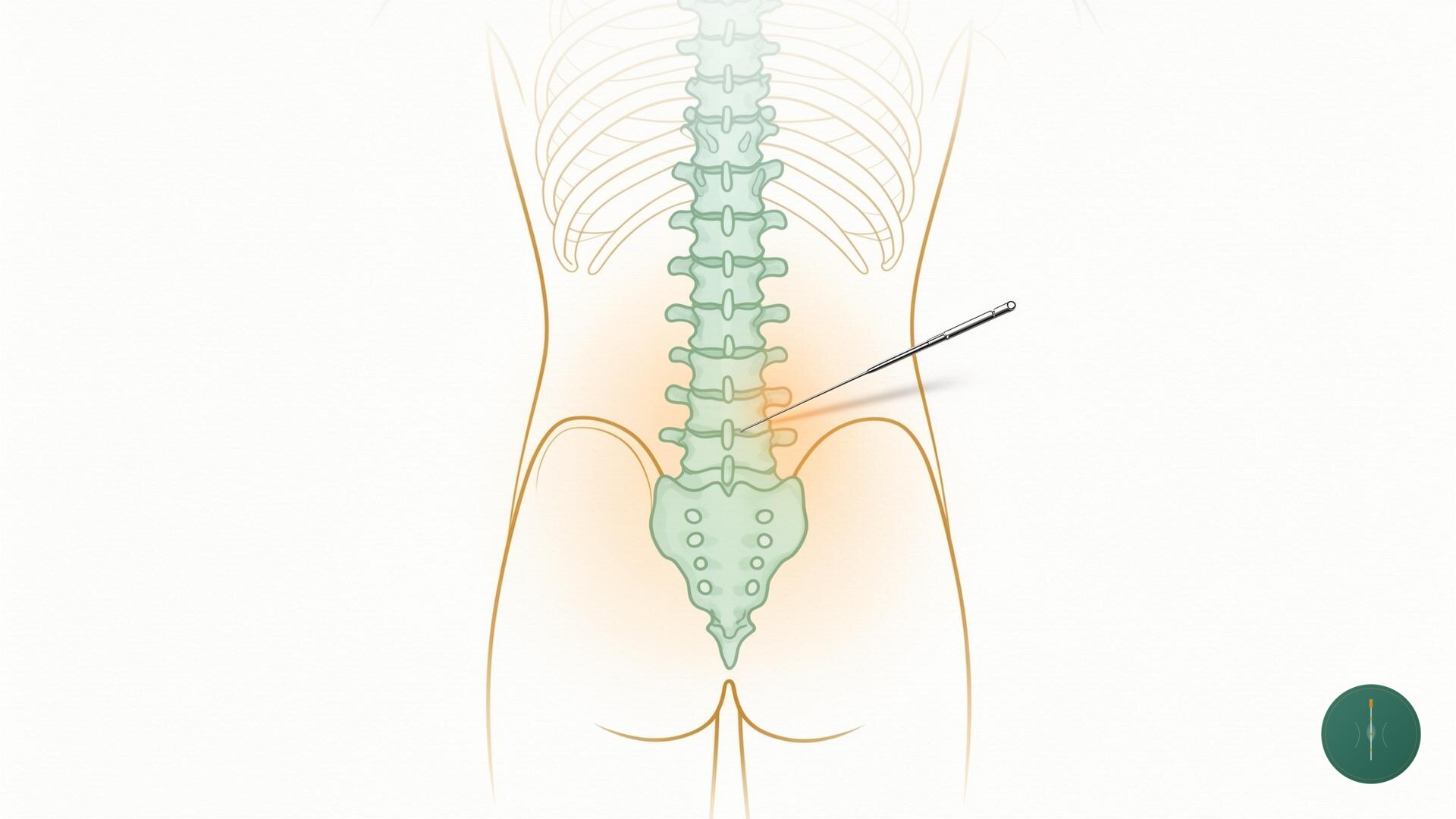
Piriformis Syndrome / Gluteal Pain
A common cause of buttock pain and sciatica-like symptoms due to piriformis trigger points compressing the sciatic nerve.
Turn This Knowledge Into a Treatment Plan
Enter any Western diagnosis and get a complete TCM treatment protocol — acupuncture points, herbal formulas, moxibustion, cupping, and gua sha recommendations.
| Point | Location | Function |
|---|---|---|
| GB-30 (Huantiao) | Junction of outer ⅓ and inner ⅔ between the greater trochanter and sacral hiatus | Releases piriformis, benefits hip joint |
| BL-54 (Zhibian) | 3 cun lateral to the sacral hiatus | Relaxes deep gluteal muscles, clears the channel |
| GB-29 (Juliao) | Midpoint between ASIS and greater trochanter | Releases TFL and gluteus medius |
| BL-36 (Chengfu) | Centre of the gluteal fold | Benefits the lumbar region, relaxes hamstrings |
Tennis Elbow (Lateral Epicondylitis)
Common extensor origin trigger points with referred pain along the lateral forearm.
| Point | Location | Function |
|---|---|---|
| LI-11 (Quchi) | Lateral end of the cubital crease | Clears the channel, reduces inflammation |
| LI-10 (Shousanli) | 2 cun distal to LI-11 | Releases common extensor origin |
| LU-5 (Chize) | Cubital crease, radial to biceps tendon | Relaxes forearm flexors, balances Yin-Yang |
| Ashi points | Tender points along the extensor mass | Direct trigger point deactivation |
Plantar Fasciitis
Trigger points in the gastrocnemius, soleus, and intrinsic foot muscles commonly contribute to heel pain.
| Point | Location | Function |
|---|---|---|
| BL-57 (Chengshan) | Midpoint of the gastrocnemius below the calf | Releases gastrocnemius-soleus complex |
| KI-1 (Yongquan) | Centre of the sole | Descends Qi, relieves plantar pain |
| BL-60 (Kunlun) | Behind the lateral malleolus | Benefits the heel, relaxes Achilles tendon |
| KI-3 (Taixi) | Behind the medial malleolus | Tonifies Kidney, strengthens bones and sinews |
Evidence Base
Systematic Reviews
A comprehensive 2024 meta-analysis of acupuncture for myofascial pain syndrome found significant reductions in pain intensity (VAS scores) compared to sham and conventional treatments, with effects sustained at 4-week follow-up. The review included 29 RCTs and concluded that acupuncture is an effective intervention for MPS management.
Trigger point acupuncture has also been specifically studied for knee osteoarthritis, with a systematic review of 9 RCTs (724 patients) demonstrating superior outcomes in total effective rate, pain reduction, and joint function compared to control groups (Lin et al., 2022).
Mechanism of Action
Research suggests needling trigger points works through multiple pathways:
1. Mechanical disruption of the dysfunctional motor endplate
2. Local blood flow increase — breaking the ischaemic cycle
3. Segmental pain modulation via A-delta fibre stimulation
4. Descending inhibition through endogenous opioid release
5. Connective tissue remodelling — mechanical signal transduction through fascial fibroblasts (Langevin et al., 2006)
Dosage & Frequency
Clinical evidence supports:
- Acute presentations: 2–3 sessions per week for 2–3 weeks
- Chronic MPS: 1–2 sessions per week for 4–8 weeks
- Maintenance: Monthly sessions for recurrent patterns
- Each session should target 3–5 trigger points maximum to avoid post-needling soreness
Integrating with Rehabilitation
Trigger point acupuncture is most effective when combined with:
- Stretching — sustained stretch of the affected muscle immediately after needling
- Strengthening — progressive loading once pain subsides
- Postural correction — addressing perpetuating factors (workstation ergonomics, movement patterns)
- Self-management — foam rolling, tennis ball compression, heat therapy
Safety Considerations
- Pneumothorax risk — exercise caution with upper trapezius, rhomboid, and intercostal needling; use appropriate needle angles and depths
- Post-needling soreness — common and self-limiting (24–48 hours); advise patients in advance
- Anticoagulant use — not an absolute contraindication but requires careful technique and firm pressure post-withdrawal
- Needle phobia — consider acupressure or manual trigger point release as alternatives
TCM Herbal Support for Myofascial Pain
Ge Gen Tang (葛根湯)
Releases muscle tension in the neck and upper back, disperses wind-cold — particularly effective for acute trapezius spasm and cervicogenic headache.
Shu Jing Huo Xue Tang (疏經活血湯)
Invigorates Blood, relaxes sinews, and unblocks the channels — indicated for chronic myofascial pain with Blood stasis pattern.
Du Huo Ji Sheng Tang (獨活寄生湯)
Dispels wind-dampness and tonifies Liver-Kidney — the formula of choice for chronic musculoskeletal pain in patients with underlying deficiency.
Using MediChi for Musculoskeletal Assessment
MediChi's diagnostic tool can help practitioners differentiate between TCM patterns underlying myofascial pain. Enter symptoms like "shoulder pain with restricted movement" or "chronic neck stiffness" to receive pattern differentiation and evidence-based treatment suggestions integrating acupuncture points, trigger point protocols, and herbal support.
Frequently Asked Questions
What is a myofascial trigger point?
How do trigger points relate to acupuncture Ashi points?
Is dry needling the same as acupuncture?
All Citations Verified6/6
Every PubMed citation in this article has been manually verified against its source.
💡 💡 Tip: Press and hold on citation links to open them in your browser.
Derek Doran, BHSc (Acupuncture)
AHPRA Registered (CMR0002211465) · AACMA Member
Derek is the founder of MediChi and a registered acupuncturist with clinical expertise in integrating Western diagnoses with Traditional Chinese Medicine treatment protocols.
Clinically reviewed: April 3, 2026