    Annual subscribers now receive The Modern Nèi Jīng FREESubscribe AnnuallyClinical Education ToolThis platform provides educational resources for TCM practitioners and students. It does not issue medical certificates, prescriptions, or clinical diagnoses.
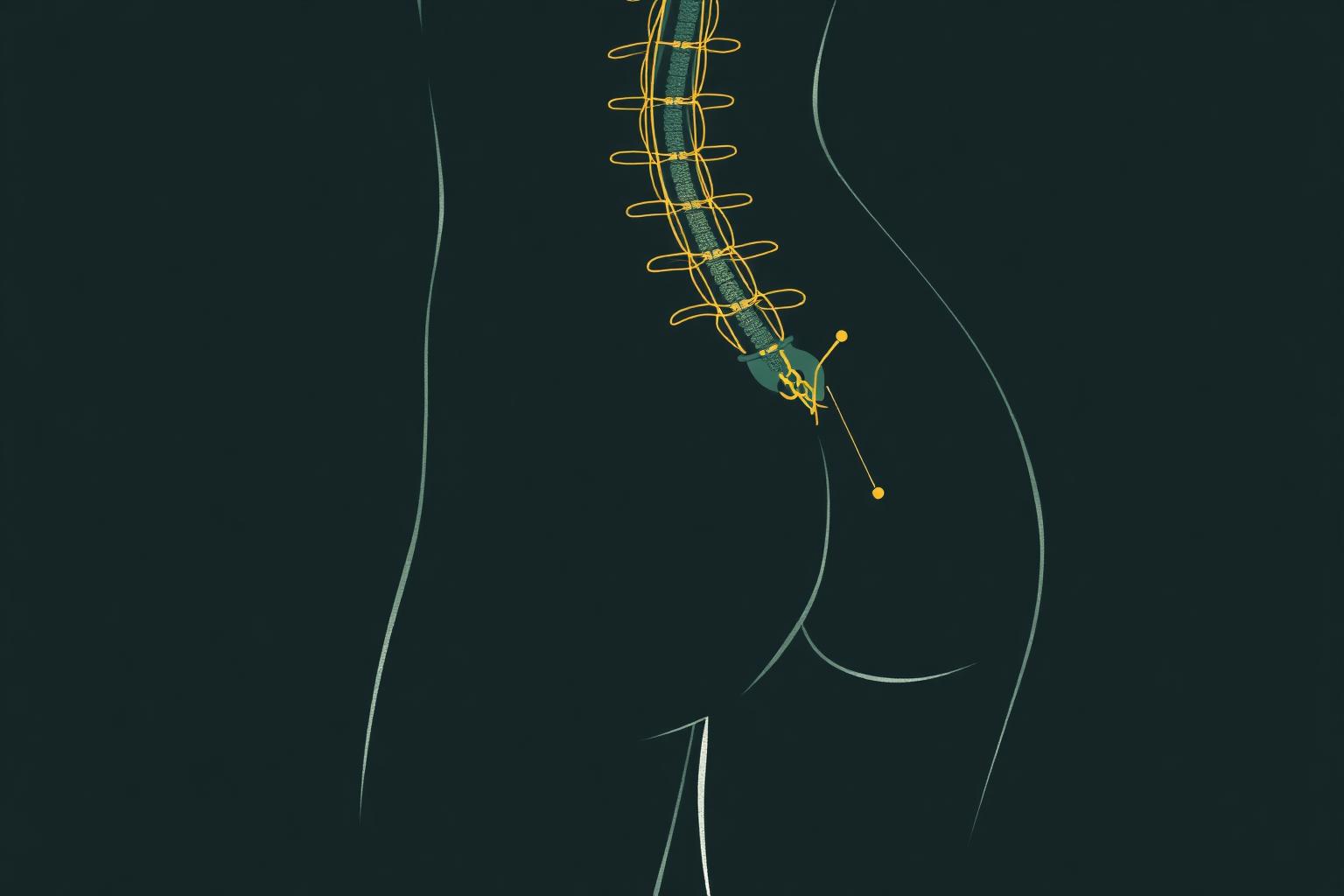
    Soft jade and gold line illustration of a side view of the lumbar spine, sacrum and posterior thigh tracing the sciatic nerve pathway with a single fine acupuncture needle at the mid-buttock, no text
    SciaticaAcupunctureRadiculopathyPiriformisMusculoskeletalPattern DifferentiationClinical Practice

    Sciatica: Notes From the Clinic

    Medically Reviewed by Derek Doran, BHSc (Acupuncture) · AHPRA Registered · AACMA Member · Updated May 28, 2026

    May 28, 202612 min readBy Derek Doran, BHSc (Acupuncture)

    Why This One Follows the Back-Pain Notes

    Almost every week I finish a lower back pain consult and the same question comes back: "and what about the leg pain?" Sciatica is the natural follow-up, and it's common enough that it deserves its own set of notes. If you've read last week's lower back pain piece, consider this the next chapter — the same posterior chain, one nerve deeper.

    I'm writing this the same way, from the chair rather than from the textbook. This is what I'm actually thinking about when someone limps in holding their right buttock and pointing down the back of their leg.

    The Scale of It

    Sciatica sits alongside chronic lower back pain as one of the most common presentations in Australian primary care. The Australian Institute of Health and Welfare still puts back problems near the top of the national chronic disease ledger, and a meaningful chunk of those cases have a radicular component at some point. The NICE NG59 guideline treats low back pain and sciatica as one assessment pathway for exactly this reason — the two conditions live on the same continuum, and most of my sciatica patients have a lumbar story sitting underneath the leg pain.

    What I'm Sorting Out in the First Ten Minutes

    Before I decide whether we're doing conservative acupuncture care or writing a referral letter, I want to answer three questions.

    Is this actually sciatica or is it referred pain? Genuine sciatica follows the nerve — buttock, back or side of thigh, past the knee, sometimes into the calf or foot — and usually brings numbness, tingling or a patch of weakness with it. Referred pain from the facets, sacroiliac joint or gluteal muscles can look similar in the top half but rarely goes below the knee cleanly and won't give you reliable dermatomal or myotome signs.

    Is there a red flag hiding in this presentation? Bilateral leg symptoms, progressive weakness, saddle numbness, any change in bladder or bowel control, unexplained weight loss or fever end the consult and start a referral. I ask every visit, not just at intake.

    Is the driver primarily nerve root or primarily piriformis? A hot disc irritating the L5 or S1 root behaves differently from a piriformis clamping down on the nerve as it exits the greater sciatic notch. Both respond to acupuncture, but the plan, the depth and the tempo change.

    The Bedside Exam I Actually Do

    • Straight leg raise. Supine, one leg at a time, lifted straight. Sharp pain reproducing the leg symptoms between about 30 and 70 degrees is the classic positive for nerve root involvement.
    • Slump test. Seated, slumped, chin to chest, one leg extended, foot dorsiflexed. A positive test that eases when the neck extends is another pointer to a neural driver.
    • Piriformis screen. Supine, hip flexed, adducted and internally rotated (FAIR position). Reproduction of the buttock pain here shifts me toward a piriformis picture.
    • Dermatomes, myotomes, reflexes. Light touch across L4, L5 and S1 skin territories, resisted big-toe extension for L5, plantarflexion strength for S1, ankle jerk for S1. Any objective change tells me we're in genuine radicular territory.
    • Leg length and hip tilt. Same as with any lumbar case. A rotated, tilted pelvis will keep loading the same side no matter how many needles I put in.

    If red flags surface anywhere in this exam, I stop and refer. Everything below assumes a screened, conservative-care candidate.

    sciatica · diagnosis guide + points

    Get the full sciatica protocol

    Radicular pain needs a clear pattern call and a hard safety screen. The subscription gives you both, plus the point protocol.

    • Cold-damp Bi, Blood-stasis and deficiency-type sciatica differentiated
    • Point protocols around GB 30, BL 40, GB 34 and BL 60 with needling-depth guidance
    • Red-flag screening for cauda equina and progressive neurological signs

    7-day free trial · No card required to start · Herb and point references stay free

    The Chinese Medicine Picture

    Classical texts don't use the word sciatica, but the pattern is familiar. It usually reads as Bi syndrome (痹证) in the Bladder and/or Gallbladder channels of the leg, sitting on top of a Kidney substrate. The channel involvement usually tells you which branch of the sciatic nerve is angry:

    • Bladder channel Bi — pain runs down the midline back of the thigh into the calf and heel. Corresponds neatly to S1 territory.
    • Gallbladder channel Bi — pain runs down the lateral thigh and calf, sometimes into the fourth toe. Corresponds neatly to L5 territory.
    • Mixed — both branches lit up, usually with a broader lumbar picture underneath.

    On top of the channel picture I read the constitutional layer, the same way I do with lower back pain:

    • Cold-Damp Bi (寒湿痹). Worse in cold, damp weather. Better with heat. Heavy, dull, fixed ache. The most common overlay in older patients and outdoor workers.
    • Damp-Heat Bi (湿热痹). Hot, swollen, worse at the end of the day, sometimes with a yellow greasy tongue coat. Often seen in the early post-acute phase.
    • Qi stagnation and Blood stasis (气滞血瘀). Sharp, fixed, stabbing pain with a clear traumatic or postural trigger. Purplish tongue, choppy pulse. Classic post-injury pattern.
    • Kidney deficiency (肾虚) substrate. Rarely the whole story on its own but almost always sitting underneath a chronic recurrent picture. Yang deficiency in the older, colder patient; Yin deficiency in the perimenopausal, dry, restless patient.

    For the framework underneath all this see my notes on meridian theory, Blood Stasis patterns and Dampness in TCM diagnosis.

    How I Actually Needle a Sciatica

    Same principle as with the lower back — the pattern reading, the depth and the response on the table matter more than any single point. That said, here's what I reach for most.

    Local Points

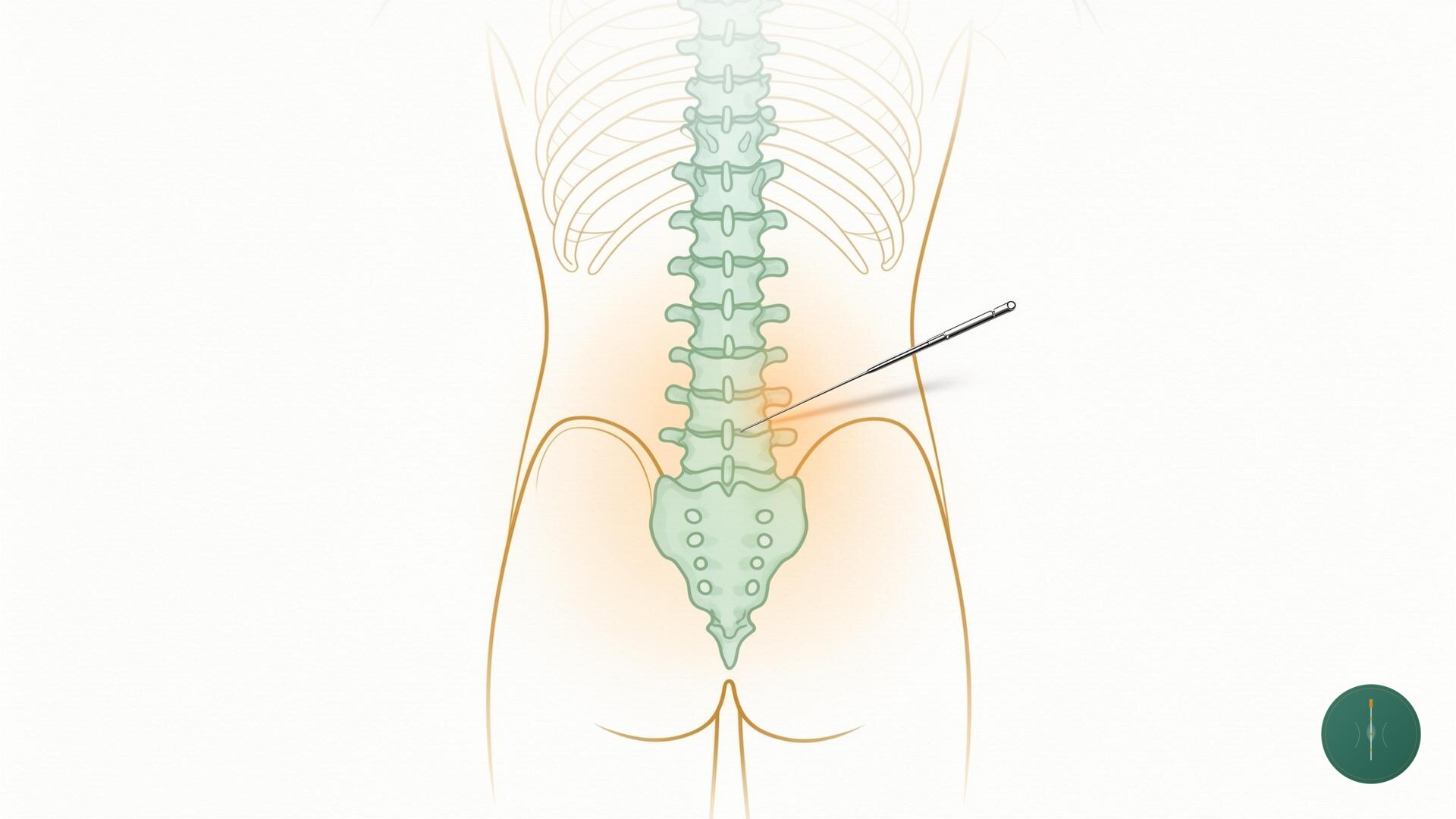
    • GB30 (Huántiào, 环跳) — the anchor point for almost every sciatica I treat. Deep needling here reaches the region where the sciatic nerve passes under piriformis. Careful angulation, patient feedback, and I stop advancing the moment we get a strong De Qi radiating down the leg.
    • BL54 (Zhìbiān, 秩边) — companion to GB30 for stubborn deep buttock pain. Also useful when the piriformis test lit up but GB30 alone didn't reproduce the referral.
    • BL36 (Chéngfú, 承扶) and BL37 (Yīnmén, 殷门) — mid and upper posterior thigh points along the Bladder channel. I use them when the pain tracks the midline back of the thigh.
    • GB34 (Yánglíngquán, 阳陵泉) — the influential point of the sinews. Almost automatic in any musculoskeletal Bi involving the leg.

    Lumbar Points From the Back-Pain Playbook

    • BL23 (Shènshū, 肾俞), BL25 (Dàchángshū, 大肠俞), BL26 (Guānyuánshū, 关元俞) — the same back-shu triad I use for lower back pain, because the lumbar story almost always needs treating alongside the leg.
    • Huátuó Jiājǐ (华佗夹脊) at L4–S1 — segmental access to the affected nerve roots without going near the canal.
    • GV4 (Mìngmén, 命门) with moxa when the presentation is Kidney Yang deficient and cold.

    Distal Points That Earn Their Keep

    • BL40 (Wěizhōng, 委中) — "for the lower back, seek Wěizhōng." Still true when the leg is involved.
    • BL60 (Kūnlún, 昆仑) — distal Bladder-channel point that pairs well with BL40 for S1-pattern sciatica.
    • GB40 (Qiūxū, 丘墟) or GB41 (Zúlínqì, 足临泣) — distal Gallbladder-channel points for L5-pattern lateral leg pain.

    Acu-Bowen and the First Visit

    On a first visit for sciatica I often won't needle the buttock at all. I'll start with Acu-Bowen work — the hybrid technique developed by Australian acupuncturist Kevin Ryan — over the lumbar paraspinals, glutes, piriformis and hamstrings. It releases the muscles that are actively compressing the nerve, drops the patient's guarding, and lets me reassess the leg length and hip tilt before we commit to needling. About a third of the time a patient will leg-length even up and the leg pain will halve just from this, which tells me the driver was primarily muscular and we can be conservative with depth from here on. The rest go on to receive GB30 and the pattern-specific points at visit two.

    When to Refer, Every Time

    • Progressive weakness in the leg
    • Numbness spreading into the saddle region
    • Any change in bladder or bowel control
    • Bilateral leg symptoms of new onset
    • Constitutional symptoms — unexplained weight loss, fever, night pain that doesn't ease with position change

    None of those get needled. All of them get a same-day GP letter or emergency referral as appropriate.

    What I Tell Patients About Recovery

    Most first-episode piriformis sciaticas settle inside a handful of sessions once the muscle stops clamping. Genuine disc-related radiculopathy takes longer — often eight to twelve weeks of combined acupuncture, movement rehabilitation and pacing before it quietens down properly. I'm honest about that up-front. I also tell them that recurrence is common, that maintaining hip mobility, glute strength and reasonable trunk control does more for long-term recovery than any point I choose, and that we'll build that into the plan from about session three onward.

    Related Reading

    Frequently Asked Questions

    Does acupuncture work for sciatica?

    The evidence is genuinely encouraging. A 2015 systematic review and meta-analysis by Ji and colleagues, pooling twelve trials, found acupuncture more effective than conventional Western medicine for sciatica across pain intensity and overall effectiveness measures, with a favourable safety profile. The 2018 Vickers individual patient data meta-analysis, though not sciatica-specific, confirmed that acupuncture produces clinically meaningful and durable reductions in chronic pain compared with sham and no-treatment controls. The current caveat is the usual one: trial quality varies, and the best evidence supports acupuncture as part of a conservative package alongside movement rehabilitation rather than as a standalone cure.

    How do I know if it's real sciatica or just referred pain?

    True sciatica means the pain follows the sciatic nerve distribution — deep in the buttock, down the back or side of the thigh, sometimes past the knee into the calf or foot — and usually comes with neurological signs such as numbness, tingling, or weakness. Simple referred pain from the lumbar facets, sacroiliac joint or gluteal muscles can mimic the pattern but rarely goes below the knee cleanly and doesn't produce reliable neurological changes. In clinic I use the straight leg raise, slump test, dermatomal sensation check, myotome strength and reflexes to sort the two. If the picture is genuinely radicular I'm slower, more cautious with depth around the spine, and more conservative about session numbers before reassessing.

    Is it safe to needle sciatica?

    In experienced hands, yes. Acupuncture is a well-tolerated intervention for both disc-related and piriformis-driven sciatica, and the NICE NG59 guideline supports non-pharmacological options in this population. The clinical task is to screen carefully for red flags every visit — progressive neurological loss, bilateral leg symptoms, saddle numbness, bladder or bowel change, unexplained weight loss, fever — and to refer immediately if any are present. Outside that, sensible needling depth and direction, especially around the lumbar spine and the greater sciatic notch, keeps the risk profile low.

    How many sessions does it usually take?

    For a first-episode piriformis-driven sciatica I often see a meaningful shift inside three to four sessions. Genuine disc-related radiculopathy is a longer job — I plan an initial course of eight to twelve sessions over eight to ten weeks and I tell patients that up-front. If there's no change by session six I stop and rethink rather than just doing more of the same. Recurrence is common, so I taper to fortnightly then monthly maintenance for anyone with a long-standing pattern.

    All Citations Verified5/5

    Every PubMed citation in this article has been manually verified against its source.

    💡 💡 Tip: Press and hold on citation links to open them in your browser.

    Derek Doran, BHSc (Acupuncture)

    AHPRA Registered (CMR0002211465) · AACMA Member

    Derek is the founder of MediChi and a registered acupuncturist with clinical expertise in integrating Western diagnoses with Traditional Chinese Medicine treatment protocols.

    Clinically reviewed: May 28, 2026
    Found this useful? Share it

    sciatica · diagnosis guide + points

    Take the sciatica protocol into your next consult

    Radicular pain needs a clear pattern call and a hard safety screen. The subscription gives you both, plus the point protocol.

    • Cold-damp Bi, Blood-stasis and deficiency-type sciatica differentiated
    • Point protocols around GB 30, BL 40, GB 34 and BL 60 with needling-depth guidance
    • Red-flag screening for cauda equina and progressive neurological signs
    • Progress notes and outcome tracking suitable for insurer reporting

    7-day free trial · No card required to start · Herb and point references stay free

    Condition pages covering the topics in this article — pattern differentiation, point selection and safety notes.

    Related Articles