Zang-Fu Organ Theory: Beyond Western Anatomy
Medically Reviewed by Derek Doran, BHSc (Acupuncture) · AHPRA Registered · AACMA Member · Updated April 3, 2026
The Organ System That Western Medicine Can't See
If you've studied Western anatomy and then opened a TCM textbook, your first reaction was probably confusion. The "Liver controls the free flow of Qi"? The "Spleen transforms and transports"? The "Kidney stores Jing and governs reproduction, bones, and willpower"?
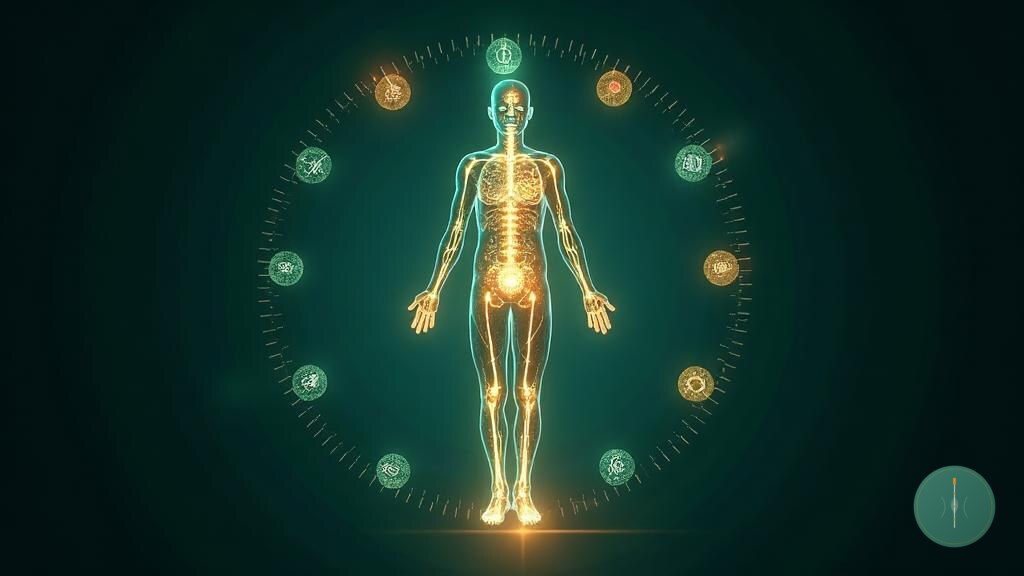
These statements sound mystical until you understand what TCM means by "organ." In the Zang-Fu system, an organ is not a piece of tissue — it's a functional sphere of influence that encompasses physiological processes, emotional states, sensory capacities, tissues, and seasonal rhythms (Zhang et al., 2010).
The TCM Liver is not the hepatic organ that metabolises drugs. The TCM Kidney is not the renal organ that filters blood. They share the same name, but they describe different — and often complementary — realities.
Zang vs Fu: The Yin-Yang Division
The Zang-Fu system divides the internal organs into two categories:
Zang (臟) — The Five Yin Organs
These are the storage organs: solid, Yin in nature, responsible for producing, transforming, and storing Qi, Blood, Jing, and Body Fluids. They are the core of TCM physiology.
| Organ | Chinese | Element | Stores | Governs |
|---|---|---|---|---|
| Heart | 心 (Xīn) | Fire | Shén (Spirit/Mind) | Blood vessels, complexion |
| Liver | 肝 (Gān) | Wood | Blood (at rest) | Free flow of Qi, tendons, eyes |
| Spleen | 脾 (Pí) | Earth | Yíng Qi (nutritive) | Transformation, muscles, mouth |
| Lung | 肺 (Fèi) | Metal | Pò (corporeal soul) | Qi, respiration, skin, nose |
| Kidney | 腎 (Shèn) | Water | Jīng (essence) | Reproduction, bones, ears, willpower |
Fu (腑) — The Six Yang Organs
These are the transformation and transportation organs: hollow, Yang in nature, responsible for receiving, digesting, and excreting. Each pairs with a Zang organ.
| Organ | Chinese | Paired Zang | Function |
|---|---|---|---|
| Small Intestine | 小腸 (Xiǎo Cháng) | Heart | Separates pure from impure |
| Gallbladder | 膽 (Dǎn) | Liver | Stores and excretes bile, governs decisiveness |
| Stomach | 胃 (Wèi) | Spleen | Receives and "rottens/ripens" food |
| Large Intestine | 大腸 (Dà Cháng) | Lung | Excretes waste, reabsorbs fluids |
| Bladder | 膀胱 (Páng Guāng) | Kidney | Stores and excretes urine |
| Triple Burner | 三焦 (Sān Jiāo) | Pericardium | Manages water pathways and Qi movement |
📖 Deep dive: The Triple Burner is unique — it has a name and a function but "no form." Read more in the upcoming article: The Triple Burner: TCM's Most Misunderstood Organ
The Five Zang Organs: A Clinical Deep Dive
1. The Heart (心 Xīn) — Emperor of the Organs
Western equivalent: Cardiac pump
TCM scope: Ruler of the entire organism, house of consciousness
The Heart in TCM does pump blood — but that's the least interesting thing it does. Its primary function is housing the Shén (神), the spirit-mind that governs consciousness, cognition, emotional stability, and sleep.
Key functions:
- Governs Blood and vessels — circulation, complexion (a bright, rosy face indicates strong Heart Qi)
- Houses the Shén — consciousness, memory, thinking, sleep quality
- Opens into the tongue — speech disorders, aphasia, and tongue ulcers often indicate Heart pathology
- Manifests in the complexion — pallor (Heart Blood Deficiency), dusky purple (Heart Blood Stasis)
Clinical red flags for Heart patterns:
- Insomnia, anxiety, palpitations → Heart Blood/Yin Deficiency
- Mania, delirium, incoherent speech → Heart Fire or Phlegm Misting the Heart
- Chest pain with purple tongue → Heart Blood Stasis
- Depression with dream-disturbed sleep → Heart Qi Deficiency (Allen et al., 2006)
📖 Related: Acupuncture for Insomnia — The Heart's role in sleep disorders
2. The Liver (肝 Gān) — The General
Western equivalent: Hepatic organ (detoxification, bile production)
TCM scope: The master regulator of smooth Qi flow throughout the entire body
The Liver is arguably the most clinically important organ in modern TCM practice, because its primary function — ensuring the smooth, unobstructed flow of Qi — is precisely what modern life disrupts most. Stress, frustration, suppressed emotions, sedentary work, and irregular eating all stagnate Liver Qi (Zhang & Fang, 2023).
Key functions:
- Ensures the smooth flow of Qi — affects digestion, emotions, menstruation, and bile secretion
- Stores Blood — regulates blood volume distribution (stores Blood at rest, releases it during activity)
- Governs tendons — flexibility, muscle spasms, cramps
- Opens into the eyes — blurred vision, dry eyes, floaters often indicate Liver Blood Deficiency
- Houses the Hún (ethereal soul) — vision, planning, dreaming, creativity
Clinical red flags for Liver patterns:
- Irritability, sighing, hypochondriac distension → Liver Qi Stagnation
- Headache, dizziness, tinnitus, hypertension → Liver Yang Rising
- Tremors, spasms, tics, seizures → Liver Wind
- Irregular menstruation, PMS → Liver Qi Stagnation affecting the Chōng and Rèn Mai
- Anger, outbursts, red eyes → Liver Fire Blazing
The Liver-Spleen relationship: This is one of the most clinically relevant dynamics in TCM. When Liver Qi stagnates, it frequently "invades" the Spleen, causing digestive symptoms alongside emotional symptoms — IBS with anxiety, bloating with mood swings, diarrhoea with frustration. This is called Liver overacting on Spleen (木克土, Mù Kè Tǔ) — Wood overcontrolling Earth.
3. The Spleen (脾 Pí) — The Minister of Agriculture
Western equivalent: The actual spleen (immune/blood filtration organ)
TCM scope: The entire digestive and metabolic system, plus the body's ability to hold things in place
This is where TCM and Western medicine diverge most dramatically. The TCM Spleen has almost nothing to do with the anatomical spleen. It corresponds far more closely to the pancreas and the digestive function of the small intestine — the system that breaks down food and converts it into usable energy (Liu et al., 2013).
Turn This Knowledge Into a Treatment Plan
Enter any Western diagnosis and get a complete TCM treatment protocol — acupuncture points, herbal formulas, moxibustion, cupping, and gua sha recommendations.
Key functions:
- Governs transformation and transportation — converts food into Qi, Blood, and Body Fluids
- Controls the ascending of pure Qi — sends refined nutrients upward to the Lung and Heart
- Governs muscles and the four limbs — muscle tone, strength, energy levels
- Holds Blood in the vessels — prevents haemorrhage (Spleen Qi Deficiency can cause bruising, heavy menstruation)
- Opens into the mouth — taste perception, appetite
- Houses the Yì (intellect) — concentration, studying, analytical thinking
Clinical red flags for Spleen patterns:
- Fatigue, poor appetite, loose stools, bloating → Spleen Qi Deficiency
- Heavy limbs, foggy thinking, oedema → Spleen failing to transform Dampness
- Bruising, heavy periods, blood in stool → Spleen not holding Blood
- Organ prolapse (uterine, rectal, gastric) → Spleen Qi sinking
- Overthinking, worry, poor concentration → Spleen Qi Deficiency affecting the Yì
Modern research connection: The gut microbiome — its role in immune regulation, nutrient absorption, and even mental health via the gut-brain axis — maps remarkably well onto TCM Spleen theory (Feng et al., 2023).
4. The Lung (肺 Fèi) — The Prime Minister
Western equivalent: Respiratory organs
TCM scope: Respiration, immune defence (Wèi Qi), skin integrity, fluid distribution, grief processing
The Lung is called the "delicate organ" (嬌臟, Jiāo Zàng) because it's the most externally exposed of the Zang organs — it communicates directly with the outside air and is therefore the first organ attacked by external pathogens.
Key functions:
- Governs Qi and respiration — inhales "clean Qi" from air, exhales turbid Qi
- Controls descending and dispersing — distributes Wèi Qi (defensive Qi) and fluids to the skin
- Regulates water passages — the "upper source of water" (sends fluids downward to the Kidney and Bladder)
- Governs the skin and body hair — skin quality, sweating, pore opening/closing
- Opens into the nose — smell, nasal congestion, sinusitis
- Houses the Pò (corporeal soul) — instinct, sensation, attachment, grief
Clinical red flags for Lung patterns:
- Frequent colds, weak immunity, spontaneous sweating → Lung Qi/Wèi Qi Deficiency
- Dry cough, dry skin, thirst → Lung Yin Deficiency
- Cough with yellow phlegm, fever → Lung Heat / Phlegm-Heat in the Lung
- Asthma, wheezing → Lung failing to descend Qi
- Prolonged grief, inability to let go → Lung Qi Deficiency (emotional)
5. The Kidney (腎 Shèn) — The Root of Life
Western equivalent: Renal organs (filtration, electrolyte balance)
TCM scope: The constitutional foundation — growth, development, reproduction, ageing, bone health, brain function, and willpower
The Kidney is the most foundational organ in TCM. It stores Jīng (精, Essence) — the inherited constitutional substance that determines your baseline vitality, reproductive capacity, and lifespan. Jīng is finite: you're born with a fixed quantity from your parents (Pre-Heaven Jīng), and you can supplement it only partially through diet, rest, and herbs (Post-Heaven Jīng from the Spleen) (Pei et al., 2020).
Key functions:
- Stores Jīng — governs growth, development, puberty, fertility, and ageing
- Governs water metabolism — works with the Bladder to manage fluid balance
- Grasps Qi — the Kidney "receives" Qi sent down by the Lung (Kidney failing to grasp Qi = chronic asthma/dyspnoea)
- Governs bones and produces marrow — bone density, teeth strength, brain function (the brain is "the Sea of Marrow")
- Opens into the ears — hearing loss, tinnitus (especially age-related)
- Houses the Zhì (willpower) — determination, drive, motivation, fear (the emotion of Kidney)
Clinical red flags for Kidney patterns:
- Low back pain, weak knees, fatigue → Kidney Qi Deficiency
- Night sweats, hot flushes, dry mouth, tinnitus → Kidney Yin Deficiency
- Cold extremities, frequent clear urination, impotence → Kidney Yang Deficiency
- Infertility, premature ageing, poor memory → Kidney Jīng Deficiency
- Chronic asthma worse on exertion → Kidney not grasping Lung Qi
- Deep fear, lack of willpower, existential anxiety → Kidney Zhì depletion
The Zang-Fu Relationships: Why Organs Don't Work Alone
Interior-Exterior Pairs
Each Zang (Yin) organ pairs with a Fu (Yang) organ. Disease in one frequently affects the other:
- Heart ↔ Small Intestine — Heart Fire can transfer downward, causing burning urination or blood in urine
- Liver ↔ Gallbladder — Liver Qi Stagnation causes Gallbladder dysfunction (nausea, bitter taste, indecision)
- Spleen ↔ Stomach — Spleen Qi ascends, Stomach Qi descends; when reversed → nausea (Stomach Qi rebelling upward) with diarrhoea (Spleen failing to ascend)
- Lung ↔ Large Intestine — Lung Qi Deficiency can cause constipation (failure to descend); chronic diarrhoea can weaken Lung Qi
- Kidney ↔ Bladder — Kidney Yang Deficiency → frequent clear urination, enuresis, nocturia
Five Element Relationships
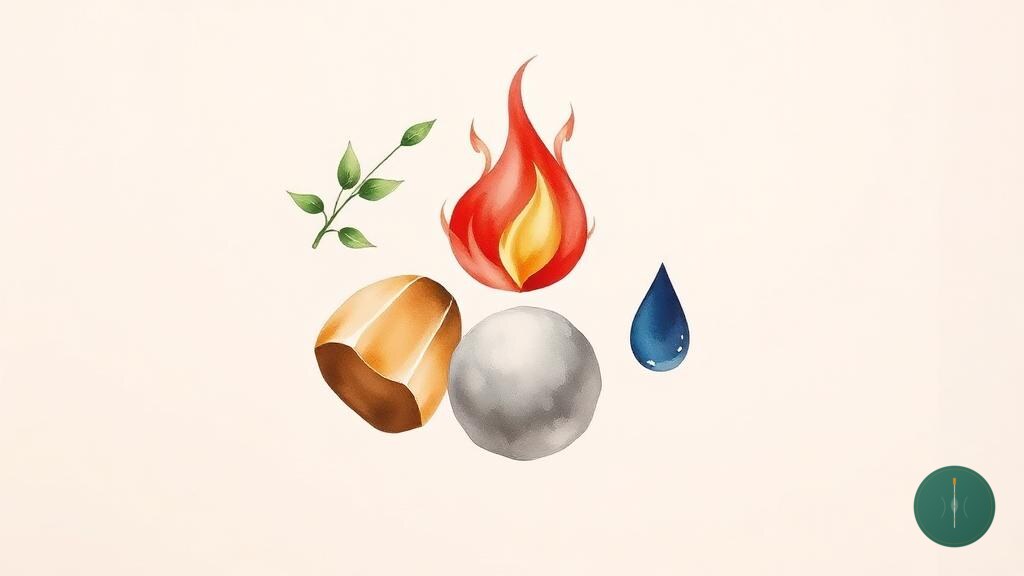
The Zang organs interact through the Five Element cycle:
Generating cycle (母子, Mother-Son):
- Kidney (Water) → Liver (Wood) → Heart (Fire) → Spleen (Earth) → Lung (Metal) → Kidney (Water)
Controlling cycle (相克, Mutual restraint):
- Heart (Fire) controls Lung (Metal)
- Lung (Metal) controls Liver (Wood)
- Liver (Wood) controls Spleen (Earth)
- Spleen (Earth) controls Kidney (Water)
- Kidney (Water) controls Heart (Fire)
These aren't abstract metaphors — they're clinically predictive. When the Kidney weakens (Water depleted), it fails to nourish the Liver (Wood), and the Liver fails to control the Spleen (Wood not restraining Earth), producing a cascade of symptoms across multiple systems.
The Clinical Cross-Walk: Western Conditions, Zang-Fu Patterns
| Western Diagnosis | Primary Zang-Fu Pattern | Secondary Patterns |
|---|---|---|
| IBS | Liver overacting on Spleen | Spleen Qi Deficiency, Dampness |
| Hypertension | Liver Yang Rising | Kidney Yin Deficiency (root) |
| Chronic fatigue syndrome | Spleen Qi Deficiency | Kidney Yang Deficiency, Liver Qi Stagnation |
| Depression | Heart Qi/Blood Deficiency | Liver Qi Stagnation, Kidney Jīng Deficiency |
| Asthma | Lung Qi Deficiency | Kidney not grasping Qi, Phlegm |
| Infertility | Kidney Jīng Deficiency | Liver Qi Stagnation, Blood Stasis |
| Menopausal syndrome | Kidney Yin Deficiency | Heart-Kidney disharmony |
| Chronic low back pain | Kidney Qi/Yang Deficiency | Blood Stasis, Dampness |
| Anxiety disorders | Heart Blood Deficiency | Liver Qi Stagnation, Gallbladder Qi Deficiency |
| Osteoporosis | Kidney Jīng/Yang Deficiency | Spleen Qi Deficiency |
📖 Related: How to Translate Western Diagnoses into TCM Syndromes — A complete clinical methodology
Why This Matters for Modern Practice
Understanding Zang-Fu theory is not optional for TCM practitioners — it's the operating system on which every diagnosis, treatment principle, point selection, and herbal formula runs. Without it, you're pressing buttons without understanding the machine.
But it also matters for integrative practitioners and patients who want to understand why their acupuncturist asks about sleep when they came in for knee pain (Heart-Kidney axis), or why treating the Liver can resolve digestive complaints (Wood-Earth interaction), or why grief can weaken the immune system (Lung-Wèi Qi connection).
The Zang-Fu system is not a primitive pre-scientific model. It's a functional network map that organises clinical observations into predictive, treatable patterns. Modern systems biology is increasingly arriving at similar conclusions — that organs don't function in isolation, that emotions affect physiology, and that the body is an interconnected web, not a collection of independent parts.
Explore More on MediChi
- AI Diagnosis Tool — Enter any condition and see which Zang-Fu patterns are involved
- Five Elements Theory — The generating and controlling cycles in detail
- Qi, Blood, Yin & Yang — The substances the Zang organs produce and store
- Tongue Diagnosis — How the tongue maps to specific Zang-Fu organs
- Acupuncture Points Database — Find the Back-Shu and Front-Mu points for each organ
Frequently Asked Questions
What is Zang-Fu organ theory?
How is the TCM Liver different from the Western liver?
What does Kidney Deficiency mean in Chinese medicine?
All Citations Verified6/6
Every PubMed citation in this article has been manually verified against its source.
💡 💡 Tip: Press and hold on citation links to open them in your browser.
Derek Doran, BHSc (Acupuncture)
AHPRA Registered (CMR0002211465) · AACMA Member
Derek is the founder of MediChi and a registered acupuncturist with clinical expertise in integrating Western diagnoses with Traditional Chinese Medicine treatment protocols.
Clinically reviewed: April 3, 2026